 Guide On Map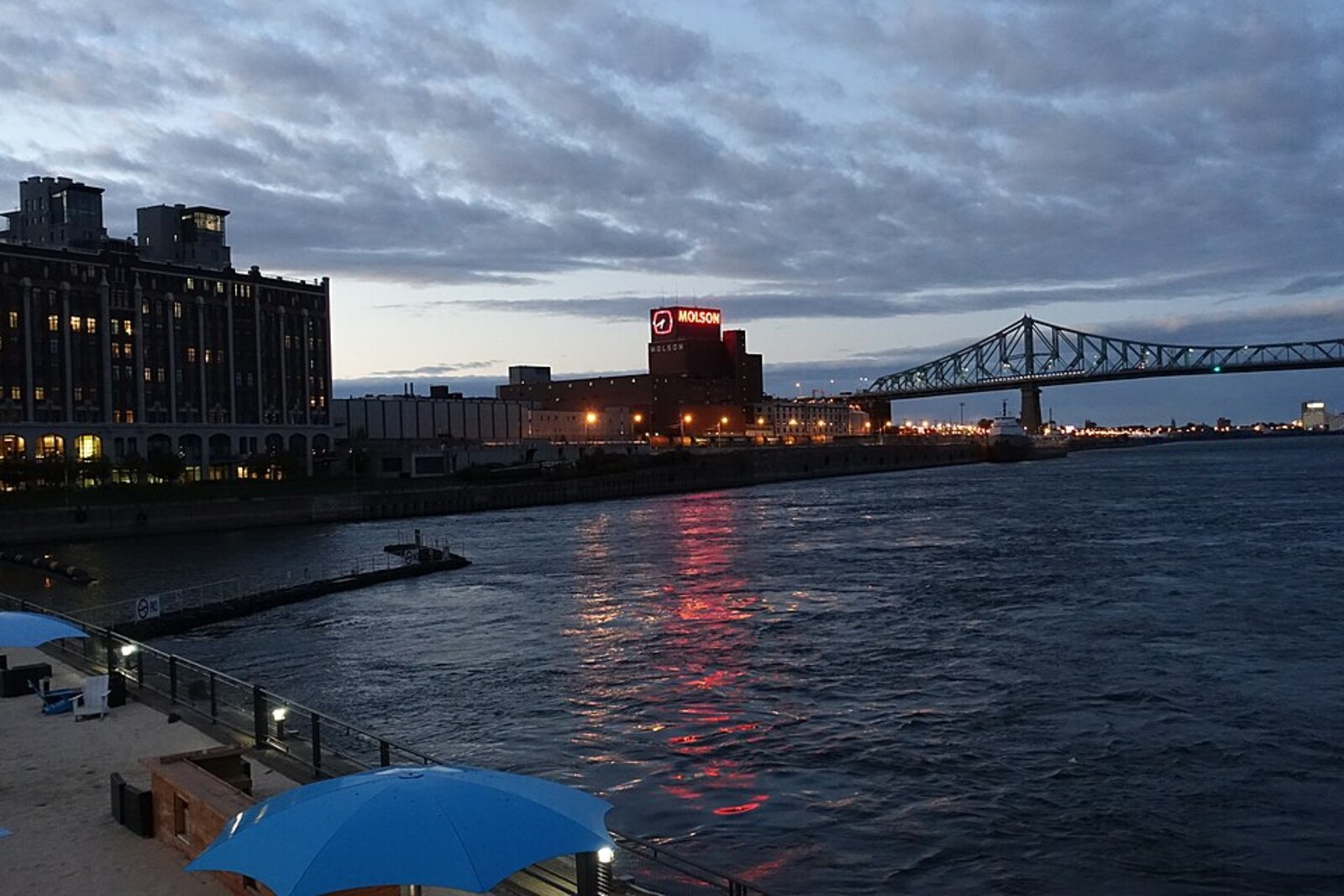
Look around first
What to notice
- White reinforced-concrete tower
- Four clock faces
- Signal light
- Memorial plaque
The story of the place
The white reinforced-concrete tower at the eastern edge of the Old Port of Montreal rises forty-five meters, and its four round clock faces gave both the tower and the quay their name. A signal light burned at the top for vessels entering the port; from the city side, the smaller tower and wall screened the sheds and grain conveyors. Bells were never installed here, and the parts of the clock mechanism arrived separately, so it began running only the following spring.
A few months after the end of the First World War, the Montreal Harbour Commission decided to erect a monument to merchant mariners at the eastern end of Victoria Pier. The Commission managed the port, through which food, weapons, and other cargoes were sent to Britain and the Allied countries during the war. The site was chosen near the port entrance, amid sheds, railway tracks, and grain conveyors: here, seagoing vessels took on cargo before heading downstream on the Saint Lawrence.
Merchant mariners were civilian hired crews. They earned their living carrying passengers and goods, but during the war years their ordinary voyages became part of supplying the front. Germany tried to sever this line with submarines. Nineteen seventeen was especially difficult, when hundreds of merchant vessels were sunk within a few months. The crews continued crossing the Atlantic Ocean in convoys protected by warships; the cargoes they delivered allowed the Allies to maintain supplies until the end of the war. Nearly fifteen thousand merchant mariners died aboard ships flying the British flag. The exact number of Canadian civilian mariners who died was not even established at the time.
The project was entrusted to Paul Leclerc, assistant chief engineer of the Montreal Harbour Commission. He had to fit the memorial into an operating cargo terminal. Leclerc designed a white reinforced-concrete tower forty-five meters high, a smaller tower, and a wall that screened the sheds and conveyors from the city side. A signal light for incoming vessels was installed at the top. On the eastern side, facing downstream, they placed a dedication to the mariners' courage and loyalty.
Leclerc included four large clock faces and bells in the plan. The bells never appeared, and the final parts of the English clock mechanism were delivered only in the summer of nineteen twenty-two. The clock began running the following spring. The monument was initially called the Sailors' Tower; later, its four clock faces gave it the everyday name Clock Tower. In nineteen ninety-two, the former Victoria Pier officially received this name as well: Clock Tower Quay means Clock Tower Quay.
After the middle of the twentieth century, cargo operations moved farther east. In nineteen seventy-seven, major port work on this section ceased, the sheds and conveyors were dismantled, and the tower was restored and opened to visitors. That is why the Old Port of Montreal is now occupied by walking areas, a marina, and a city beach. Swimming at the beach is not allowed: the sand and loungers are meant for relaxing by the river.
Sand now lies where the grain sheds once stood. The main memorial plaque has no list of the mariners who died—only a dedication to them and the names of the port commissioners. The plaque still faces downstream on the Saint Lawrence, toward the exit to the Atlantic Ocean.
Useful on site
The entire meaning of this stop is accessible from outside. Check the possibility of going up separately, and on the open pier keep the wind and lack of shelter from bad weather in mind.