 Guide On Map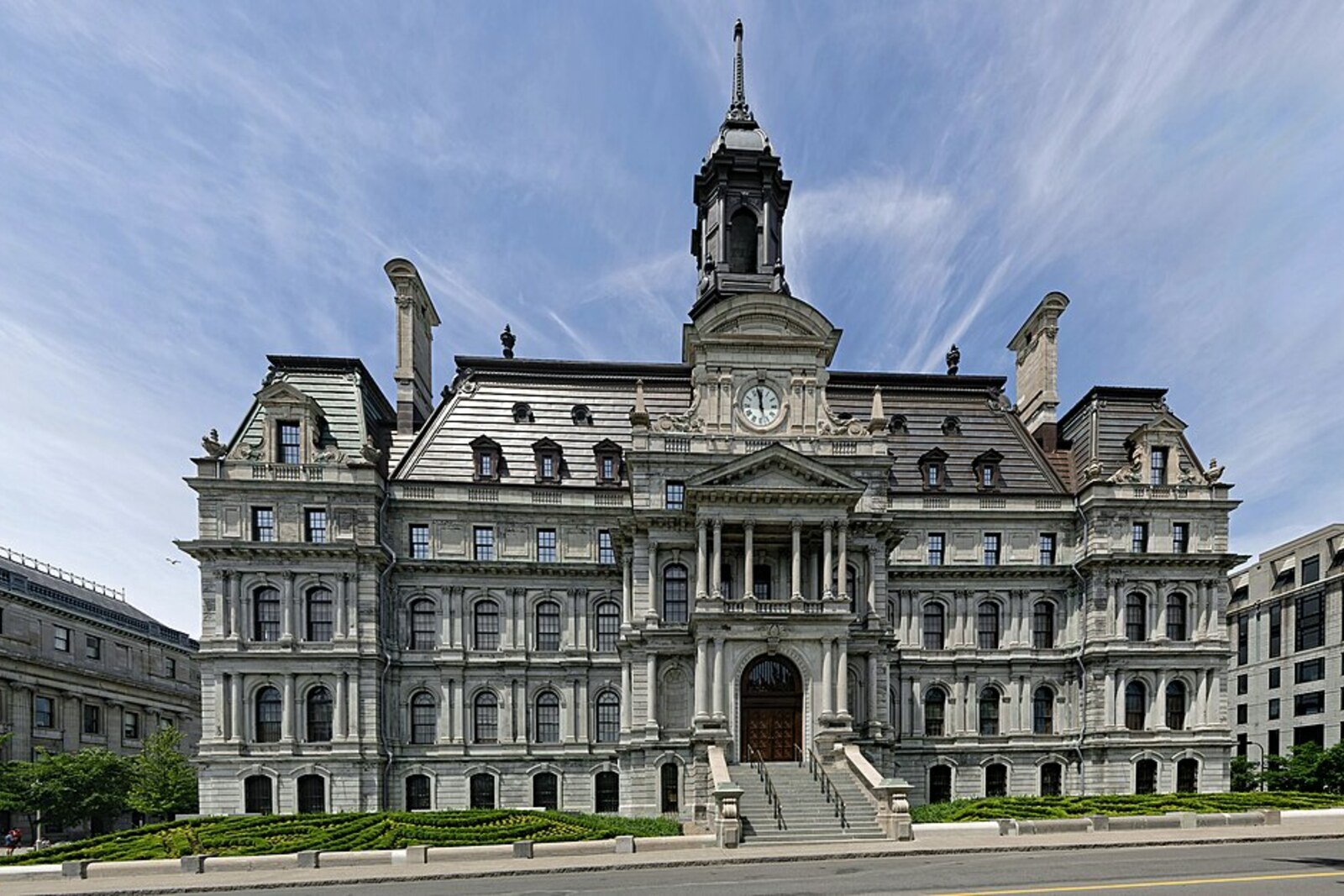
Look around first
What to notice
- Central balcony
- Main entrance
- City hall facade
The story of the place
The stone facade of Montreal City Hall faces Notre-Dame Street, and the central balcony divides it vertically above the main entrance. Inside, the city and agglomeration councils meet, the city archives are kept, and a museum space operates. After a major fire, the building was restored on the same site, remaining close to the earlier design. The balcony remained the boundary between the enclosed chamber of power and the square in front of the facade.
The balcony above the central entrance connects to the city council chamber. Behind its doors, the mayor and councillors discuss city projects and vote on municipal bylaws. This was the first city hall in Canada built specifically for a city administration. Its best-known speech from the balcony, however, was not on any city agenda.
On the evening of July twenty-fourth, nineteen sixty-seven, the serving President of France, Charles de Gaulle, came here. He wanted to publicly support French-speaking Quebec's desire to determine its own future. De Gaulle spoke as a head of state: he was responsible for France's relations with Canada, and he still had a trip to Ottawa and a meeting with Canada's leadership ahead of him.
Montreal's mayor, Jean Drapeau, who received the French president as an honored guest, gathered almost one hundred thousand people in front of Montreal City Hall. A speech from the balcony was not on the program, but microphones had been installed. De Gaulle stepped out to the crowd and decided to speak.
He compared the gathering in Quebec to the liberation of France, which he himself had led during the Second World War. He then said that France would help Quebec move forward, and ended with the words: “Long live Montreal! Long live Quebec! Long live free Quebec!” The final phrase was the slogan of supporters of the province's independence. Spoken by a foreign president from an official balcony, it turned a city reception into a diplomatic conflict. According to the city archives, Drapeau was stunned.
The next day, Canada's prime minister, Lester Pearson, who defended the country's integrity and was preparing to receive de Gaulle in Ottawa, called the words unacceptable. He recalled that thousands of Canadians had died liberating France and stated that Canadians did not need to be liberated. After that, de Gaulle canceled his trip to the capital and flew home.
Above the entrance remains that same balcony of the city council chamber. The city's elected representatives still meet behind it; that evening, the President of France stepped outside through it, and he did not make it as far as the Canadian capital.
Useful on site
This stop works fully from the square; check separately whether it is possible to enter the active administrative building.