 Guide On Map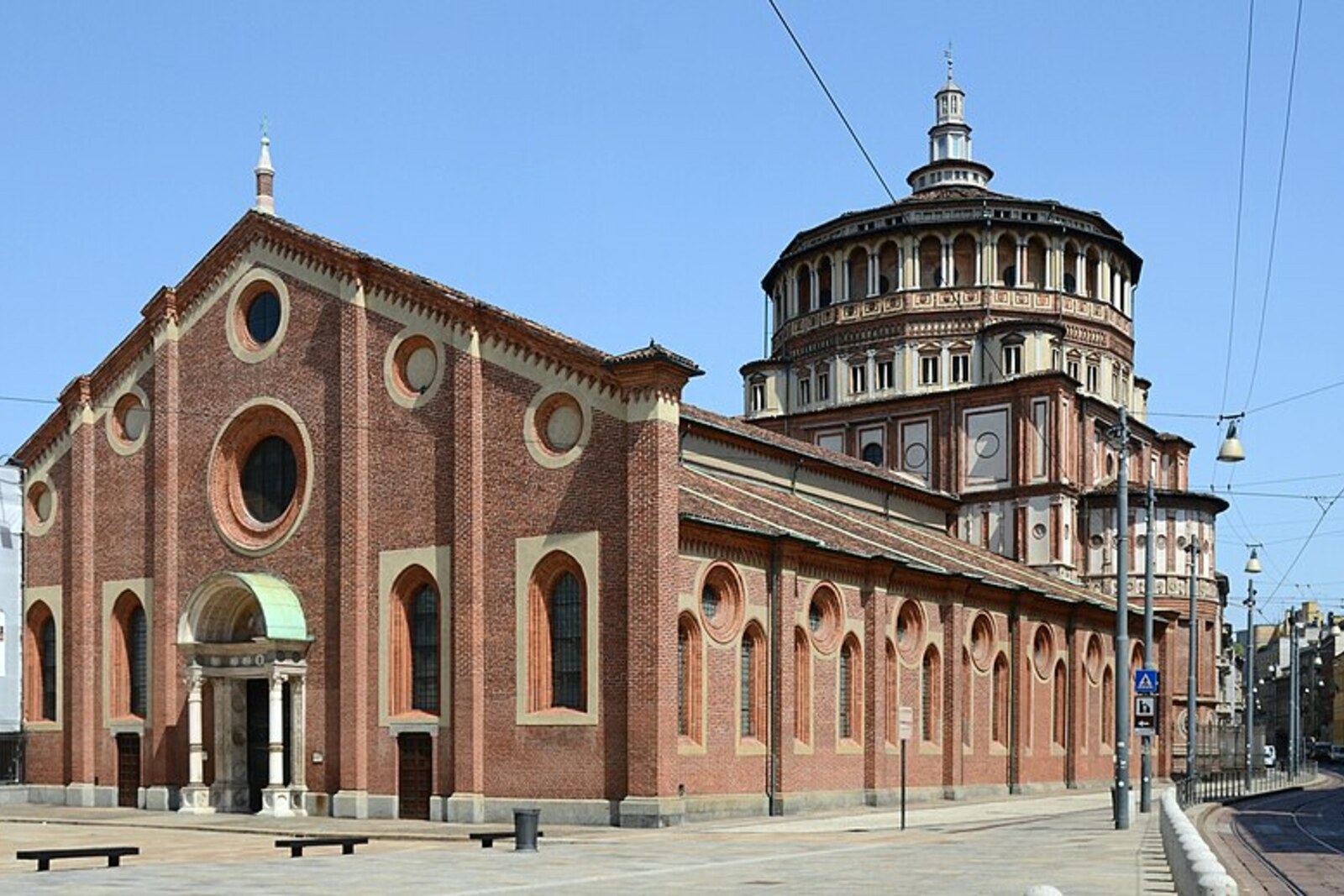
Look around first
What to notice
- Sforza coats of arms above the painting
- Gaps where paint has been lost
- The ceiling lines of the painted refectory
- The Crucifixion on the opposite wall
The story of the place
The name Santa Maria delle Grazie appeared before the church itself. A chapel with a fresco of Our Lady of Graces—the Virgin Mary with the infant—stood on this site. In fourteen sixty, Count Gaspare Vimercati, commander of the Sforza forces, transferred the land to the Dominicans. The monks retained the chapel’s dedication and began building the monastery of Santa Maria delle Grazie three years later.
Three decades later, the Milanese duke Ludovico Sforza, known as Moro, conceived the idea of creating a family mausoleum here. He was rebuilding the church and commissioning paintings from the artists of his court. Leonardo da Vinci served the duke as a painter, engineer, and organizer of court entertainments; his livelihood and workshop depended on Sforza commissions. Ludovico assigned him the north wall of the monastic refectory.
The function of the room itself determined the choice of subject. In the refectory, the Dominicans ate, prayed, and listened to readings. On one end wall, Donato Montorfano painted the Crucifixion of Jesus Christ; on the other, Leonardo was to depict Jesus Christ’s last meal with his twelve closest disciples. The monks sat between the two scenes—the supper and the crucifixion.
Leonardo chose the seconds after Jesus Christ’s words that one of those seated at the table would betray him. The disciples do not yet know the betrayer’s name. They spring up, argue, demand explanations, and point to themselves. The artist arranged them in four groups of three, while Judas, who had already agreed to betray his teacher for thirty pieces of silver, remained among the others. Judas recoils and grips the purse containing the payment. The lines of the ceiling and walls converge at Jesus Christ’s head, so that the painted room continues the real refectory.
Matteo Bandello, an eyewitness to the work and a future writer, recalled how Leonardo would sometimes climb the scaffolding at dawn and not release his brush until evening, forgetting to eat. Then he might paint nothing for several days, studying the figures for hours. Once, he left off work on a clay model at the ducal court, hurried here, put a few strokes on the wall, and left at once.
An ordinary fresco does not allow this way of working. The artist must quickly apply paint to wet plaster: once the section dries, it can no longer be corrected. Leonardo wanted to return to the faces, change the gestures, apply transparent layers, and work on the whole scene at once. He leveled the dry wall with a white preparatory layer and painted on it with rich tempera containing egg yolk, almost as if on a wooden panel.
This gave him time for his revisions, but the paint did not bond with the plaster. As early as fifteen seventeen, a visitor recorded that the painting had begun to deteriorate. Later masters tried to restore the fading figures, painted over the losses, and left their own versions of Leonardo’s work on top. From nineteen seventy-seven to nineteen ninety-nine, the restorer Pinin Brambilla Barcilon removed these layers, stabilized the surviving parts, and left gaps where the original paint was no longer present.
Today, the custodians admit small groups into the former refectory through automated doors that open one after another. The air is filtered, humidity is continuously measured, and time in the room is limited. Above the damaged painting, the Sforza coats of arms remain, and beneath them lies that very thin layer of paint for which Leonardo refused to paint quickly.
Useful on site
The basilica is open daily, but tourist visits are prohibited during services. The Last Supper museum is open from Tuesday to Sunday in timed slots; booking is mandatory, and the visit lasts fifteen minutes.
Checked: June 30, 2026. Check the official source before visiting.The basilica and refectory are visited separately. The Last Supper requires a separate, pre-confirmed time slot; allow extra time and follow the visiting rules.