 Guide On Map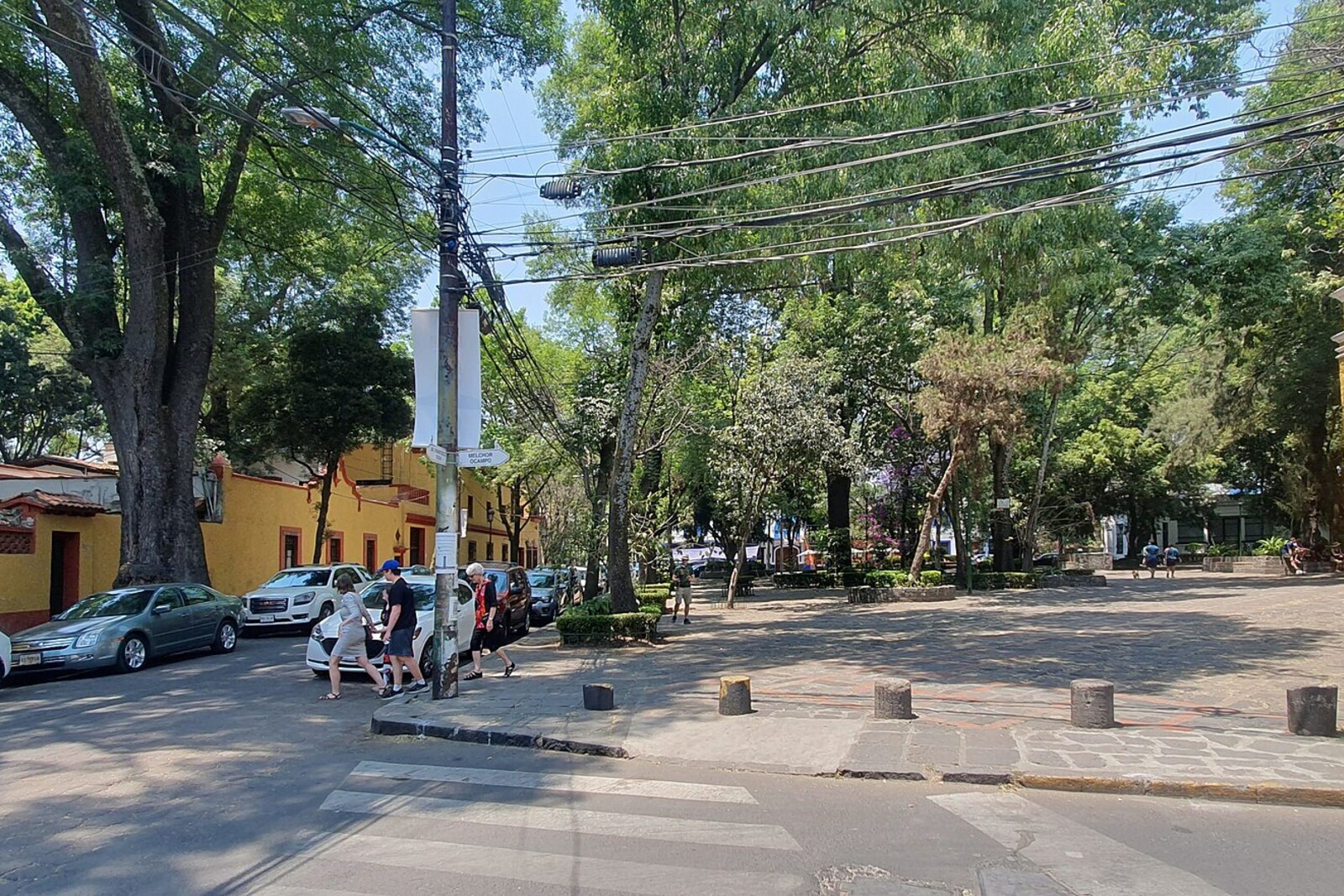
Look around first
What to notice
- Yellow façade
- Central entrance
- Two side arches
- Bell tower
The story of the place
The plaza at Santa Catarina was the chapel’s open courtyard. A roof sheltered only the altar, while people gathered outside: services were held here and those still preparing for baptism were taught. The yellow façade and bell tower face the same space; during Holy Week, the Way of the Cross passes through it again.
Before the Spanish conquest, this quarter was called Omac—“between two waters.” It was an established community with its own ruler: nearby stood his tecpan, where residents’ cases were heard, while a sanctuary occupied the site of today’s plaza. Dominican missionaries chose the same center to convert the local population to Christianity.
The first chapel was set up in the sixteenth century. The building needed a roof only over the altar; a broad open courtyard was left in front of it. The monks held services and taught under a canopy, while the residents of Omac gathered outside. Many were still preparing for baptism. This is how “open chapels” appeared: they were designed for a community accustomed to rites in the open air and allowed preachers to address large numbers of people at once.
The dedication was Dominican as well. Santa Catarina is the local name for Catherine of Siena, a fourteenth-century Dominican who cared for the sick, intervened in church disputes, and pressed Pope Gregory the Eleventh to return from Avignon to Rome. The saint’s name was gradually attached to the settlement’s old name, creating Santa Catarina-Omac. From there it passed to the quarter, the plaza, and the road.
By the seventeenth century, the congregation had grown. Around sixteen fifty, builders used the former open chapel as the beginning of a new church: behind it, they built a long enclosed nave and added a bell tower. The old arrangement did not disappear. Three openings from the first chapel can still be read in the yellow façade: an ornamented central entrance and two wide side arches, now closed with glass and grilles. Inside, its boundary is marked by a transverse structure at the entrance and a surviving round arch.
The plaza in front of the chapel was that very open courtyard where the residents of Omac stood. During Holy Week, ceremonies once again move out of the small church: the Way of the Cross passes through the plaza, returning the old atrium to its original function.
Useful on site
The plaza is open; access to the chapel depends on services and the current schedule
Checked: date not specified. Check the official source before visiting.Do not count on entering the old chapel: most of the time, viewing it from the plaza is enough. During a service or local festival, stay out of passageways and do not play the audio through a speaker.