 Guide On Map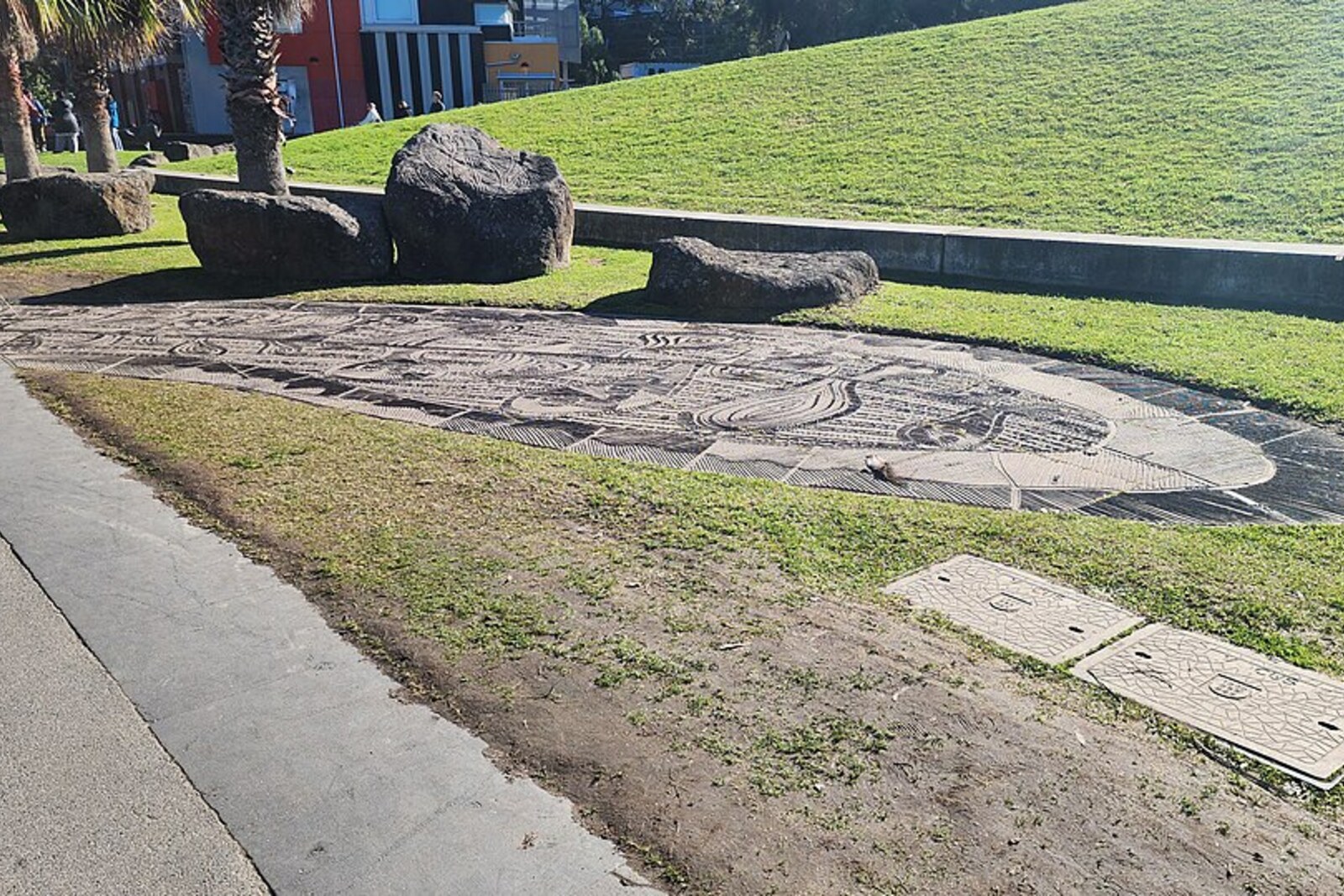
Look around first
What to notice
- Earthen mound
- Cast-iron path of two eels
- Five metal shields
- Wooden message sticks
The story of the place
“Birrarung Wilam” means “camp by the river.” Inside a low earthen mound near ArtPlay lie objects brought here by Indigenous communities from across Victoria. They were placed in the ground during the ceremony for which this site was created.
In nineteen ninety-nine, the artists Vicki Couzens, Lee Darroch, and Treahna Hamm saw two possum-skin cloaks made in the nineteenth century in a museum collection. Couzens belongs to the Kirrae Wurrong and Gunditjmara peoples, Darroch to Yorta Yorta, Mutti Mutti, and Trawlwoolway, and Hamm to Yorta Yorta. All three earned their living through art and taught classes in communities. After relocations to missions and the breakdown of family ties, the making of such cloaks had almost ceased: there was no one to pass on the techniques, designs, and stories connected with them.
The artists studied the old cloaks and began teaching this craft to people in different parts of Victoria. Each community made its own cloak: designs about family, land, and events that were to be preserved were applied to the inside. The item of clothing once again became part of ceremonies, rather than only an exhibit behind glass.
In two thousand five, the city commissioned the same three artists to create a memorial place for the Indigenous peoples of Victoria. They placed an image of a camp and family at its center. The site was chosen beside the Birrarung. A cast-iron path in the shape of two intertwined eels recalls eel fishing near the shallow rapids that once separated the river’s fresh water from the bay’s salt water. Five metal shields by the bank represent the five Kulin peoples. Wooden message sticks on the eastern and western sides represent the Woiwurrung and Bunurong peoples and welcome those entering according to these peoples’ rules of hospitality.
The artists rejected an ordinary explanatory plaque. Instead, metal panels shaped like unfurled cloaks were installed: a touch set off recorded voices, stories, and songs from Victorian communities. Ancestral stones were arranged in a semicircle, leaving a space inside for performances and ceremonies.
When Birrarung Wilam was ready in two thousand six, elders and representatives of every language group in Victoria came here. Many wore newly made possum-skin cloaks. Participants placed objects from their communities inside the mound and held a ceremony calling on the ancestors, which opened the new place for future gatherings.
This mound was built in the twenty-first century. The objects placed there by the ceremony’s participants are still inside it, between the message sticks and the semicircle of stones by the Birrarung.
Useful on site
Open public artwork in the park; no ticket required; access may change during events in Birrarung Marr.
Checked: June 29, 2026. Check the official source before visiting.Choose a spot where you do not obstruct movement along the path, and keep away from the water’s edge. The sound of trains here is part of the setting, so it is more convenient to listen to the audio with headphones.