 Guide On Map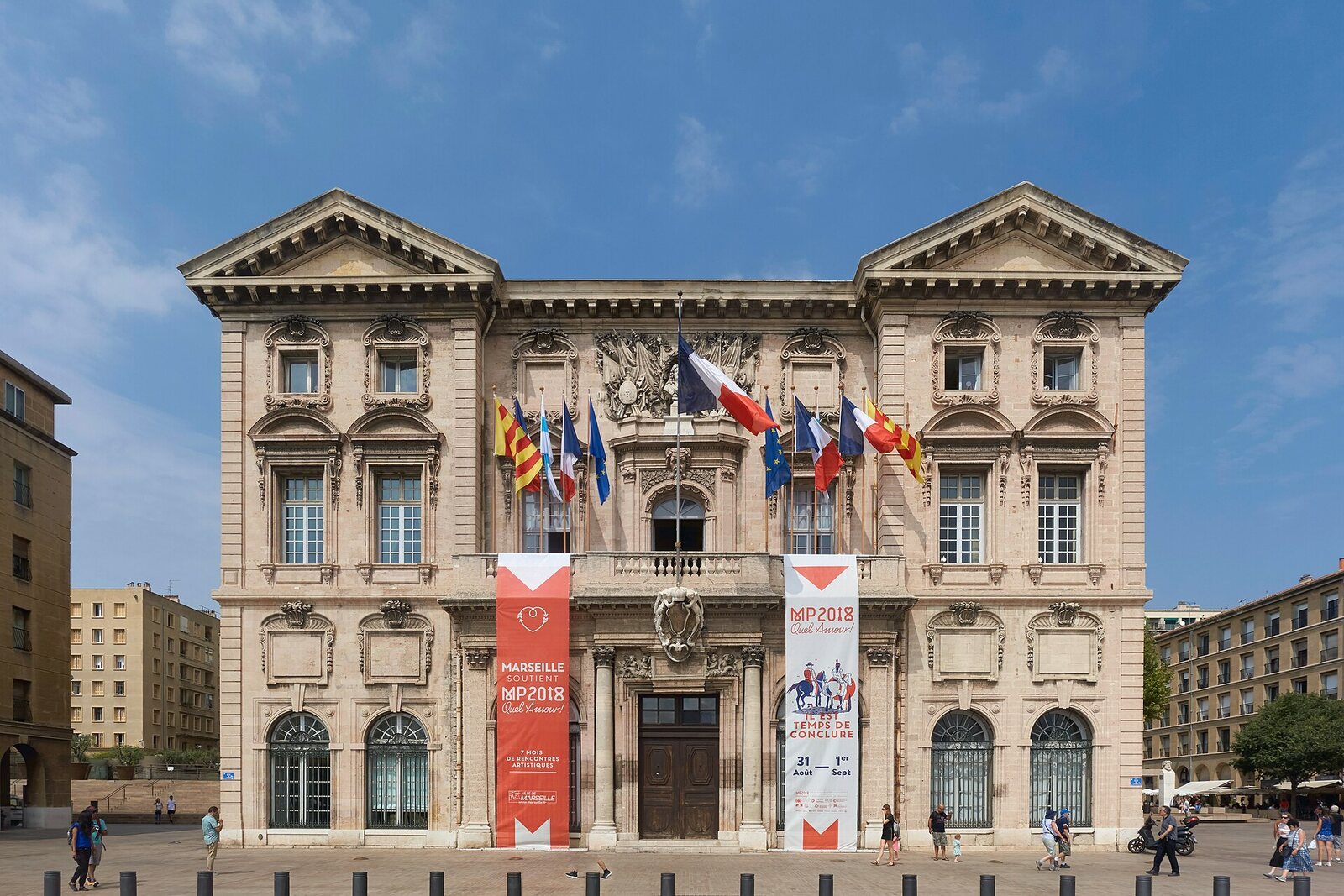
Look around first
What to notice
- The Baroque pavilion of the Hôtel de Ville
- The stone gallery above the street
- Postwar buildings with arcades
- The northern quay
The story of the place
On January twenty-third, nineteen forty-three, Karl Oberg, head of the German SS and police in France, and René Bousquet, secretary-general of police of the French Vichy government, were in this Hôtel de Ville. From here, they watched the roundup in central Marseille and on the northern shore of the Vieux-Port.
The operation's headquarters took over the working municipal-administration building. As early as the Middle Ages, merchants stored grain on the lower floor of the local municipal loggia, while the city consuls met above—elected administrators of Marseille's affairs. In the seventeenth century, the present Baroque pavilion was built for them. The division between the floors remains literal: inside, there is still no staircase from the first floor to the second. The mayor reaches the office through the rear building and the stone gallery above the street.
Twenty days before the roundup, members of the French Resistance carried out two armed attacks in Marseille at places visited by the occupiers. The German command declared a state of siege. Heinrich Himmler, head of the SS, ordered Oberg to evict the residents of the northern shore, deport those detained, and blow up the old neighborhoods. In negotiations, French officials secured a reduction in the area to be demolished. In exchange, Bousquet agreed to provide French police for the forced eviction and to carry out separate arrests throughout the city center.
At dawn on January twenty-fourth, police officers and German soldiers roused the residents of the houses behind the Hôtel de Ville. Dockworkers, sailors, craftspeople, and owners of small shops lived here; many families had come from Italy, especially from Naples. They were allowed to take hand luggage, warm clothing, and food for forty-eight hours. As they left, people had to lock their doors—although no one intended to preserve their apartments.
Around fifteen thousand people were led onto today’s Quai du Port, then called Quai du Maréchal Pétain. From here, they were taken by trams and buses to the Arenc freight station, then sent in locked railcars to camps near Fréjus. Most were later released back to Marseille. Those who returned found their homes looted. Of the six hundred people arrested in the Vieux-Port area and then sent to concentration camps, one hundred returned after the war.
On February first, German sappers began blowing up the emptied houses. Over two weeks, they destroyed fifteen hundred buildings; fifty streets disappeared from the map. The Hôtel de Ville and several other monuments were not blown up. The old Baroque pavilion remained in its original place, while the orderly stone buildings with arcades on either side were erected only during the postwar reconstruction of the northern quay. The mayor’s office is still on the upper floor of the building from which the leaders of the roundup watched the cordoned-off port.
Useful on site
Outdoor stop on the quay. For a self-guided route, do not plan on regular entry inside the Hôtel de Ville; any possible special visits should be checked separately.
Checked: June 29, 2026. Check the official source before visiting.The main elements of the story are visible from the quay, so entering the building is not required. Stand where you can take in the façade, the water, and the space of the former dense development at the same time.