 Guide On Map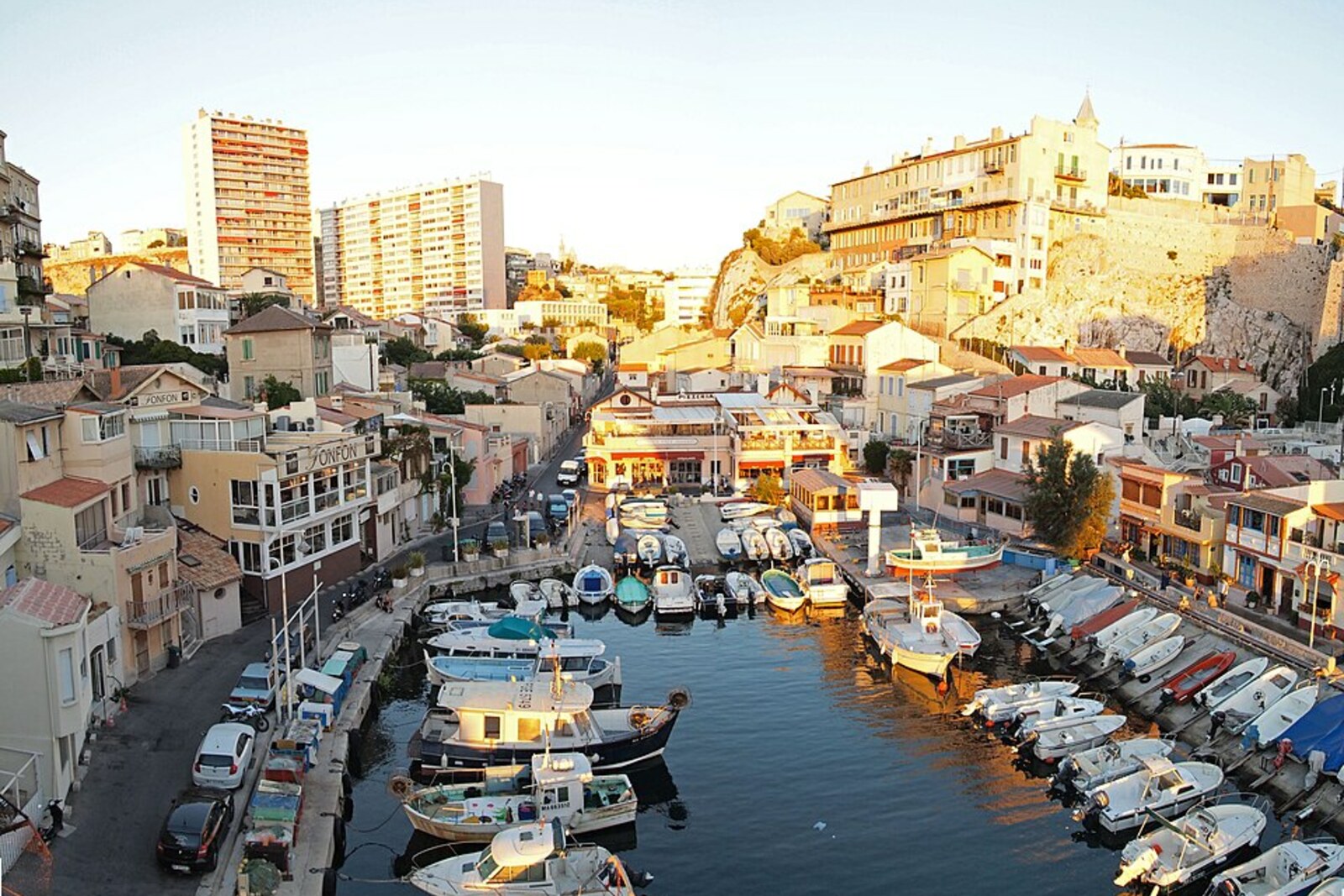
Look around first
What to notice
- Granite arch
- Bronze Victory
- Inscriptions in stone
- The sea through the arch opening
The story of the place
The granite arch at the entrance to Vallon des Auffes (formerly Vallon du Roy) was built on a rocky outcrop above the sea. Water is visible through the opening, and a bronze Victory rises above the stone; the names of the veterans' federation, the committee, and the national subscription are carved into the blocks themselves. The monument is dedicated to the Army of the East and to soldiers and sailors who died far from France. Beneath the bronze figure, the inscription about the first armistice remains.
The ceremony for laying the first stone took place somewhere entirely different. Veterans of the Eastern Front sought a national monument of their own: their comrades had died in the Dardanelles and the Balkans, and their families wanted a place of remembrance in France. The National Federation of Oriental Poilus, led by Gustave Gouin, began collecting donations. The state, the department, and Marseille also contributed funds.
The idea met with opposition. France had already buried the Unknown Soldier beneath the Arc de Triomphe in Paris, where he was meant to represent all the fallen. Opponents of a separate monument to the eastern units feared that shared remembrance would once again be divided by front. Parliament nevertheless approved the expenditure, and on May eighth, nineteen twenty-two, the president of the republic laid the first stone where Avenue du Prado meets the beach loop. The present arch is not there: construction never began on the selected site.
A competition was held two years later. Gaston Castel, the department's chief architect and a former severely wounded prisoner of war, wanted to build an open portico on a rocky outcrop facing the sea, so that it could be seen from afar. The site was moved here, to the entrance to Vallon des Auffes (formerly Vallon du Roy). Ships carrying soldiers, mules, and military equipment departed from the port of Marseille; beyond the Mediterranean Sea lay the fronts to which the monument was dedicated. This gave the arch its second name: Porte d'Orient (Monument to the Heroes of the Army of the East and Far Lands).
The Army of the East was the name given to French units sent first to the Dardanelles in nineteen fifteen. The landing at Gallipoli ended in defeat. The troops were then transferred to Salonika: they tried to help the retreating Serbian Army and held the Macedonian Front. The soldiers lived with shortages of supplies and contaminated water; scurvy, dysentery, typhus, and malaria claimed lives alongside the fighting. While the front barely moved, these servicemen were contemptuously called the “gardeners of Salonika” and suspected of having hidden from the real war. The words “Far Lands” in the monument's name extended the dedication to other soldiers and sailors who died far from France.
In June nineteen eighteen, Louis Franchet d'Espèrey took command of the Allied armies in the East. He sought a breakthrough in the Bulgarian positions where the supply routes of two Bulgarian armies passed through the Vardar valley. On September fifteenth, French and Serbian units crossed the Macedonian mountains and broke through the front. General Jouinot-Gambetta, commander of a North African cavalry brigade, led the Spahis and the Chasseurs d'Afrique around it. They covered about eighty kilometers through the mountains without maps, artillery, or food supplies, and on September twenty-ninth they unexpectedly took Uskub (now Skopje). On the same day, Bulgaria signed an armistice. The first of Germany's allies to leave the war was the state whose front had been broken through by an army considered useless. Its last French soldiers returned home only in March nineteen nineteen.
On April twenty-fourth, nineteen twenty-seven, Gustave Gouin officially handed the completed monument over to the mayor of Marseille. The stone still lists the veterans' federation, the committee members, and the national subscription. Beneath the bronze Victory are carved the words: “September twenty-ninth, nineteen eighteen—the first armistice.” The first stone was laid at Prado; the resulting monument was raised here, above the sea route of the Army of the East.
Useful on site
Open around the clock outdoors; the steps may be slippery after rain.
Checked: date not specified. Check the official source before visiting.The monument is viewed from outside and does not require a reservation. Watch your footing on the steps and keep the nearby road in mind.