 Guide On Map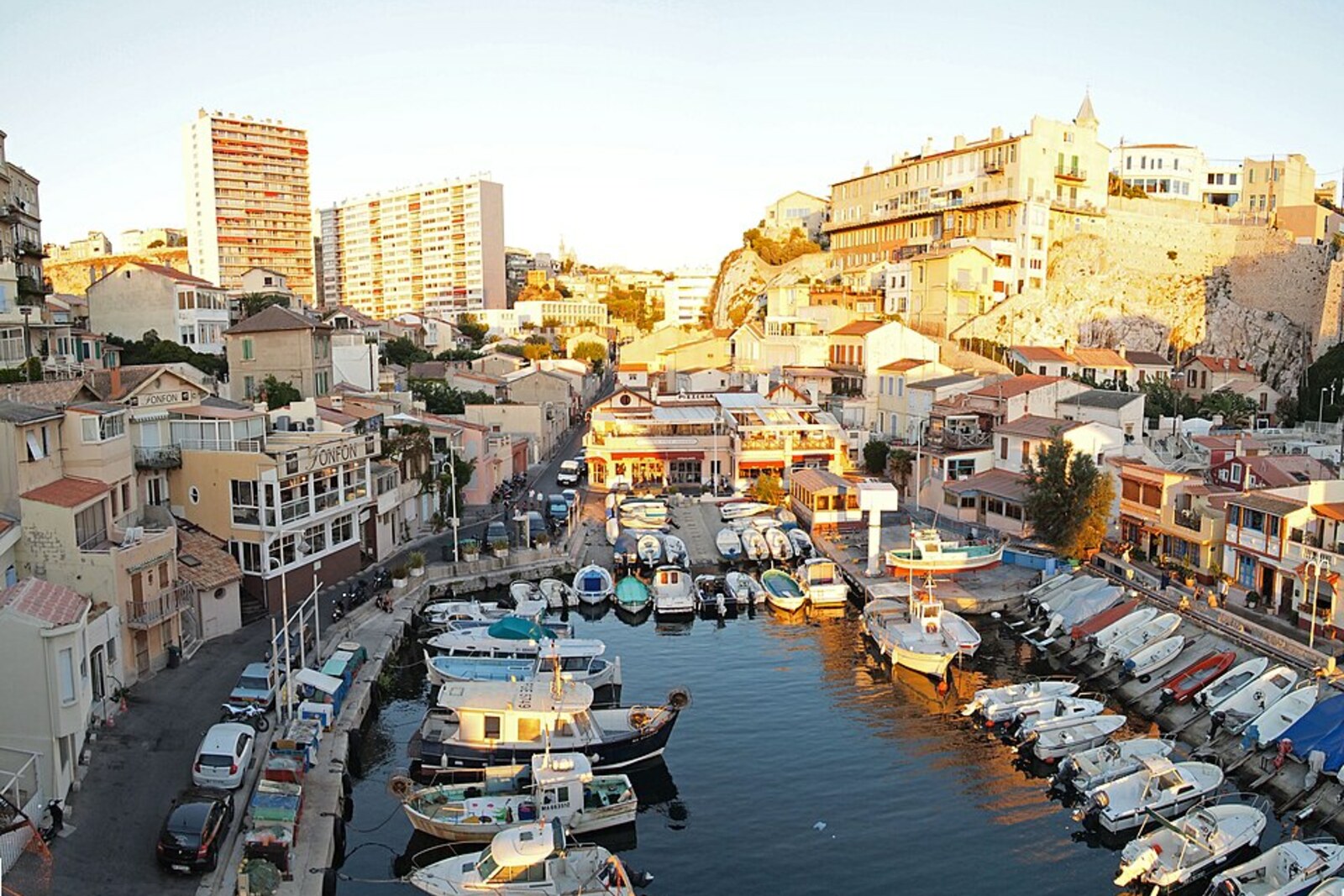
Look around first
What to notice
- Three arches of the viaduct
- Low houses
- Fishing boats
- Breakwater
The story of the place
Behind the breakwater, a small working basin remains, where low houses stand almost at the water's edge and fishing boats still find a quiet mooring. Even before the craft workshops, families from a small port south of Genoa settled in this coastal hollow: from here it was convenient to go fishing and pull boats ashore beside their homes. Local fishermen considered the newcomers rivals, but the settlement endured and in time became almost entirely Genoese. Today its former purpose can still be read in the houses and boats around the water.
In the middle of the eighteenth century, craftspeople arrived in this narrow inlet. They earned their living by weaving ship's ropes, fishing nets, baskets, and mats. Their raw material was alfa—a stiff grass from the dry regions of North Africa and southern Spain. In Provençal, it was called “auffo.”
You cannot weave the dry stalks right away: their fibers had to be softened with seawater. The craftspeople left their workshops by the Old Port and chose this narrow inlet to soak the bundles. Here they kept the raw material in the water, then separated the fibers and wove things without which fishermen and sailors could not earn a living. For the craftspeople, the small harbor was part of the production process.
Before they arrived, documents mentioned the name Vallon du Roy—Royal Hollow. In a deed dated April thirteenth, seventeen forty-seven, Vallon des Auffes already appears: the townspeople named the inlet after the grass soaked here. The workshops later disappeared. Nothing remained of their work—not warehouses, nor bundles of alfa; the name survived.
Fishermen had used this inlet even earlier. From the sixteenth century, families from Santa Margherita Ligure, a small port south of Genoa, moved here. They were called Margaridens. They were looking for a place from which they could go fishing and pull small boats ashore. The narrow coastal hollow gave them both a mooring and a place to live beside their boats.
Marseille fishermen saw the newcomers as rivals for catches and earnings. From sixteen seventeen, lawsuits began between the two groups. The Margaridens nevertheless remained in Vallon des Auffes, continued fishing, and settled their families here. By the nineteenth century, almost the entire population of the inlet consisted of Margaridens and other people from Genoa.
The low houses around the water grew out of this settlement, and the small basin still serves fishing boats. Alfa is no longer soaked here. Boats now stand in the water where craftspeople softened its stalks for nets and ropes.
Useful on site
The port is open around the clock; restaurants operate on their own schedules.
Checked: date not specified. Check the official source before visiting.This is a working small port. Do not block the slipway or passageways, do not step on fishing gear, and view the boats from the public part of the shore.