 Guide On Map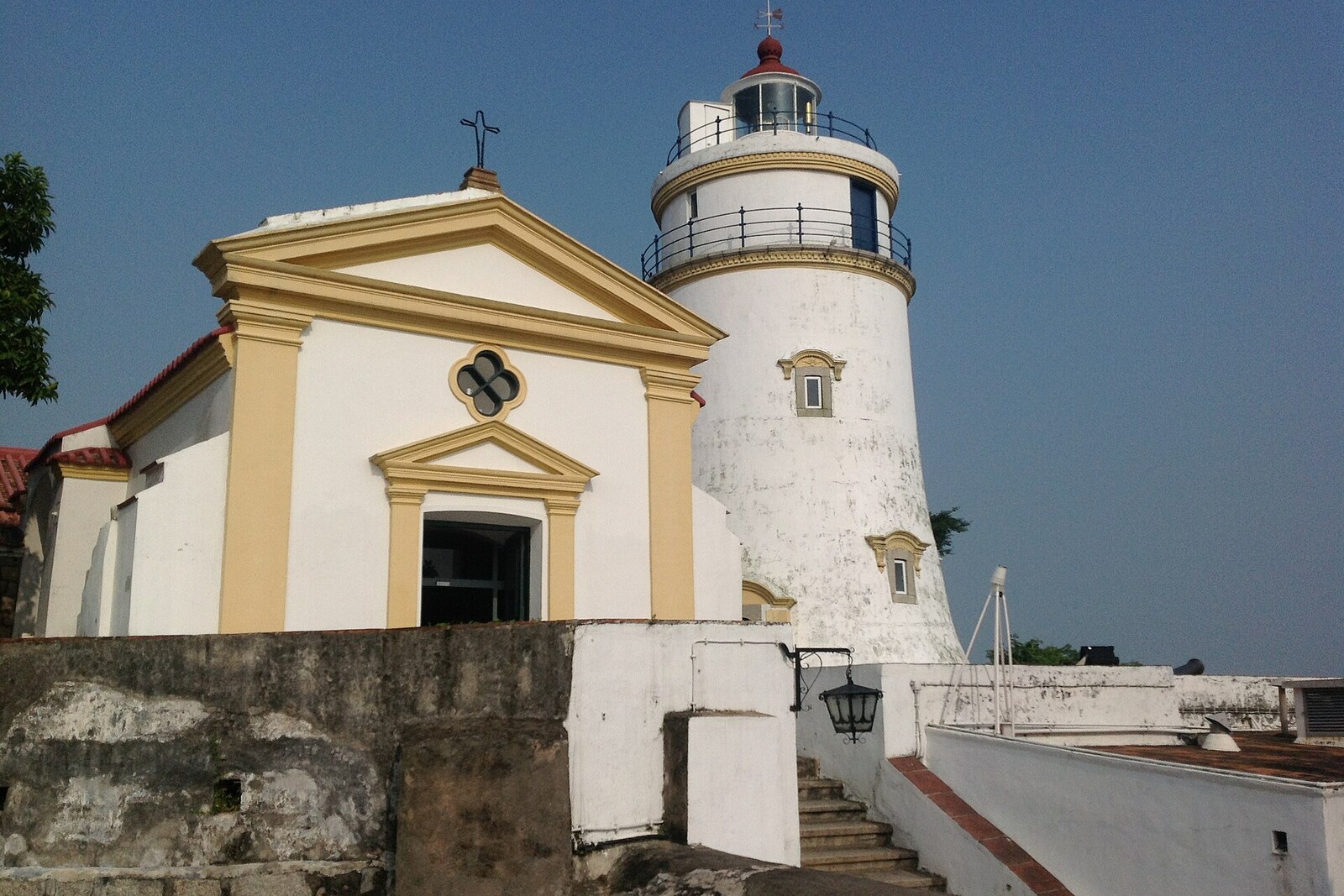
Look around first
What to notice
- Lighthouse tower
- Stone walls of the fort
- Inscription at the gate
- Chapel
The story of the place
On September twenty-fourth, eighteen sixty-five, a lighthouse was lit for the first time on the summit of Guia Hill. Macao Governor José Rodrigues Coelho do Amaral ordered that ships be given a permanent nighttime point of reference, and he entrusted the mechanism to Carlos Vicente da Rocha, an engineer born in Macao. A wooden wheel and a rope turned the paraffin lamp. This was how the first modern lighthouse on the Chinese coast began operating.
There was no need to choose a height for it. Soldiers had already been watching ships from here and raising typhoon warnings for two centuries. Rocha turned their watch post into a navigational beacon visible far out at sea. The exact coordinates of the tower were later adopted on maps as the geographic point of Macao itself.
Its mechanism served for nine years. A typhoon in September eighteen seventy-four severely damaged the tower, and the lighthouse went dark. Rocha died in eighteen eighty-three, without ever seeing his light again. Repairs stretched out for more than three decades. Only on June twenty-ninth, nineteen ten, did the keepers switch on equipment brought from France and return the lighthouse to service.
The stone walls around it appeared because of another threat. In sixteen twenty-two, a Dutch landing force attempted to seize Macao. For local merchants and sailors, losing the port meant losing their ships, warehouses, and livelihoods. The city raised its own funds and commissioned artillery captain António Ribeiro Raia to build a permanent fortress on the exposed summit. The inscription at the gate preserves the names of the commissioner and the builder: work began in September sixteen thirty-seven and ended in March of the following year.
By then, the last battle with the Dutch had already taken place in sixteen twenty-seven. They never returned, and the present walls did not have to withstand an assault. The garrison watched the sea, kept guns, barracks, and a powder magazine here, and closed the entrance to townspeople.
One of the rare days when outsiders were admitted through the gates was August fifth—the Feast of Our Lady of the Snows, to whom the chapel is dedicated. The name refers to a late Catholic legend. John, a Roman patrician, and his childless wife wanted to give their property to Our Lady of the Snows and asked her to indicate a place for a church. Supposedly, snow fell on Esquiline Hill on August fifth, and a basilica was built along its outline.
The chapel also has another name—Our Lady of the Snows, meaning the Guiding One. A local legend tells of Portuguese sailors who lost their course near Macao, saw a light on the summit, and built a sanctuary here after being saved. Historians confidently confirm only that the chapel already existed by sixteen twenty-two. From its name, Guia passed to the hill, the fort, and the lighthouse.
The military opened the grounds to everyone after leaving in nineteen seventy-six. Visitors are still not admitted into the lighthouse tower, but the light mounted above it continues to guide ships.
Useful on site
The fort and information center are usually 09:00–18:00, last entry 17:30; chapel 10:00–17:00.
Opening hours by day
The exterior ensemble can be viewed even when access to individual rooms is limited. In the chapel, speak quietly, do not touch the paintings, and do not use a flash if photography is permitted.