 Guide On Map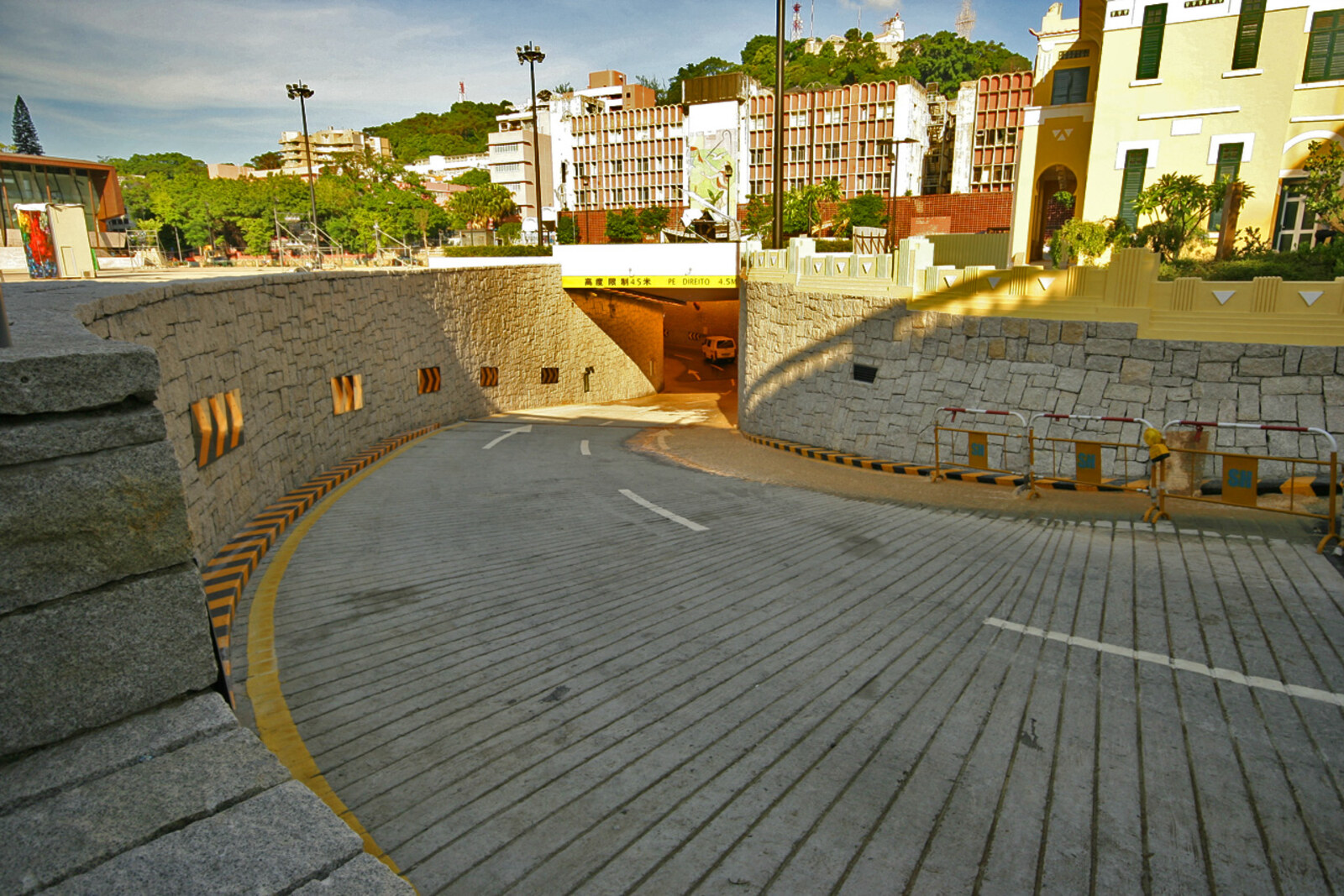
Look around first
What to notice
- Stone paving
- Open space
- Two-story School Aid Fund building
The story of the place
The stone paving lies above the tunnel into which vehicle traffic was moved after the present square was created on the site of the former sports field. Field hockey was played on the field, while the open space now hosts city celebrations and craft fairs. At the edge of the square stands the surviving two-story School Aid Fund building: its funds bought textbooks for children, paid for lunches, and awarded scholarships; it now hosts exhibitions and performances for young people.
The name “Tap Seac” is older than the square. It is associated with granite boulders that lay on the hill here one atop another, like a stone tower. At the beginning of the twentieth century, the marshy plot was filled in, and the enormous stones were destroyed. The name remained without the object that had given rise to it.
Children from the nearby orphanage gathered on the cleared land and flew kites. Then Fernando de Lara Reis took up the work here—a teacher of drawing, manual training, and gymnastics at the lycée opposite. He lived on a teacher’s salary, while his students had to pay for secondary education. Few were exempt from fees, so poor families did not have enough money for textbooks, food, and continuing their studies.
Lara Reis organized paid school performances and fairs. The proceeds were given to the School Aid Fund: it bought school supplies for children, fed them in the school cafeteria, and awarded scholarships. In nineteen twenty-one, the teacher held another fair—this time for a sports ground at Tap Seac.
In November of the following year, he presented a project with a pavilion and three courts. For the remaining land, he sought a football field. In nineteen twenty-five, the administration transferred the plot to the School Aid Fund free of charge. The plan for a ground exclusively for students changed: the city’s youth began using it, and the football section was set aside for field hockey.
By the nineteen thirties, teams from Hong Kong came here almost every Sunday. On April ninth, nineteen thirty-four, five thousand spectators surrounded the field for a match between Macao and the Malaya national team, one of the strongest in Asia. The referee did not count two goals by the Macao team, the visitors won one–zero, and after the final whistle the crowd disputed the result. At the end of that same year, Macao’s players set off for return matches in Singapore and Malaya; they returned home after two victories and two defeats, with a reputation as one of Asia’s best hockey teams.
In two thousand five, builders dismantled the field. Two years later, a paved square opened in its place, and vehicle traffic was moved into a tunnel beneath it. Since two thousand eight, rows of craft-fair tents have been set up here in spring and autumn; on other days, celebrations and cultural events occupy the open space.
Lara Reis’s undertaking has left behind the two-story School Aid Fund building, constructed at the edge of the field in nineteen twenty-five. It now hosts youth exhibitions and performances. The hockey field itself lay where the square’s stone paving continues today.
Useful on site
Open square; access may change during fairs, concerts, and city events.
Checked: date not specified. Check the official source before visiting.There is little protection from the sun in the square, and during city events, stages and barriers may occupy part of the space. For the narration, it is better to stop closer to the edge, without crossing the flow of people.