 Guide On Map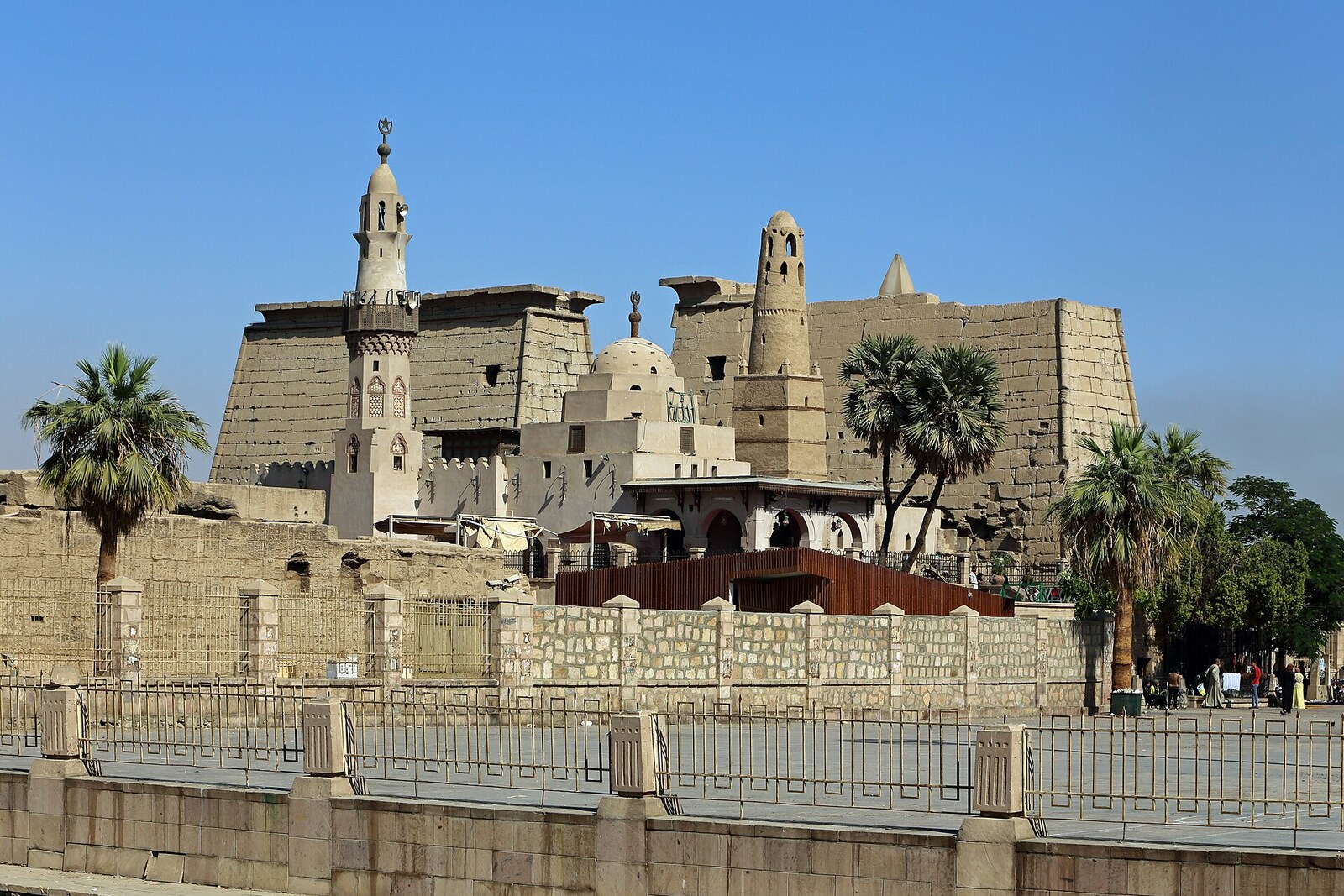
Look around first
What to notice
- Eastern obelisk
- Two pylon towers
- Colossal statues
- Cartouches of Ramesses II
The story of the place
One granite needle stands before the pylon of Ramesses II, although the entrance was designed as a pair. In the thirteenth century BCE, the pharaoh added a courtyard and a pylon—a gateway between two massive towers—to an older temple. Before them, he ordered two obelisks to be set up, bearing dedications to Amun and his own royal names. The procession from Karnak approached here and entered the temple between the stone needles.
The pair was divided because of Jean-François Champollion’s choice. In eighteen twenty-nine, Muhammad Ali, Egypt’s viceroy, decided to give France two obelisks from Alexandria. Champollion, a French Egyptologist, pressed for the better-preserved monument to be sent to Paris. He proposed replacing the Alexandrian obelisks with this pair from Luxor, although it stood about seven hundred kilometers upstream on the Nile. Muhammad Ali agreed and officially transferred both to France the following year.
They decided to transport the western obelisk first, weighing between two hundred twenty and two hundred thirty tons. The work was assigned to Apollinaire Lebas, an engineer in the French Corps of Naval Construction. He was paid to calculate ship structures and mechanisms; now his calculations would determine whether the monolith, which had stood here for about three thousand years, would split.
At the site, it became clear that the base was buried beneath almost four meters of sand and that a crack about eight meters long ran upward from it. Lebas had to redesign the lowering apparatus. At the same time, a cholera epidemic began in Luxor City.
On October thirty-first, eighteen thirty-one, the obelisk was enclosed in a wooden protective casing. Two hundred people turned the mechanisms, slowly lowering it onto its side. When the center of gravity shifted, the holding anchors began to pull out of the ground, the supports gave way, and the stone moved in a direction other than the one calculated. It struck the sand, but the crack did not open.
Then, for several weeks, the obelisk was turned and dragged four hundred meters to the Nile on movable wooden sledges. The bow of the specially built Luxor Ship was dismantled. Forty-eight people, working four capstans, pulled the monolith inside in two hours; afterward, shipwrights closed the hull again. They could not sail at once: the expedition members waited seven months for the Nile flood.
The obelisk was taken down to the sea, towed through the Mediterranean Sea and the Atlantic Ocean, and then brought up the Seine. On October twenty-fifth, eighteen thirty-six, it was being erected at Place de la Concorde. Lebas directed the lifting with a speaking trumpet and stood directly beneath the structure: in the event of a collapse, he did not intend to survive his failure. The stone was raised intact. After that, the engineer was appointed keeper of the National Maritime Museum of France, which he directed for sixteen years.
The eastern obelisk of Ramesses II remained by the pylon. The western one, lowered here into the sand on October thirty-first, eighteen thirty-one, now stands in Paris on a new granite pedestal: the ancient base proved too damaged to send after it.
Useful on site
Luxor Temple is usually open daily from 06:00 to 20:00; the ticket page states that the last entry is before 19:00.
Checked: date not specified. Check the official source before visiting.The overall design of the façade is easy to grasp from outside. For the reliefs, move closer only where this is permitted, and keep in mind that worn scenes are more visible in angled light.