 Guide On Map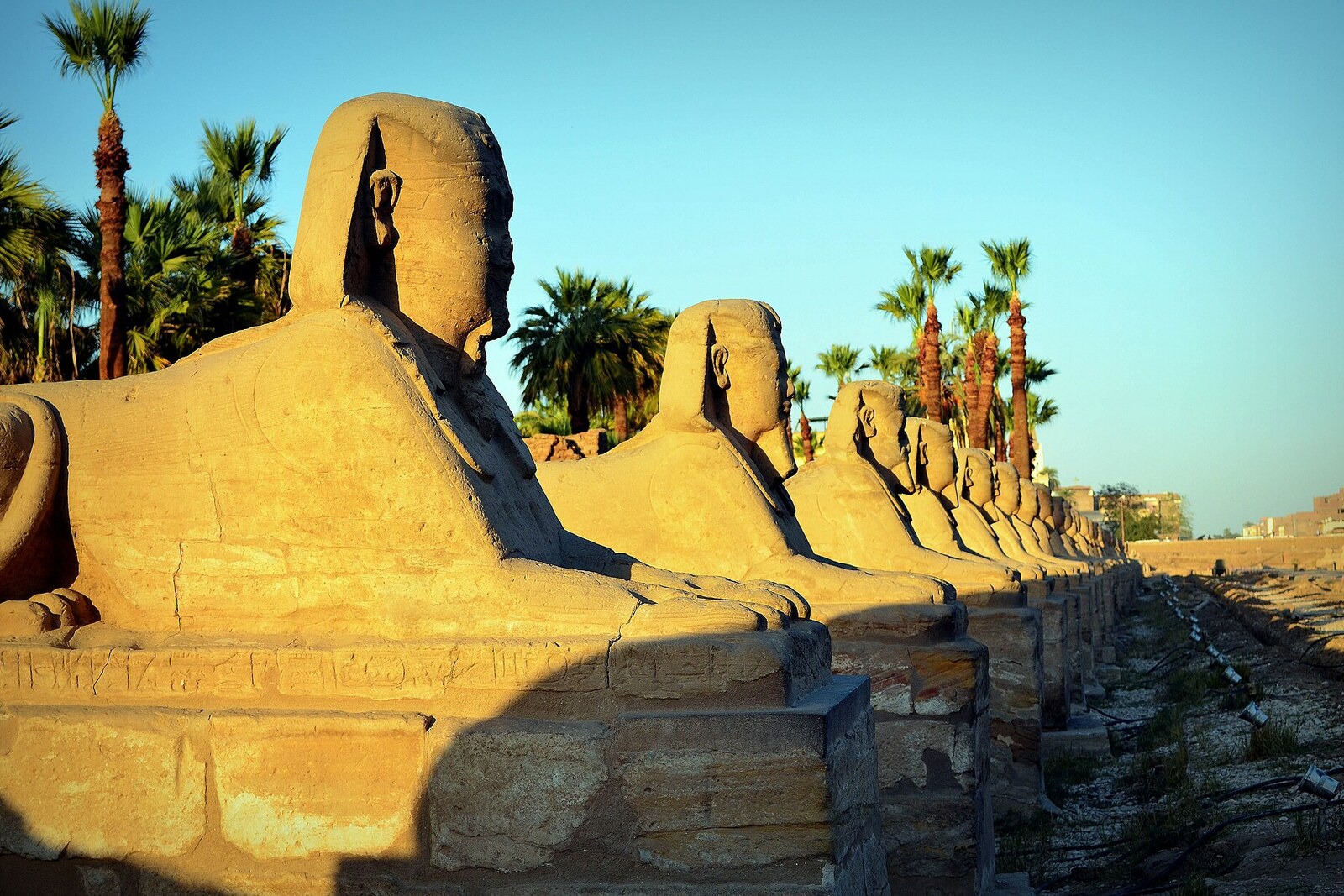
Look around first
What to notice
- Sphinxes with human heads
- Stone pedestals
- Fragments of heads
- Remains of the stone surface
The story of the place
The sphinxes in this middle section are more than a thousand years younger than the Opet Festival itself. Priests carried the barques between Karnak and Luxor Temple long before the present rows appeared. Nectanebo I ordered them installed—a military commander from the Nile Delta who, in three hundred eighty BCE, overthrew Nepherites II and sought recognition as the legitimate pharaoh.
Nectanebo gained the throne through a coup; he did not inherit it from the previous king. Before his coronation, his position and resources had been controlled by military service. Now he had to preserve both his own life and the country: the Persian king intended to subjugate Egypt again. A recognized pharaoh was expected to do two very specific things—defend the borders and maintain the temples. Seven years after his accession, Nectanebo repelled a Persian invasion. At the same time, he began building and restoring sanctuaries throughout Egypt.
In Thebes, the ancient city on the site of present-day Luxor City, Nectanebo ordered the road between the two temples to be laid out anew. Workers had to level ground that was flooded by water. Beneath the foundation, they compacted a layer of clay and silt more than a meter thick, adding broken brick and pottery fragments. They then laid a stone surface and set hundreds of sphinxes with human heads in royal headdresses along its sides.
Between the pedestals, the builders left round brick flowerbeds and connected them with narrow irrigation channels. Nectanebo's inscription describes an enclosed road with trees and flowers. The modern stone corridor gives only an incomplete impression of it: a long temple garden was prepared for the procession.
Here Nectanebo could link his name with the festival's main act. When the procession traveled overland, priests carried the barques of Amun, Mut, and Khonsu along the entire row. Nectanebo's royal names were repeated on the bases of the sphinxes. In one inscription, he says that he made a beautiful road for his father Amun and calls himself a good son. The kinship was ritual: Amun was recognized as the pharaoh's father, and the pharaoh provided the god's route.
It cannot be established how much this construction helped Nectanebo gain recognition. The outcome of his struggle is known: he ruled for eighteen years, died a pharaoh, and passed the throne to his son Teos. The Thirtieth Dynasty that he founded became the last native dynasty of ancient Egypt.
Later, the inhabitants of Roman Thebes dismantled a substantial part of the pavement and the sphinxes for building stone. In the excavated sections, the eastern row proved almost completely destroyed, while the western one survived better. The trees, flowers, and enclosure are long gone; in the middle section, two lines of pedestals remain, along with fragments of human heads and carved names of the military commander who ordered Amun to walk along the road among his sphinxes.
Useful on site
The middle sections of the avenue function as an open urban area with controlled entrances; exact access depends on gates, security, and ongoing work.
Checked: date not specified. Check the official source before visiting.If you cannot walk along the excavated strip, do not look for a way around the barriers. Continue along the accessible parallel street and observe the relationship between the avenue and the city.