 Guide On Map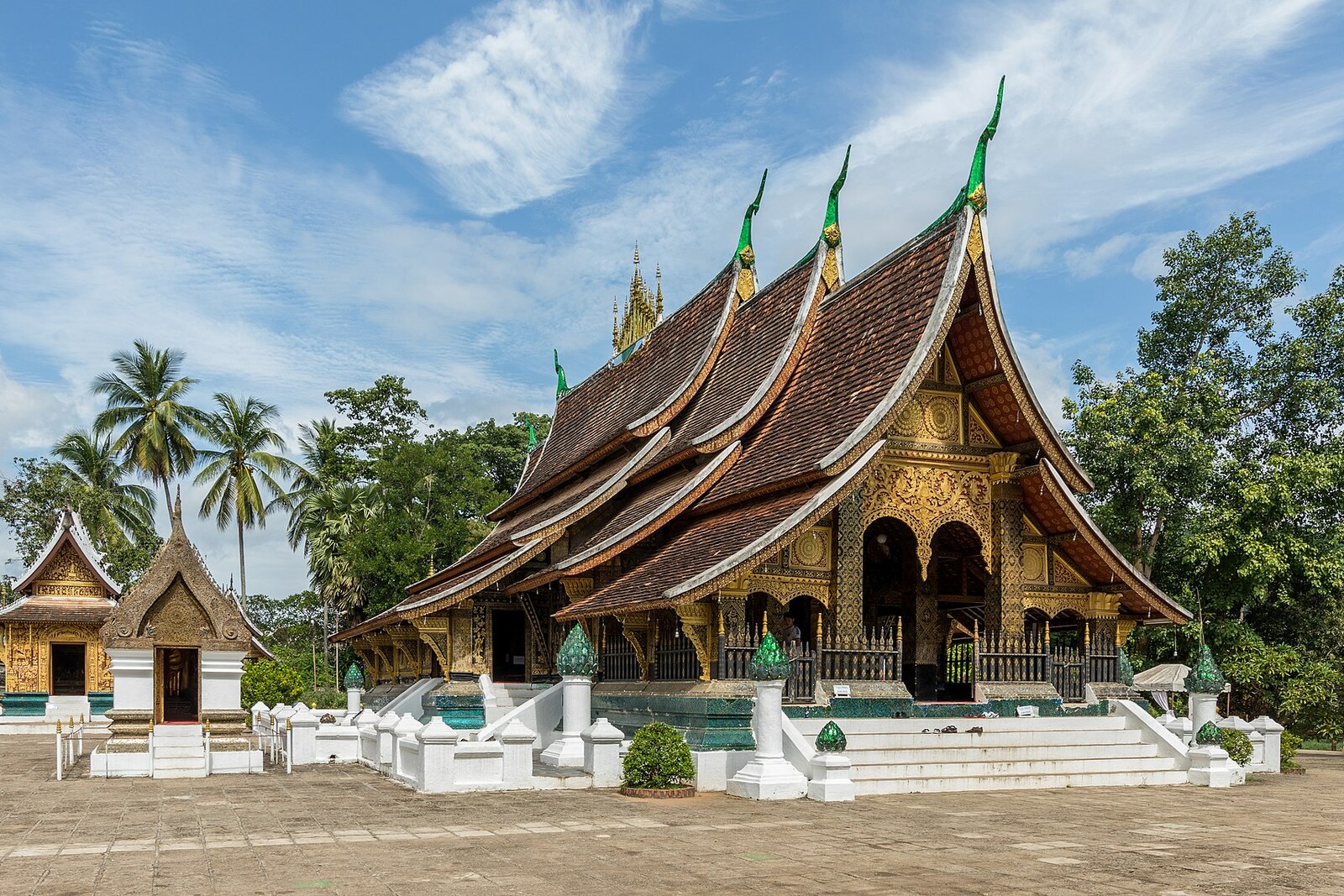
Look around first
What to notice
- Low roof tiers
- Central sim
- Glass Tree of Life
The story of the place
At the very edge of the peninsula, where low roof tiers descend toward the Mekong, stands Wat Xieng Thong, a monastery whose name recalls the city's old name. Its land was set aside from the palace holdings in the sixteenth century, and rulers and honored guests approached the complex from the river. In the main hall, monks were ordained, the most important ceremonies were held, and Lao monarchs were crowned. The later Tree of Life mosaic gleams on the rear wall, yet beneath it the old sim still remains, dating from the monastery's early years.
During the already mentioned attack by the Ho forces in eighteen eighty-seven, Kham Oum (Deo Van Tri) was heading toward Luang Prabang. He was the hereditary ruler of Muang Lai, also known by the Vietnamese name Deo Van Tri. He wanted to free his brothers, whom a Siamese punitive detachment had captured. Kham Oum believed the prisoners were being held in Luang Prabang, and he brought his warriors along with mercenaries from the Black Flags. These forces lived by looting and exactions, so the promise of spoils took the place of pay.
When the attackers entered the city, the brothers were no longer there: they had been sent to Bangkok. Kham Oum did not achieve his aim and allowed the forces accompanying him to loot homes and the palace. Yet he placed one of his headquarters in Wat Xieng Thong. Later accounts explain this choice through his past: in his youth, Kham Oum had been a Buddhist novice here.
He returned to the place where he had once obeyed monastic discipline, now at the head of armed men. The sacred complex became a military camp, but his men did not burn the central sim—the hall for monastic ordinations and the principal ceremonies. Thus the leader's personal connection with his former monastery saved the structure when many wooden buildings in Luang Prabang disappeared in the flames.
The name itself means “Monastery of the Golden City.” Xieng Thong was once the name of present-day Luang Prabang. In fifteen sixty, King Setthathirath set aside part of the palace land at the end of the peninsula for the monastery. From the Mekong side, rulers and important guests who arrived in the city by water climbed up here. Lao monarchs were later crowned in this monastery.
The raid did not free Kham Oum's brothers. Their return was later secured through negotiations by the French vice-consul Auguste Pavie. Kham Oum formed an alliance with the French, and in eighteen ninety they recognized him as the head of a federation of twelve Tai principalities. After his departure, the monastery was again used for Buddhist and royal ceremonies; monks and novices still live here.
Not all of the present decoration survived that raid. The famous glass Tree of Life on the rear wall appeared during a restoration in the nineteen sixties. The mark left by Kham Oum's decision is greater: the sixteenth-century sim itself beneath the low roof tiers.
Useful on site
Daily 08:00–17:00
Checked: date not specified. Check the official source before visiting.Treat the complex as an active monastery: remove your shoes where required, speak quietly, and do not interrupt rituals. Access to individual buildings may change.