 Guide On Map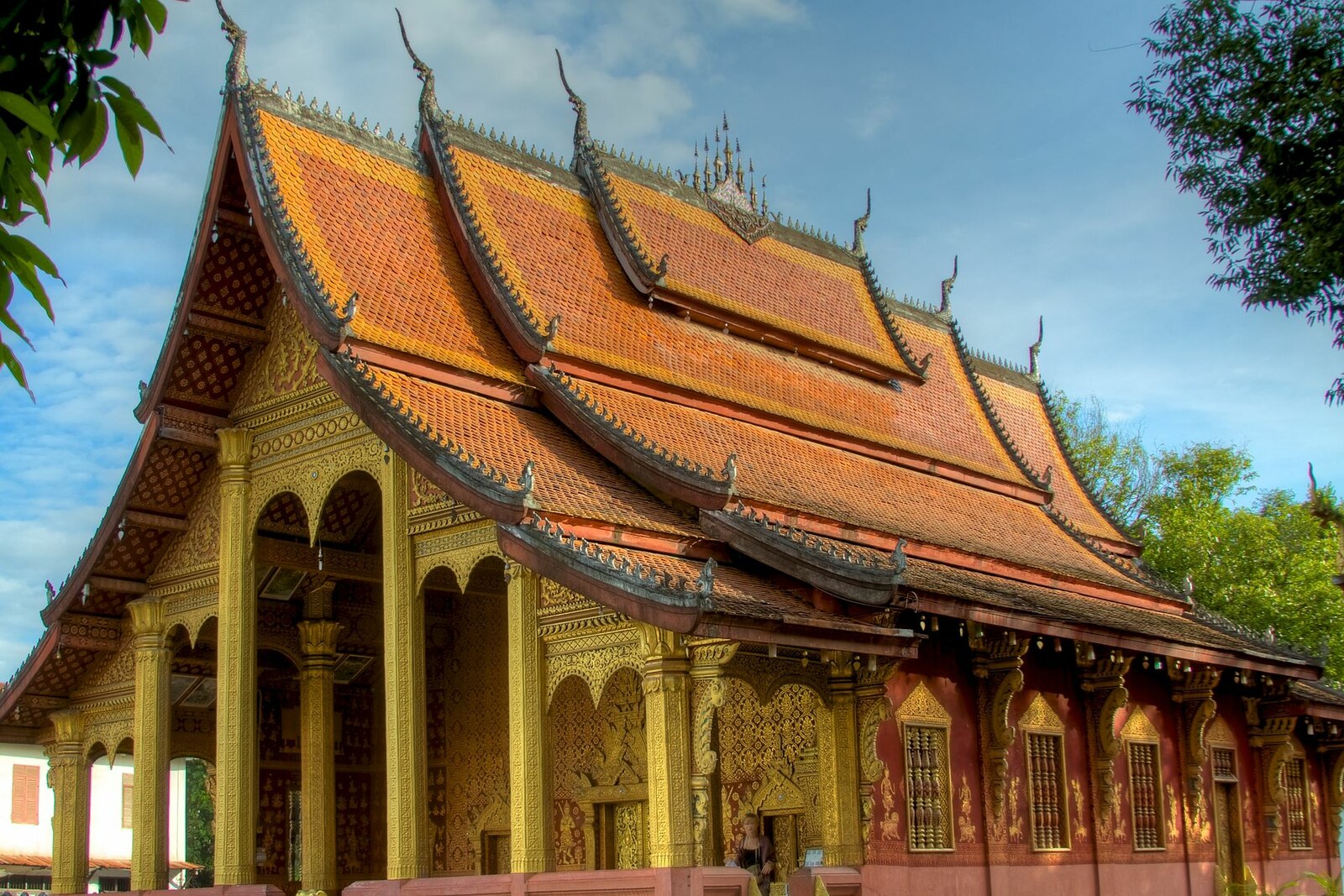
Look around first
What to notice
- Red walls of the sim
- Gold stenciled patterns
- Red-and-yellow tiled roof
- Red-and-gold funerary urn
The story of the place
Wat Sensoukharam began as Wat Sen; later, a word translated as “the abode of great peace” was added to the old name. In the middle of the last century, the monastery's main hall was made more spacious: the roof ridge was raised and side wings were added. Gold stenciled patterns cover the red walls, and red-and-yellow tiles lie above. Abbots of other monasteries in Luang Prabang later began using this alteration as a model.
The red-and-gold building in front of you is the sim, the monastery's ordination hall. Here monks gather for morning and evening readings, and here new members are admitted into the community. Its present appearance was chosen by a man who intended to spend only one year as a monk.
Khamchan Virachitta grew up in a family that made its living through trade. Even as a schoolboy, he spent holidays at this monastery: he boiled water for the abbot, cleaned the abbot's cell, and learned to read the old Lao script used to record Buddhist texts. Later Khamchan took off his monastic robes and returned to the family business. Trade was going well; it was on it that he expected to live.
In nineteen forty-one, twenty-one-year-old Khamchan came here again for ordination. He intended to observe the custom, spend a year as a monk, and return to trade. But during that year, Khamchan began studying monastic discipline and went with his mentor, the Supreme Patriarch of Laos, to meditate in forest monasteries. He gave up returning to his former life. When the abbot whom Khamchan had served as a boy died, Khamchan returned to Wat Sen, and in nineteen forty-nine he himself became head of the monastery.
The full name, “Wat Sensoukharam,” appeared under him around nineteen fifty-three. Before that, the monastery had the shorter name Wat Sen. Khamchan added “Sukharam,” translated as “the abode of great peace.” The widespread translation “Temple of One Hundred Thousand Treasures” refers above all to the old word “Sen” and does not explain the part of the name added by the abbot.
A few years later, Khamchan directed the rebuilding of the sim. In nineteen fifty-eight, craftsmen raised the roof ridge and added side wings. This created the spacious hall with red walls, gold stenciled patterns, and red-and-yellow roof tiles that stands here now. Other abbots in Luang Prabang began using this reconstruction as a model for their monasteries.
King Sisavang Vong appointed Khamchan head of the province's monastic community. When the former structure of the Lao Sangha was abolished in nineteen seventy-five, the monks of Luang Prabang again chose him as their leader—this time in the new Buddhist organization. He held this position until his death in nineteen o seven, while remaining abbot of Wat Sensoukharam.
In a separate pavilion on the monastery grounds, a red-and-gold funerary urn used in Khamchan's farewell ceremony is kept. Beside it stands the sim that he rebuilt. The one year promised to the family business became sixty-six years of monastic life here.
Useful on site
The official tourist page lists 09:00–21:00 and free admission; individual buildings may close earlier
Checked: date not specified. Check the official source before visiting.Boats may be behind the fence or unavailable for close viewing. Do not climb into them or touch the ritual decorations: they are not exhibition props.