 Guide On Map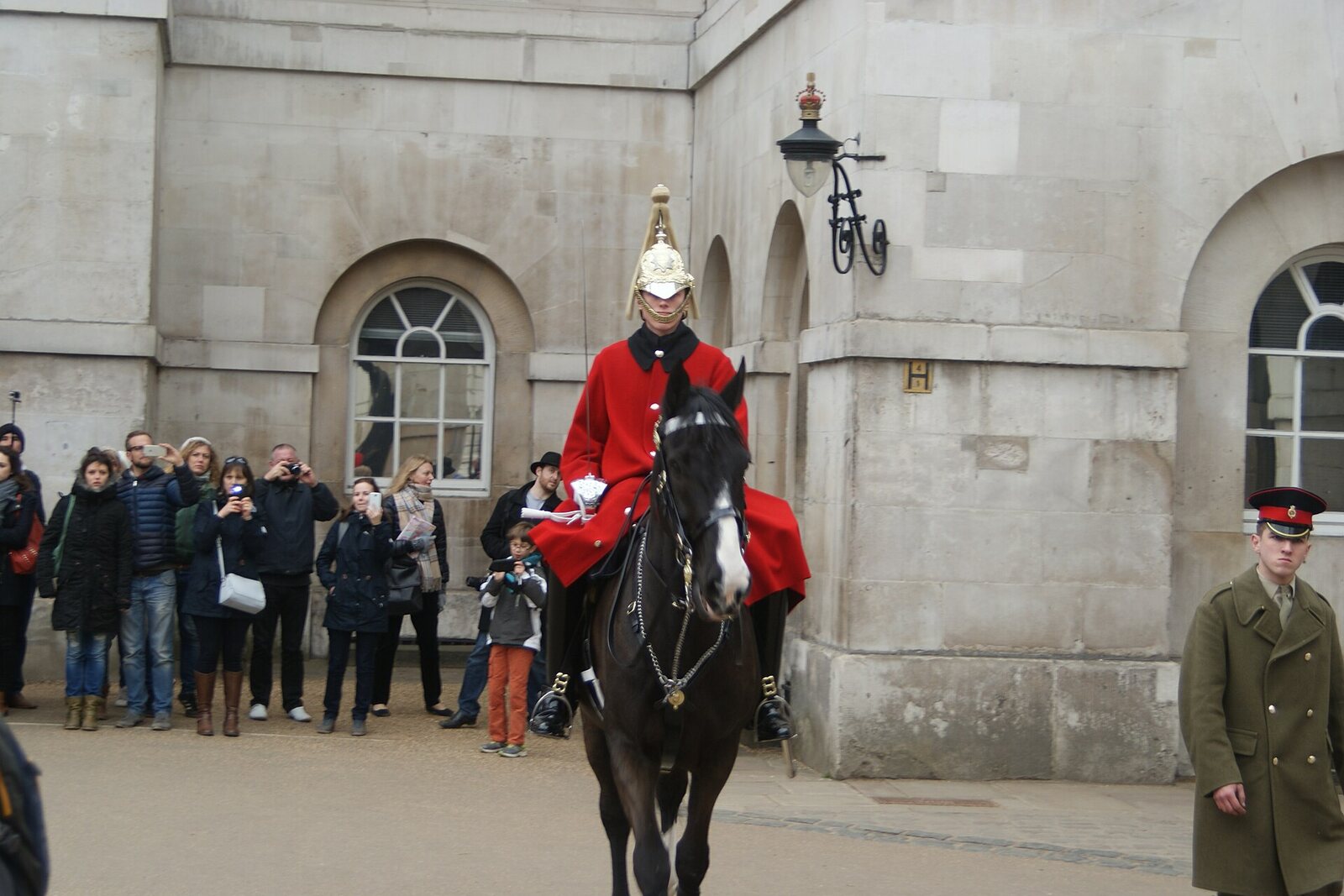
Look around first
What to notice
- Clock tower
- Through arch
- Mounted sentries
- Open parade ground
The story of the place
In eighteen ninety-four, Queen Victoria arrived at the Horse Guards building. The cavalrymen on duty were supposed to be waiting for her here, to escort her back to Buckingham Palace. By then, the Queen had survived several assassination attempts, so a properly functioning escort was part of her personal security.
According to a story preserved by the regimental museum, instead of a ready detachment, Victoria found the guards asleep, drunk, or occupied with gambling. She ordered them to be formed up every day at exactly four o'clock in the afternoon for an officer's inspection. The punishment was imposed for one hundred years.
The cavalrymen had been here long before Victoria. After the execution of Charles I, the monarchy was abolished, but in sixteen sixty his son Charles II returned to the throne. He needed a personal mounted guard, and three years later he ordered a guardhouse built for it at the edge of the former tiltyard of the Palace of Whitehall. Under Henry VIII, court riders jousted with lances on this long open ground. Now two military detachments relieving one another could form up and ride away here.
In the middle of the eighteenth century, builders replaced the first guardhouse with the present building, with its clock tower and through arch. The arch serves as the official entrance to the royal residences, so it is still guarded by mounted sentries. Both the Horse Guards building and the parade ground behind it took their names from them.
On the parade ground, the relieving detachment takes over duty from the preceding one. The ceremonial presentation of the color in honor of the monarch's official birthday also takes place here. A color is a regimental flag: when ranks broke apart on the battlefield, soldiers gathered around the familiar piece of cloth. The flag was carried along the ranks in advance so that everyone would remember it. At the ceremony here, the color still moves between the formed-up guards, and the monarch receives their salute.
In nineteen ninety-four, the one hundred years appointed by Victoria expired. Elizabeth II, then the British queen, ordered the inspection to continue as a regimental tradition. It takes place every day on the other side of the arch, in the courtyard on the Whitehall side: two riders and six foot guards form a line, an officer inspects them, and only then releases the mounted sentries from their post.
Useful on site
An outdoor point, but the parade ground is closed or restricted during rehearsals, ceremonies, and major events. Two mounted sentries usually stand at the entrance from 10:00 to 16:00; changes, inspections, and ceremony times should be checked on the day of your visit. Checked 2026-06-28.
Checked: June 28, 2026. Check the official source before visiting.Do not approach the horses or cross the formation or the cordoned-off area. During the ceremony, follow the instructions of the police and military personnel.