 Guide On Map
Westminster and Whitehall: power, ritual, and chance
From Parliament Square through Whitehall to St James's Park
Guide On Map on your phone
Open the walk like a regular app
It takes about 10 seconds to install. No app store needed.
The whole path
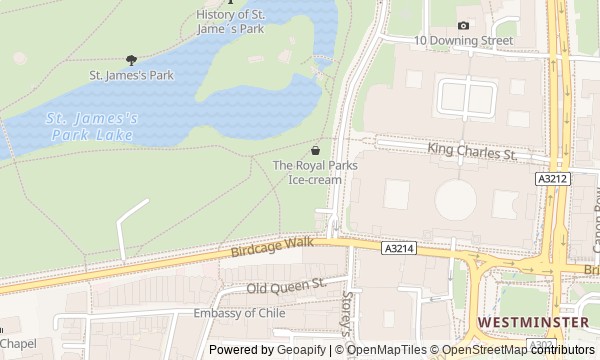
Route map
About the walk
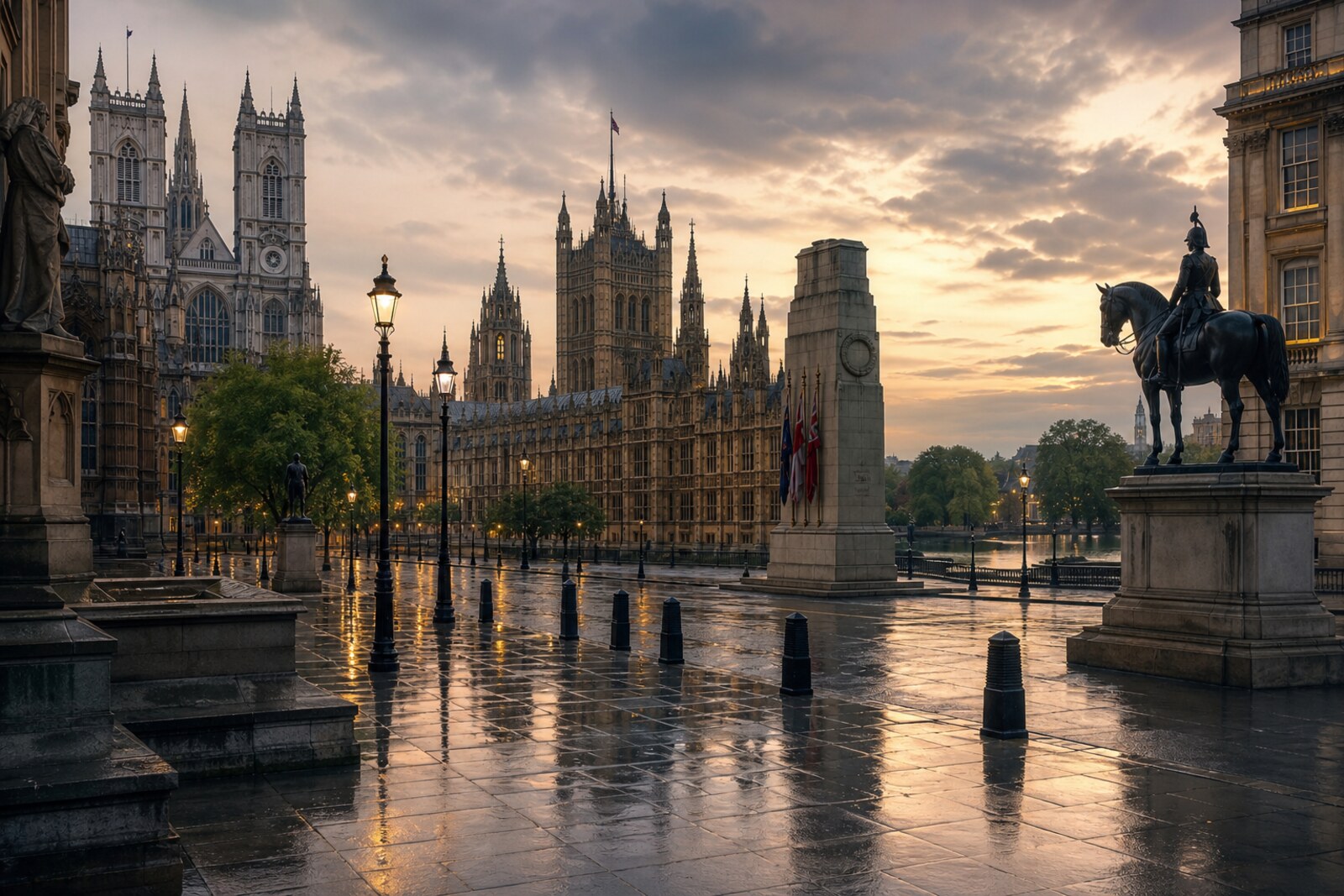
You will begin at the parliamentary gates and walk from the square to Westminster Abbey, then through Old Palace Yard and out onto Whitehall. From there, the road leads across Horse Guards Parade to the water of St James's Park. Along the way come Gothic walls, a palace façade, a guards' arch, The Cenotaph, and a bridge with blue railings.
But this route is not a parade of famous views. You will pick apart moments when order rested on error, fear, discipline, or a temporary fix. Small details will lead the way: a memorial plaque beside a traffic light, an extra shirt before stepping out to a crowd, a daily inspection long past its expiry date.
The story will be calm and exact, separating confirmed fact from later versions. By the end, you will be able to explain why Westminster and Whitehall look so ceremonial, even though their familiar rituals often began with a dangerous failure or an inconvenient decision.
Why this order
From the square, you will first head to Westminster Abbey: the parliamentary gates stand beside the church where power received religious recognition. Farther south, in Old Palace Yard, that recognized power became a target for physical destruction—the store lay beneath the House of Lords, while the scaffold stood opposite. From there, the route continues along Whitehall: the site of Palace of Whitehall and the execution develops the dispute over who has the right to rule, while The Cenotaph shows how the same street became a place of shared remembrance. The neighboring arch of Horse Guards turns state ritual into daily service. Beyond the parade ground, stone façades give way to parkland and water, and Blue Bridge closes the route with a decision paid for by an anonymous bequest.
Those who want to understand British power through particular cases and human decisions Fans of the history of coronations, parliament, and royal ceremonies Those interested in visible urban traces of vanished buildings and temporary structures
Those expecting a chronological biography of British monarchs Those for whom architectural styles matter more than decisions and their consequences Those looking for an easy walk without executions, conspiracies, and political conflict
Before you go
Think of this primarily as an outdoor route: visits inside Westminster Abbey, the Palace of Westminster, and Banqueting House should be planned separately and may require advance booking. Before setting out, check official notices about ceremonies, services, and temporary restrictions. Bring headphones, shoes comfortable for long periods of standing, and clothing for wind or rain: the open squares offer almost no shelter. On weekdays, service traffic is heavier around Whitehall, and during protests or state events, familiar passages may be closed.
When to go
2–3 hours for the whole route, including listening and looking at exterior details. Separate visits inside Westminster Abbey, the Palace of Westminster, or Banqueting House are not included in this time.
Backup plan
If the square or the parliamentary perimeter is partly closed, do not try to pass through cordons: listen to the relevant stop from the nearest accessible side, then continue along open streets toward Whitehall. Even if Banqueting House is closed, you can still read it from outside through its façade and the site of the royal execution. If access to the parade ground is restricted by a ceremony or security, observe it from an authorized point and enter the park by the detour indicated by staff. In heavy rain, it is easy to split the route after Whitehall, leaving Horse Guards Parade and Blue Bridge for another walk.
Route conditions
Surface. Paved — 2.1 km; unpaved — 115 m (data covers 82% of the route)
Stairs. Flights: 5, 34 m in total
Access. Wheelchair — no; stroller — limited (stairs)
Facilities. Toilets — 2; drinking water — 1
Elevation. Ascent — 20 m; descent — 30 m
OpenStreetMap extract of June 18, 2026: database data, not a check on the ground. Data © OpenStreetMap contributors, ODbL licence
Walk plan
Open in maps ↗- 1
Parliament Square
Here, the failure of the first traffic signal sets the theme of decisions tested quite literally at Parliament’s gates. - 2
Westminster Abbey
The coronation will show how public consent became a threat because of a mistake by the armed guard. - 3
Old Palace Yard
This stop explains how the plot was uncovered and why its trace is still sought before the opening of Parliament. - 4
Whitehall
Two commemorative gestures on the same street will juxtapose the execution of a sovereign with national remembrance. - 5
Horse Guards Parade
Here, a disciplinary punishment will outlive its allotted term and become a daily ceremony. - 6
Blue Bridge
The finale will explain why the present crossing owes its appearance to a fire, an argument, and an anonymous will.
Route features
Everything you need stays in the browser
Progress, saves and your trip plan are stored on this device.
Add Guide On Map to your home screen so the walk opens outside the browser.
How we handle sources, maps and corrections: our editorial standards