 Guide On Map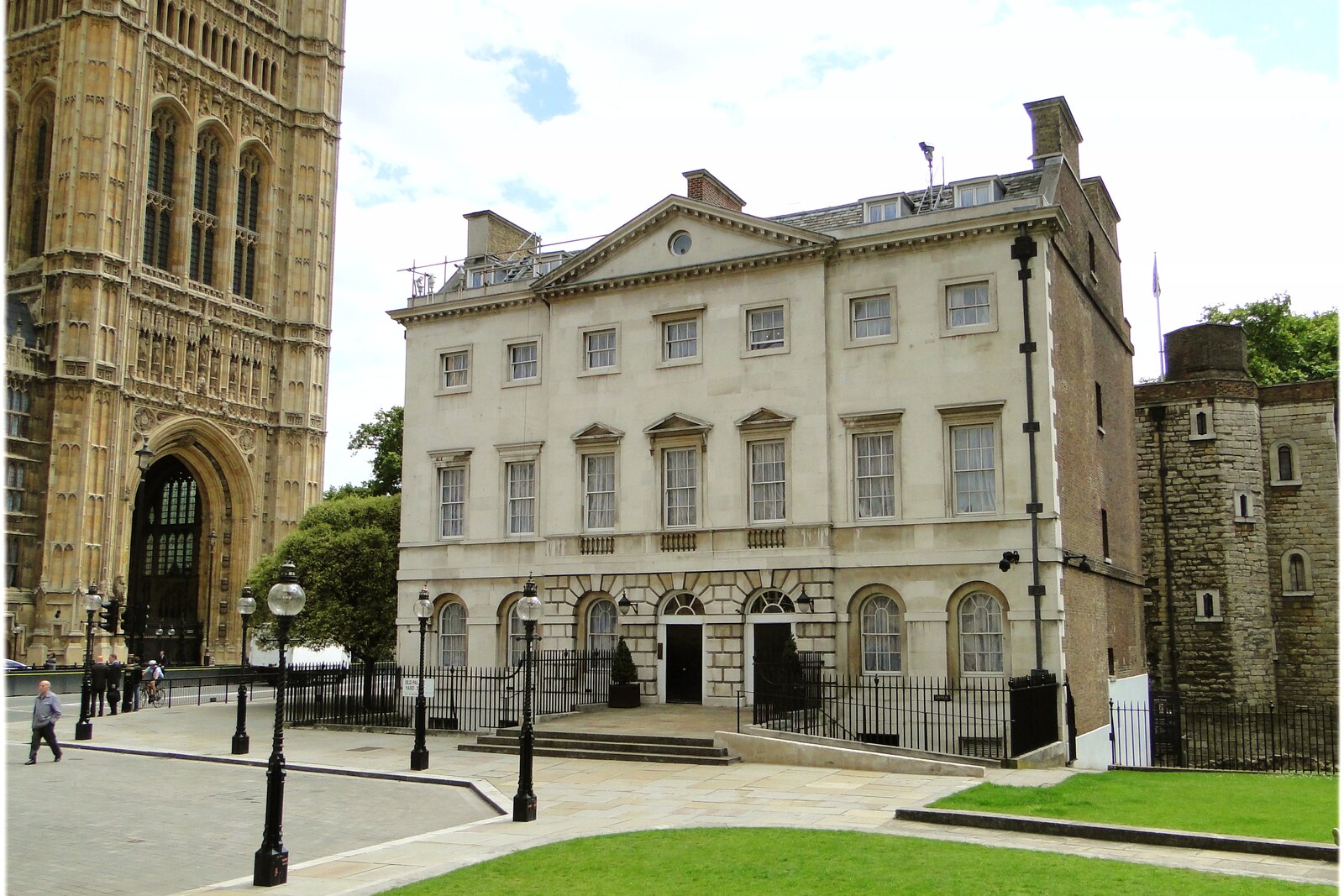
Look around first
What to notice
- Brass plaque by the House of Lords
- Facade of the House of Lords
- Open space of the yard
The story of the place
The present open space once served as the southern yard of the medieval Palace of Westminster: it linked the royal apartments with Westminster Abbey, and a row of houses stretched across it. New Palace Yard took shape nearby later, and the old name remained with this site. Dense palace development stood here for a long time, and now a brass plaque beside the House of Lords marks its location.
On the night of November fourth to fifth, sixteen oh five, Sir Thomas Knyvet, a royal official, was ordered to search the rooms beneath the House of Lords once more. Near a vaulted storeroom, he met a man who called himself John Johnson. During the first search, he had been taken for a servant guarding firewood. Now thirty-six barrels of gunpowder were found beneath the firewood, and he had fuses and materials for starting a fire.
Guy Fawkes, a professional soldier who had earned his living fighting in the Netherlands on the side of Catholic Spain, called himself John Johnson. Robert Catesby, the organizer of the plot, chose him for his experience with gunpowder and assigned him to light the fuse during the State Opening of Parliament. In the chamber above the storeroom, King James I, the lords, and the bishops were due to gather. After the explosion, the conspirators planned to abduct the king’s nine-year-old daughter, Princess Elizabeth, proclaim her queen, and rule in her name.
Under the previous queen, English Catholics were fined for refusing to attend Anglican services, and Catholic priests were forbidden to remain in the country. James was expected to ease the restrictions, but he kept the old ones. Catesby decided to kill the king and gathered a small group of fellow believers ready to die with him.
It was the layout of Old Palace Yard that made it possible to get close to the target. It was the southern yard of the medieval Palace of Westminster, linking the royal apartments with Westminster Abbey. To the north lay the later New Palace Yard; this is how the word “Old” became attached to this square. A row of houses ran through its middle. The conspirator Thomas Percy rented a house here, then leased the vaulted storeroom beneath the House of Lords. The room is often called a cellar, although in the development of that time it stood at ground level.
On October twenty-sixth, one of the lords invited to the opening received an anonymous letter advising him to stay away from Parliament. He passed the letter to the Privy Council. The conspirators learned of this but decided to continue: they relied on no one in Westminster knowing the soldier Fawkes. That decision led Knyvet to the second search.
After his arrest, Fawkes at first refused to name his accomplices. James gave written permission to begin with lighter torture and proceed to harsher methods. At an early interrogation, Fawkes signed firmly; the signature beneath his later confession is barely legible. Catesby and Percy fled London and, a few days later, were shot while attempting to resist. Eight surviving conspirators were tried in Westminster Hall and sentenced to death.
On January thirty-first, sixteen oh six, Fawkes and three others were led to the scaffold in Old Palace Yard—opposite the building they had intended to blow up. A contemporary recorded that Fawkes, exhausted by torture and illness, climbed the steps with the executioner’s help high enough to break his neck when he fell. He died before the later parts of the execution; his body was nevertheless quartered, and his remains were displayed in London.
The row of houses in the middle of the yard, the former House of Lords, and its storeroom have disappeared. During the rebuilding of eighteen twenty-two, the architect John Soane dismantled the old rooms. Beside the present House of Lords, a brass plaque marks the place where the gunpowder was discovered. Before every State Opening of Parliament, the Yeomen of the Guard still carry out a ceremonial search of the cellars.
Useful on site
Outdoor point beside the parliamentary complex. Routes, stopping places, and viewpoints may change because of sittings, tours, security, and events. Entry to Parliament is possible only under the current rules for tours, galleries, or events. Checked 2026-06-28.
Checked: June 28, 2026. Check the official source before visiting.View the monument from an accessible sidewalk, and do not linger by service entrances. The parliamentary perimeter may change without warning.