 Guide On Map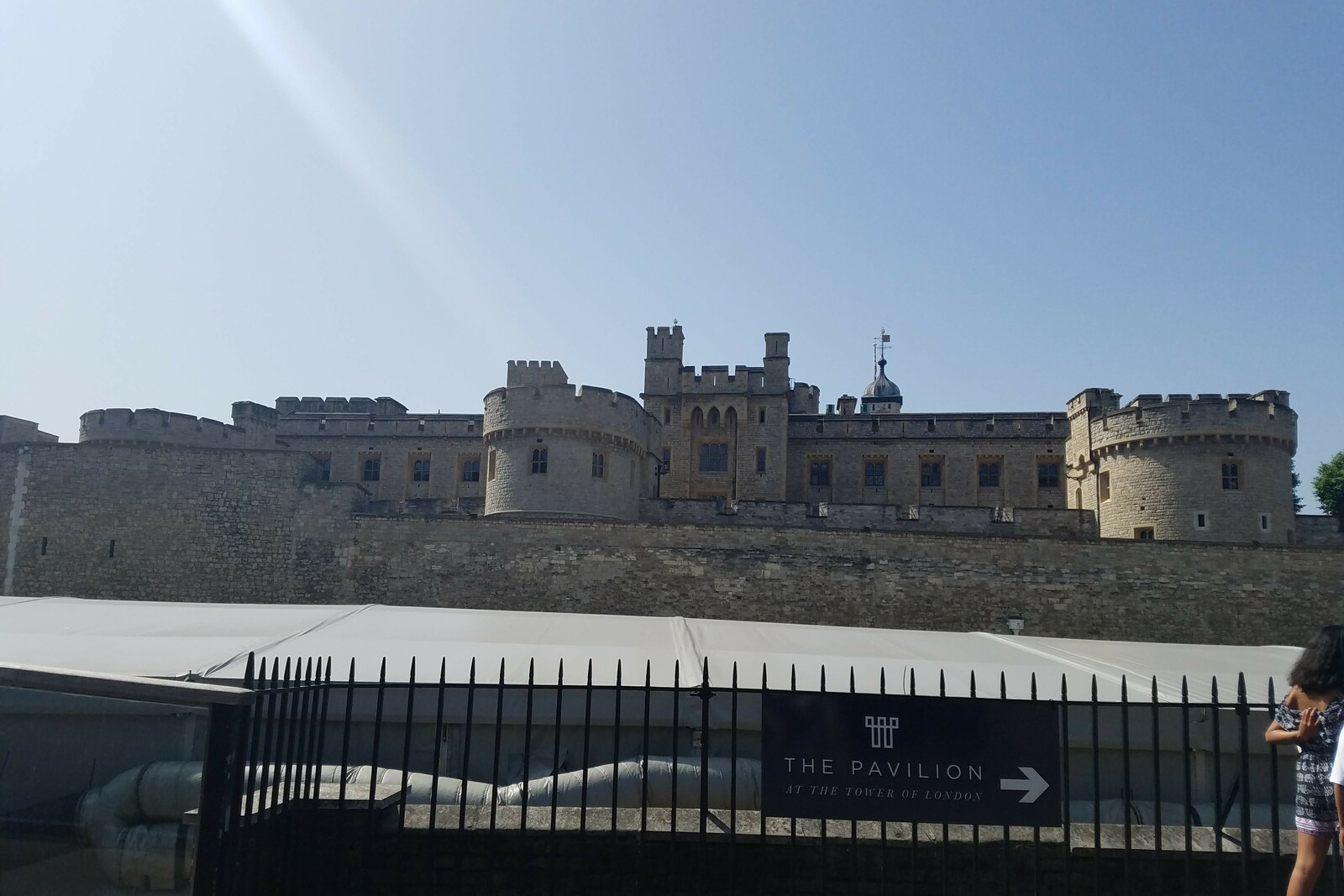
Look around first
What to notice
- White Tower
- Four ornate domes
- Inner and outer fortress walls
- Chapel Royal of St Peter ad Vincula
The story of the place
Tower of London is the name of the entire fortress. The White Tower at its center was its stone core, while farther south stood the royal palace, with ceremonial halls, private chambers, and a garden. English monarchs lived here for about five centuries. The fortress walls did not protect an empty garrison: behind them were the royal family, the court, servants, and advisers.
In the spring of fifteen thirty-three, King Henry VIII was preparing these rooms for Anne Boleyn, his second wife. Henry was seeking a legitimate son and heir. The pope refused to annul his previous marriage, and in order to marry Anne, the king began taking the English Church out from under papal jurisdiction. Anne was already six months pregnant. Her public coronation was meant to secure her position and the future child's legitimate rights.
Henry ordered a great reception room, a dining hall, and a separate garden rebuilt for her. Four ornate domes were installed above the White Tower. Anne arrived on the River Thames, accompanied by fifty decorated boats and barges. The king himself met her at the gate. She spent several days in the new rooms, then left the Tower of London through London for Westminster Abbey and received the crown.
A daughter, Elizabeth I, was born. Anne had no son; her next two pregnancies ended unsuccessfully. Henry turned his attention to her lady-in-waiting, Jane Seymour. At the same time, Anne quarreled with her former ally Thomas Cromwell, the king's chief minister: they disputed who should receive the money from the monasteries being closed. Cromwell wanted to direct it to the treasury, while Anne wanted it used for charity and education.
In May of fifteen thirty-six, Cromwell assembled a case against her from court rumors and testimony. The queen was accused of adultery, incest with her brother, and conspiring against Henry's life. Anne denied everything. A court whose members included her opponents found her guilty.
She returned to the Tower of London by river. Anne asked the constable whether she would be sent to the dungeon. He replied that she would be placed in the rooms where she had lived before her coronation. The palace made it possible to hold a noble prisoner in fitting surroundings while completely cutting that prisoner off from the city. The court was assembled here as well, and the royal order was awaited here.
The execution of an English queen was an event without precedent. Henry and Cromwell arranged it inside the fortress, on Tower Green, before a limited circle of courtiers and servants. On May nineteenth, Anne was beheaded by a French swordsman specially brought in for the purpose. Her body was buried in the Chapel Royal of St Peter ad Vincula here. Eleven days later, Henry married Jane Seymour; the following year, she bore him a son, Edward VI.
The royal rooms south of the White Tower have been demolished. Of the work carried out for Anne Boleyn's coronation, four ornate domes remain above the White Tower's walls. Not a single room survives of those where she first awaited the crown and then the sentence.
Useful on site
Ticketed site; HRP publishes daily hours and closure warnings, so check the page before entering.
Checked: June 26, 2026. Check the official source before visiting.From outside, the scale of the fortress is easy to grasp; the Crown Jewels, chapels, and prisoners' inscriptions are accessible only with a separate visit to the complex.