 Guide On Map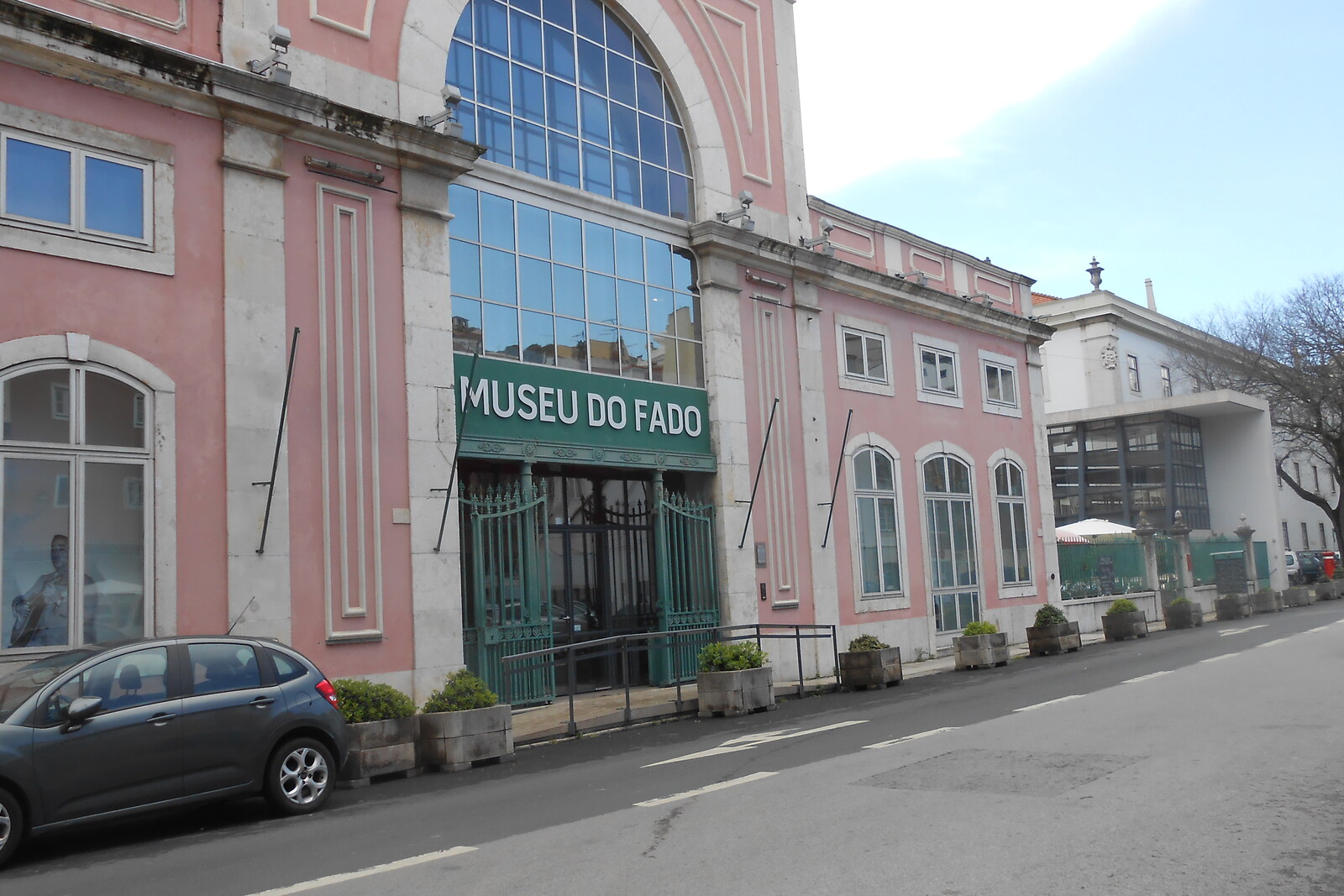
Look around first
What to notice
- Central glazed arch
- Buildings of the former pumping station
- Portuguese guitars
- Contracts and professional identification cards
The story of the place
Fado was passed on among singers, guitarists, songwriters, and the owners of fado houses. At the Fado Museum, alongside Portuguese guitars, there are sheet music, records, stage costumes, contracts, and professional identification cards. The materials are kept in the documentation center, while singing, Portuguese guitar, and guitar accompaniment are taught in the auditorium and school. The central glazed arch marks the entrance to the rooms where the craft can be seen in objects and continued in classes.
Behind the facade with its central glazed arch once stood steam pumps. In eighteen sixty-eight, Companhia das Águas de Lisboa built a station here to raise water from Alfama's springs to Verónica Reservoir. After the more powerful Barbadinhos station began operating, this one was kept in reserve, then closed in the nineteen sixties. In the nineteen nineties, the municipality commissioned the architects João and José Daniel Santa-Rita to adapt the buildings for a new institution. On September twenty-fifth, nineteen ninety-eight, the House of Fado and Portuguese Guitar—the present-day Fado Museum—opened here.
The collection still had to be assembled, and the main difficulty was the mistrust of the musicians themselves. The singer Carlos do Carmo, who worked to gain recognition for fado and to involve performers in preserving it, became one of the museum's consultants from its earliest stages. For him, it was a craft that earned his living: after his father's death, Carlos managed Faia, the family fado house, while also performing as a singer.
He later recalled that, when the museum was being created, many of his colleagues viewed scholars warily. Fado was passed on among singers, guitarists, songwriters, and the owners of venues; researchers, meanwhile, came with their own catalogs and terms. Carlos do Carmo and the other consultants agreed to work with them. After that, hundreds of professionals and amateurs donated their personal archives here: instruments, records, sheet music, stage costumes, contracts, licenses, and professional identification cards. Among the dressier items were papers on which a performer's everyday work had once depended.
This collaboration led to the next task. Museum staff, university researchers, singers, guitarists, and instrument makers prepared an application to have fado included on UNESCO's list of intangible heritage. Carlos do Carmo became one of the project's representatives. Lisbon submitted the application through the museum in two thousand ten; in two thousand eleven, fado was added to the list, and the plan prepared here was recognized as a model for other applicants.
The plan required training to continue and the crafts without which the song cannot exist to be preserved. That is why the former pumping station now contains a permanent exhibition, a documentation center, an auditorium, and a school. Singing, Portuguese guitar, and guitar accompaniment are taught here; nearby, makers demonstrate how the instrument itself is made. In the museum cabinets lie the contracts and identification cards donated by musicians, while in the neighboring rooms study those to whom they passed on their craft.
Useful on site
Open Tuesday–Sunday from 10:00 to 18:00, last entry at 17:30. Closed January 1, May 1, December 24, 25 and 31. Checked 2026-06-29.
Checked: June 29, 2026. Check the official source before visiting.Allow extra time for a substantial visit inside. If you skip the museum, look at the building and the nearby space that connects fado with working life by the water.