 Guide On Map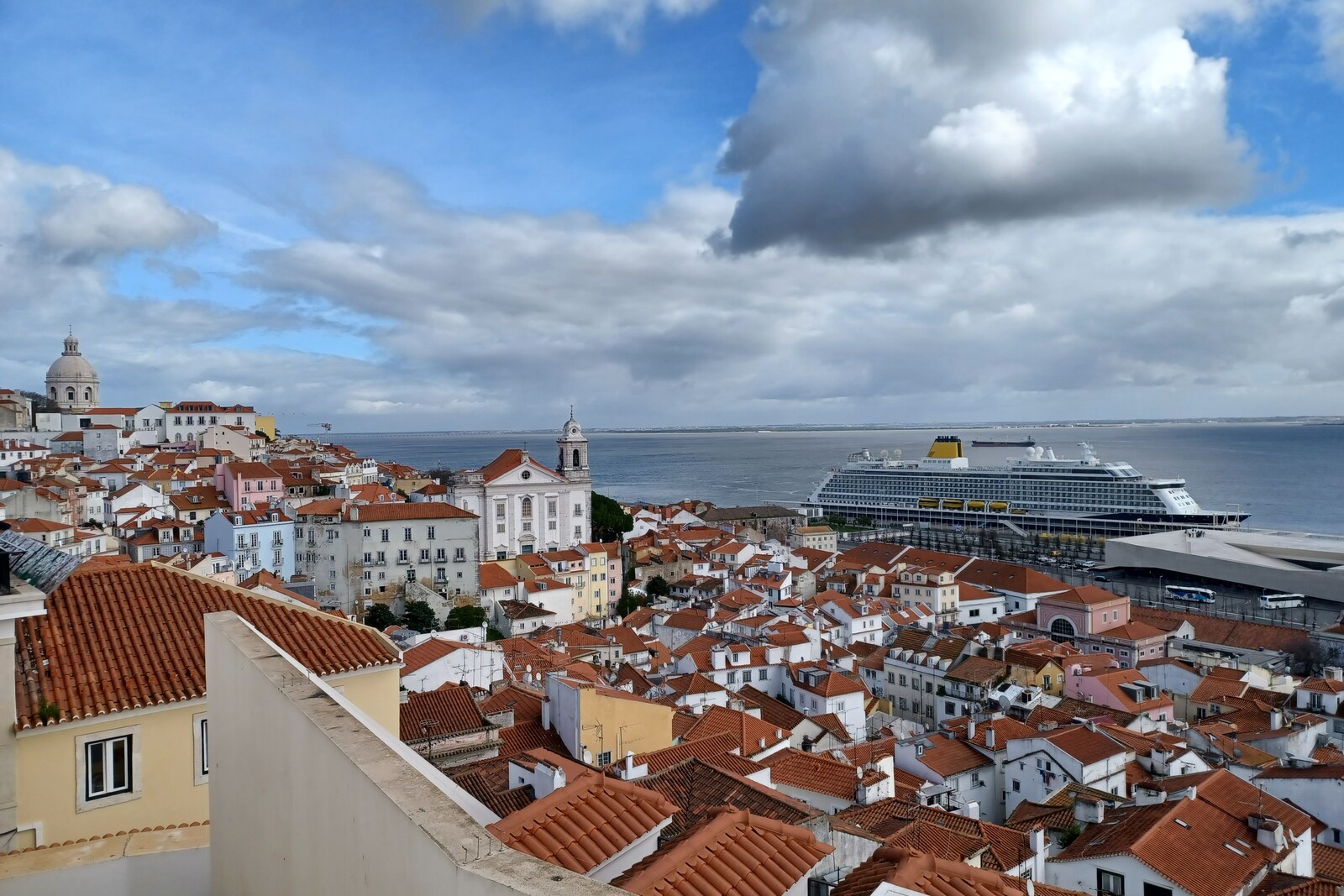
Look around first
What to notice
- The pergola above the terrace
- The church's white façade
- The bronze bust of Júlio de Castilho
- Tombstones inside the church
The story of the place
The pergola shelters a small garden beside the white façade of an old church; at its edge stands a bronze bust of Júlio de Castilho. He collected documents about Lisbon and published seven volumes on its eastern districts, so the garden was given his name. Beyond the garden wall is the national headquarters of the Portuguese knights of the Order of Malta: commanders served here, and ten of their tombstones remain in the church. The order helped the sick and pilgrims, but its brothers also undertook military duty.
The terrace with its pergola occupies a former churchyard and an old cloister—a walled courtyard with galleries. The church stands on the line of the ancient wall, by Portas do Sol. Before the garden appeared, this edge of the hill belonged to the Knights Hospitaller.
After the already recounted conquest of Lisbon, Afonso Henriques needed to hold the eastern approach to the city. Church tradition places the founding of the fortress church here in his reign. It is reliably known that by the year twelve twenty, this was the center of the city commandery of the Knights Hospitaller, later called the Order of Malta. The church was originally dedicated to Saint Blaise.
The brothers of the order took religious vows, helped the sick and pilgrims, and fought when necessary. Their upkeep came from income from the commandery's houses and lands; in the early thirteenth century, the Hospitallers owned an especially large number of plots in Lisbon and its surroundings. The choice of site suited their military duty: the fortress church projected above the eastern suburbs, beside the gate and the wall. Commanders served here and chose their graves here as well. Ten tombstones remain inside the present church, although the white building had to be restored after the earthquake of seventeen fifty-five.
In eighteen thirty-four, the Portuguese government abolished the religious orders and nationalized their property. The Hospitallers lost both the commanderies' income and this church. The Portuguese branch broke up into individual knights.
António de Carvalho e Melo, 6th Marquess of Pombal, and the order's bailiff—a senior knight seeking to establish a permanent Portuguese assembly—decided to restore its legal existence. He was a courtier and a peer of the realm, so he could appeal directly to the Crown. On May thirty-first, eighteen ninety-nine, Carlos I of Portugal approved the assembly's charter. The Marquess became its first chairman and led it until his death in nineteen eleven. He did not manage to regain the church. That happened only in nineteen fifty-eight, when the church was again handed over to the Portuguese knights for worship and their national headquarters was established here.
The name of the viewpoint came from the church's later dedication to Saint Lucy. She was a Christian martyr from Syracuse in Sicily, executed in the early fourth century. Stories of her eyes being torn out belong to legend; in church tradition, Lucy became the patron saint of sight. The church's full name retains both saints—Lucy and Blaise.
On July twenty-fifth, nineteen twenty-nine, a municipal commission installed a bronze bust of Júlio de Castilho in the former cloister. This historian collected documents about Lisbon and published seven volumes on its eastern districts. The bust was made by his nephew, Costa Mota, and the garden was named Jardim Júlio de Castilho. Beyond the garden wall still stands the church that the Order of Malta lost for one hundred twenty-four years and then regained.
Useful on site
Open around the clock, free entry; source checked 2026-06-29.
Checked: June 29, 2026. Check the official source before visiting.View the panels as twentieth-century works, not as reports from the scene; compare their orderly scenes with the uneven, living city around them.