 Guide On Map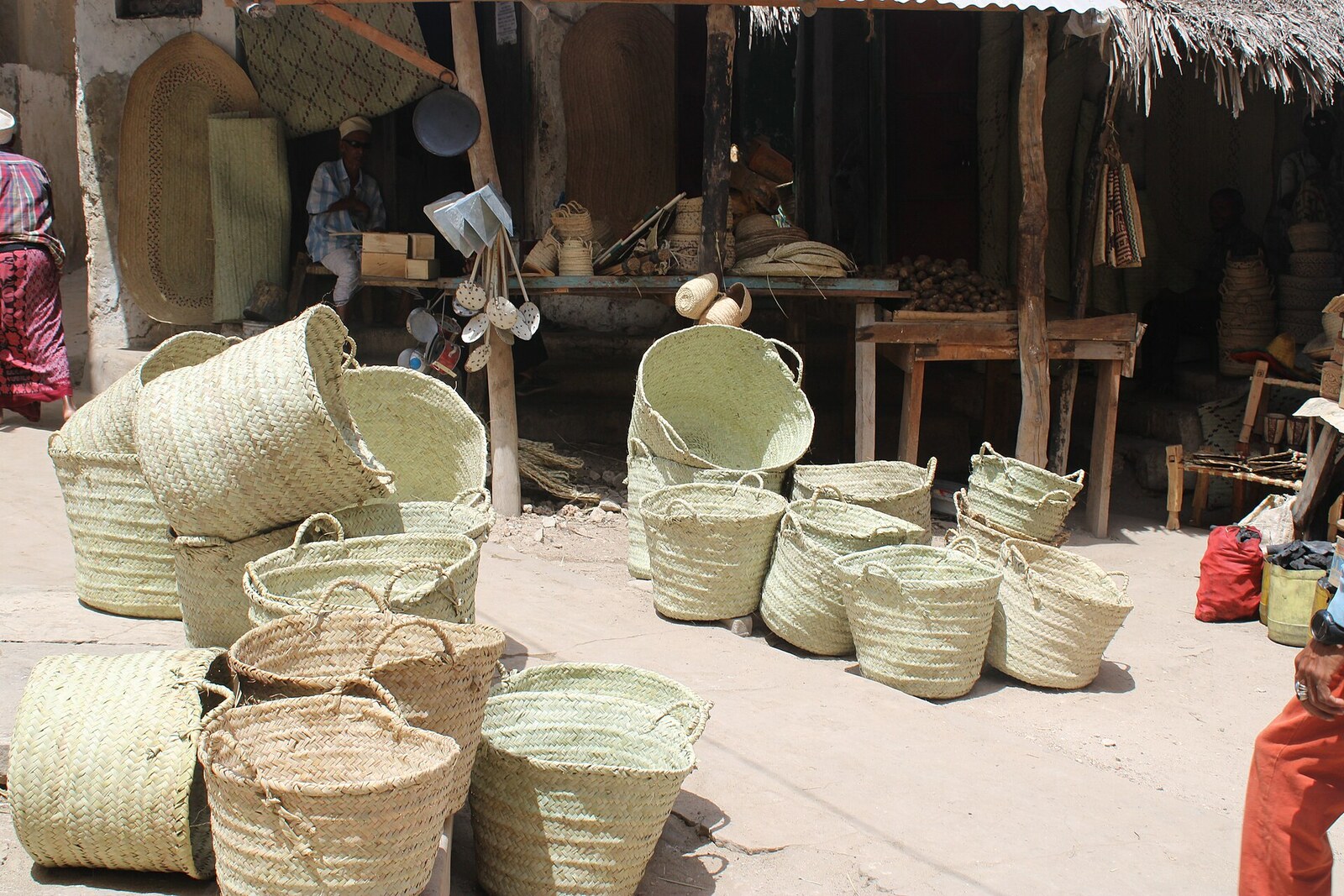
Look around first
What to notice
- The covered market building
- Market stalls
- Mkunguni Square
- Side passageways
The story of the place
Trade here is sheltered in a covered building with stalls, while side passageways of the old town spread out nearby. After the expansion, there are more than two hundred places for sellers inside, although the premises previously had room for fewer than one hundred stalls. People still come here for vegetables, fruit, fish, meat, and household utensils; the market maintains the flow between the harbor and the town's main streets. Neighboring Mkunguni Square now has a different life: the daily stalls have moved under cover, and the square remains for gatherings and celebrations.
Lamu Central Market has an exact date of establishment at this particular site: nineteen eighty-six. Before that, traders worked on Mkunguni Square in front of Lamu Fort. In the nineteen sixties and seventies, an open-air market was held there: sellers laid out their goods in the square, while buyers came to them from the jetty, from the stone-built quarters to the north, and from poorer neighborhoods south of the fort.
The market inherited this location from the former shoreline. Mkunguni Square originally served as a landing place for boats. The residents then reclaimed a strip of land from the sea, and the former jetty found itself inside the town. The square retained its connection with the harbor, but streets on land now passed through it. For a seller, that meant the essential thing: this was where people who needed vegetables, fruit, fish, meat, and household utensils converged.
In the early nineteen seventies, the conservation architect Usam Ghaidan led a survey of Lamu Old Town. His team went from house to house, measuring buildings and recording courtyards, passageways, and public spaces. Ghaidan sought an arrangement under which residents would continue to use the old town and new construction would not destroy its layout. In nineteen seventy-six, he published the first detailed study of Lamu; the work became the basis for the town's subsequent conservation plan.
A specific problem had to be solved with the market. Trade supported the sellers, but it occupied the main open square. Moving the stalls to the outskirts would have cut them off from the familiar flow of customers. So, in nineteen eighty-six, a separate market was built for the traders beside Mkunguni Square, and the stalls were moved here. The square was cleared and improved; residents gained a place for gatherings and celebrations, while the sellers remained by the jetty and the town's main streets.
The market building has since been rebuilt. After an expansion completed in July two thousand twenty-two, more than two hundred traders returned here; previously, the premises had room for fewer than one hundred stalls. Mkunguni Square still lies nearby, named after the mkungu tree—an Indian almond. There are no longer daily market stalls in the square itself: their place is now inside Lamu Central Market.
Useful on site
Official visitor hours have not been published. The route is planned for the morning, when the chances of finding the stalls open are higher.
Checked: date not specified. Check the official source before visiting.Do not linger in front of the stalls unnecessarily or obstruct unloading; ask permission first for a close-up of goods or a seller.