 Guide On Map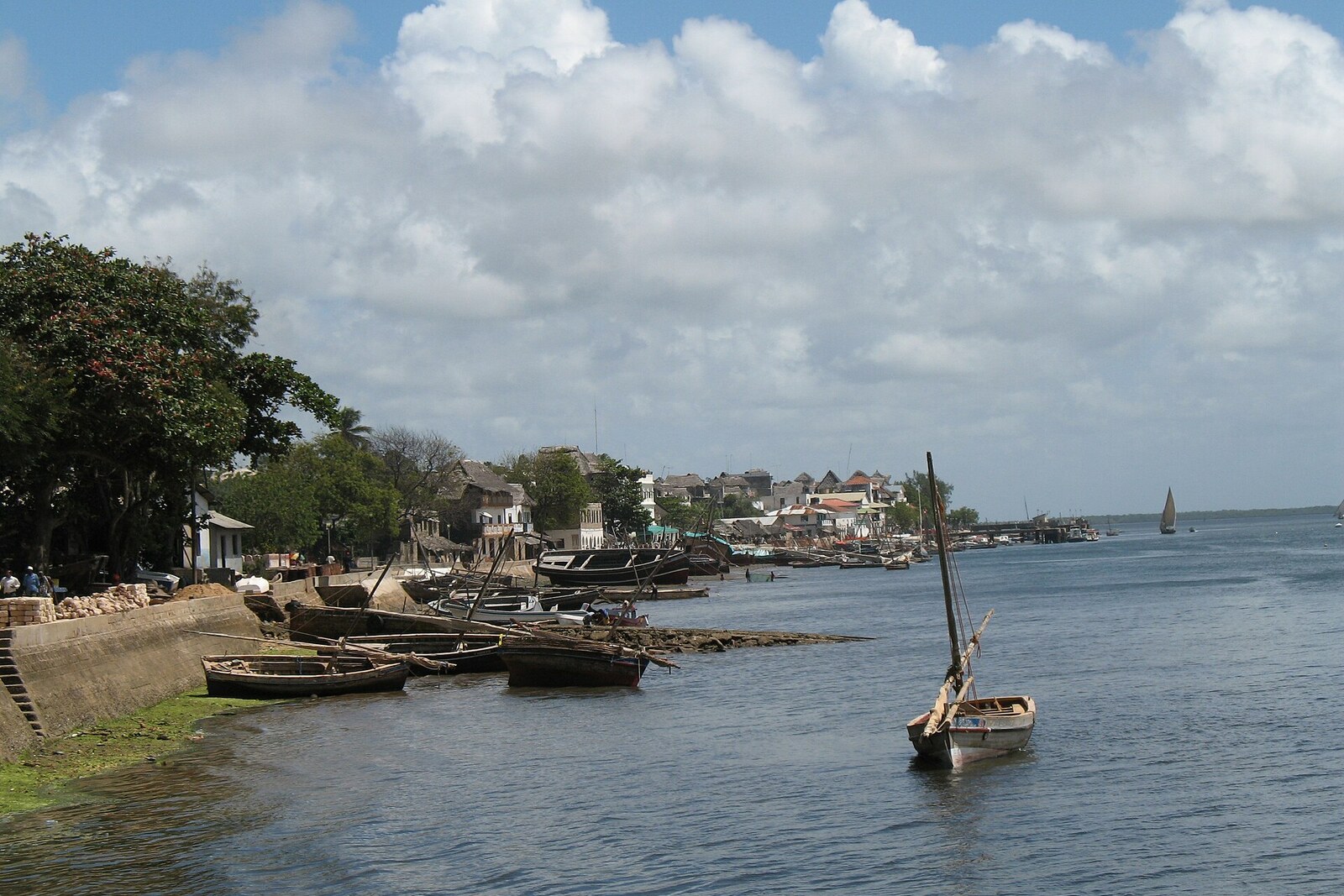
Look around first
What to notice
- Concrete jetty
- Passenger boats
- Dhow hulls
- Square in front of the fort
The story of the place
The Main Jetty serves as Lamu's formal entrance out of necessity. The airport is on neighboring Manda Island, and the road ends on the mainland, at Mokowe, so passengers and cargo reach the old town by boat. The jetty was placed on the sheltered side of the island: Manda Island shields the harbor from the open ocean.
In September eighteen seventy-three, an empty dhow was brought here, nearly bringing the governor of Lamu into conflict with British sailors. The vessel was sailing from Kilwa to the Somali town of Brava. After being damaged at sea, its captain brought it into Shela harbor, at the entrance to Lamu Channel—allegedly for repairs. On board were two hundred seventeen enslaved people.
The governor of Lamu, an official of the Sultan of Zanzibar, detained both them and the vessel. The governor's name is not given in British correspondence, but his decision was recorded in detail: the people were to be put ashore, the dhow taken to Lamu, and further instructions requested from the sultan. Only a few months earlier, Barghash bin Said had signed a treaty prohibiting the transport of enslaved people by sea. It now had to be shown that the ban also applied in ports governed by his deputies.
The sultan's reply was still on its way when the boats of the British ship HMS Daphne entered Lamu. They were commanded by Lieutenant Marcus McCausland, who was hunting for slave-trading vessels. He decided that the governor intended to claim the captives for himself and demanded that he hand over the dhow and the people. The governor insisted that he had detained the vessel himself and was obliged to await the sultan's order. The interpreter did not relay all of the governor's objections to the British. With armed people gathered around, the dispute could have turned into a clash, so the governor yielded the dhow and fifty captives. HMS Daphne took them to Aden; the rest were to be sent to Zanzibar as free people.
Later, the British consul John Kirk reviewed the case using testimony collected in Lamu. It emerged that McCausland had been mistaken: the dhow had entered the harbor six days before the British boats appeared, and the governor had indeed been the first to detain the vessel and report to the sultan. Kirk called the act a precedent: after that, slave-trading captains could no longer expect a port of the Sultan of Zanzibar to give them shelter.
There was no modern concrete jetty then. The shoreline lay about thirty meters closer to the fort, and the present square between the fort and the jetty was used as a landing place. It was directly in front of the fort that the empty dhow was hauled ashore, while two hundred seventeen people waited to see whose captives they would be declared—and whether they would be recognized as free. Later, residents reclaimed a strip of land from the harbor, and after the First World War they built a seawall. Boats now dock farther east, and arrivals walk to town across the dry square, beneath which the old shoreline remains.
Useful on site
An active public jetty; there is no separate tourist arrangement. Visit during daylight hours.
Checked: date not specified. Check the official source before visiting.Stay clear of mooring operations and cargo handling; photograph people only with their consent.