 Guide On Map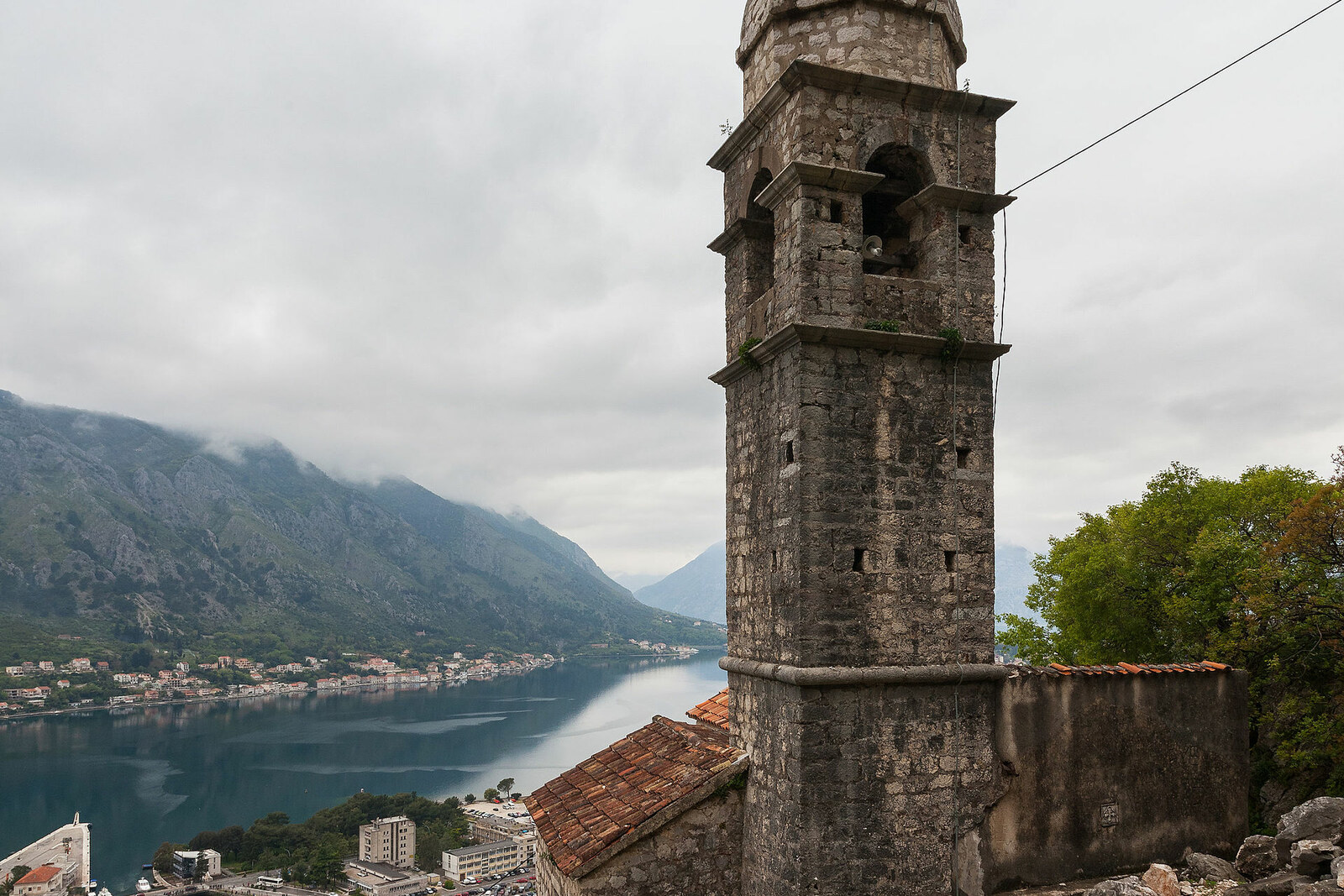
Look around first
What to notice
- Stone church
- Fortress staircase
- Roofs of Kotor below
- Bay beyond the city
The story of the place
The stone church stands on the ascent to the upper fortifications, above the roofs of Kotor and the bay. In an old city record, it bears the name Our Lady of Rest because the chapel offered a respite on the long road upward. After one of the plague outbreaks, residents made it a place of vows and began calling it Our Lady of Health. Here they brought a promise during illness and a gift after recovery.
On November twenty-first, eighteen fifty-five, city officials and clergy climbed to this church for an icon of the Virgin Mary. They took it out of the chapel, carried it down the fortress staircase, and bore it through all of Kotor to St. Tryphon's Cathedral. The procession began after the cholera epidemic had already been recognized as over.
Over several months, two hundred twenty-one people fell ill in the city, and sixty-six died. Those who agreed to enter infected houses constantly had to care for them. Lazar Kardija earned his living as an assistant sacristan at an Orthodox church, looking after church vessels. During the epidemic, he left his usual work for the dying: he kept watch beside them, dressed the bodies after death, laid them in coffins, carried them to the mortuary, and helped bury them. The parish priest Girolamo Forti made his way to the sick in the mountain village of Špiljari above Kotor. After the epidemic, both men were recognized among the people who had not abandoned the infected.
The icon for the thanksgiving procession was taken from here precisely because of this church's purpose. Gospa od Zdravlja means Our Lady of Health. People turned to her with a vow during illness, and after recovery they brought the promised gift. Thus the chapel became a city shrine to which people went for help when treatment gave no certainty of the outcome.
The building itself is older than its present name. In an archive, it was first mentioned in fifteen eighteen as Gospa od Počivala—Our Lady of Rest. The name suited a chapel on the steep route to St. John's Fortress. The story that it was built immediately by townspeople who had survived the plague appeared later and fits poorly with the documents. Devotion to Our Lady of Health spread widely through Venetian possessions after the plague of sixteen thirty. Kotor, too, endured repeated outbreaks of plague; after one of them, residents made the old chapel a place of vows and gave it a new name.
The main icon of the Virgin Mary, painted by masters of the Veneto-Cretan school in the sixteenth century, is now kept in the treasury of St. Tryphon's Cathedral. But on November twenty-first, pilgrims still climb here for services. In eighteen fifty-five, the image was carried down from here to the city recovering from cholera; now, on the same day, people take this route in the opposite direction.
Useful on site
The point lies on the paid City Walls route. Last official schedule found: 1 March — 30 April 08:00–18:00; 1 May — 30 September 07:00–20:00; 1 October — 30 November 08:00–17:00. Opening of the church interior is not separately guaranteed.
Checked: date not specified. Check the official source before visiting.Use this stop to rest and assess how you feel; enter only when access is open and without disrupting prayer.