 Guide On Map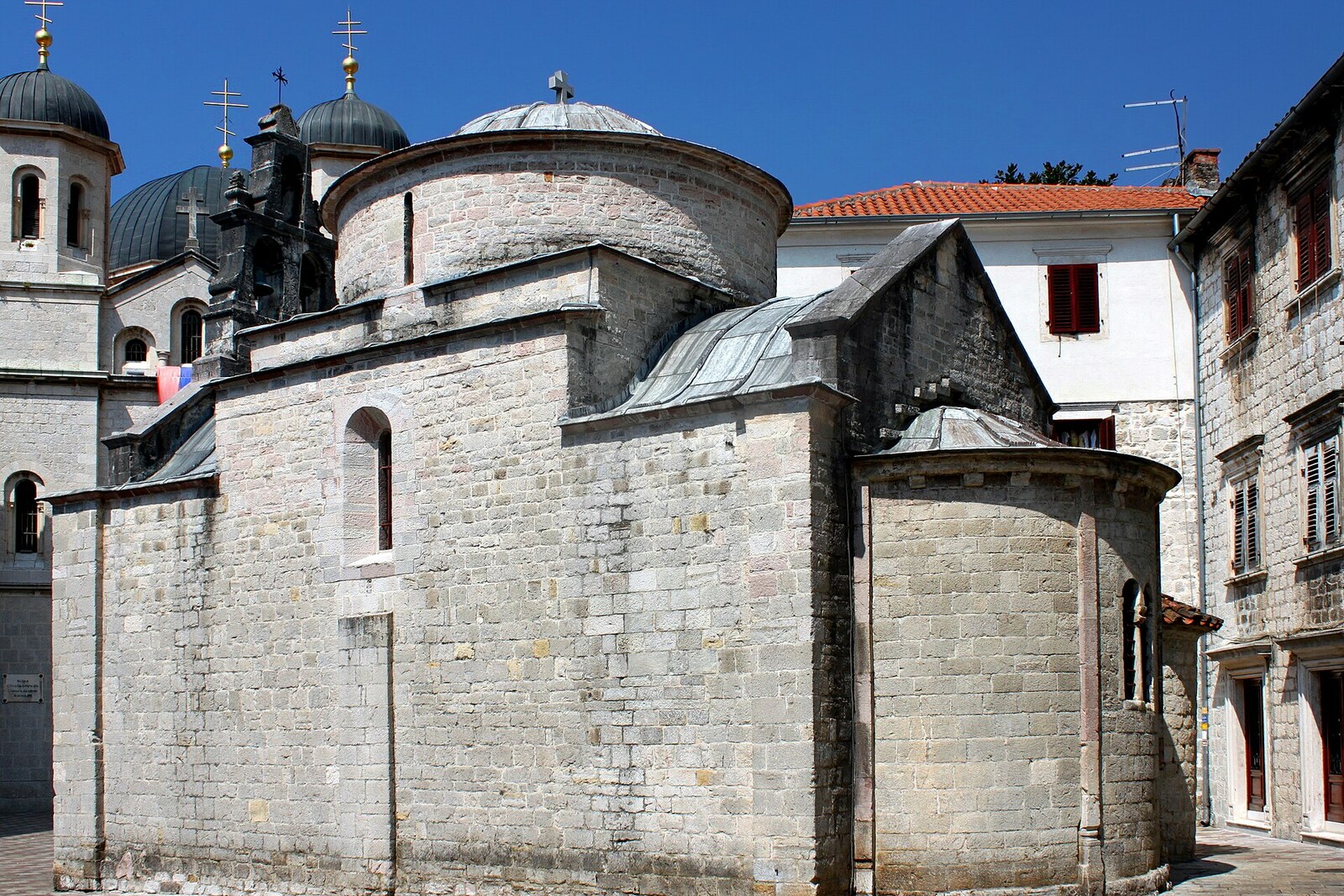
Look around first
What to notice
- The marble plaque above the entrance
- The church's stone walls
- The Orthodox iconostasis
The story of the place
The small stone church gave the square its name. A marble plaque above its western entrance has survived: in eleven ninety-five, the Kotor merchant Mavro Kacafrangi and his wife Bona had it inscribed that they had built the church for the salvation of their souls and dedicated it to St. Luke—the apostle and evangelist. From this inscription, the name passed first to the church and then to the square.
The main change came here in sixteen fifty-seven. The Cretan War was under way—a prolonged war between the Republic of Venice and the Ottoman Empire. Orthodox families fled Ottoman troops from Grbalj, a fertile rural area between Kotor and Budva. They lived from the land and livestock; taking shelter behind the city walls, the people left their homes, fields, and their own churches outside.
The Venetian administration allowed the refugees to hold services in the Catholic St. Luke's Church. The Catholics kept their altar by the south wall, and the Orthodox set up their own. Under one roof, they alternated between celebrating Mass and the liturgy. This arrangement lasted for about a century and a half. The refugees gained a church within the protected city, while the former parishioners continued to come to their altar.
By the beginning of the nineteenth century, the Orthodox community had grown markedly. Its priests demanded that the Catholic altars be removed from the churches handed over to them. In eighteen ten, the French administration then governing Kotor agreed. St. Luke's Catholic altar was dismantled, and the former parishioners finally lost their place of worship in this church. The Orthodox received it in its entirety; services according to the Orthodox rite are still held here.
The two altars inside have long been gone. From the first arrangement, the Latin plaque of Mavro and Bona remains above the entrance; from the second, the Orthodox iconostasis. The Catholic altar by the south wall disappeared in eighteen ten, but the square still bears the name chosen by its first builders in the twelfth century.
Useful on site
Both churches are active. St. Nicholas Church reports a daily liturgy; tourist visits may be restricted without notice.
Checked: date not specified. Check the official source before visiting.There is little room inside, and the slabs are directly underfoot; move carefully, speak quietly, and do not disturb the service.