 Guide On Map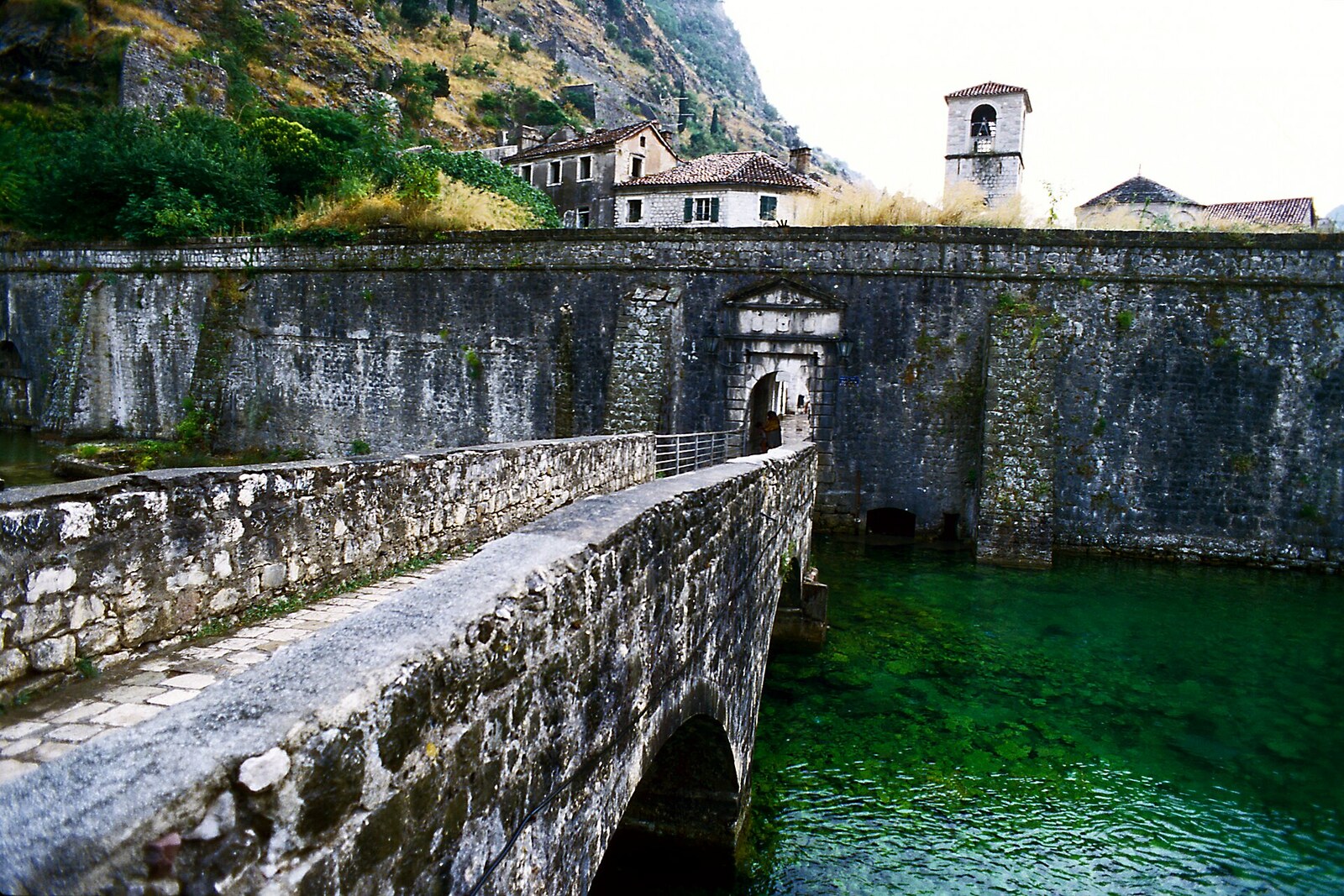
Look around first
What to notice
- Stone bridge
- Škurda riverbed
- Renaissance arch
- Inscription above the passage
The story of the place
A stone bridge leads to the arch over the Škurda. In the sixteenth century, the river served as a moat for the northern wall, and the final wooden span of the bridge was raised on chains. Here stood the North Gate—the former northern entrance to the city. Military engineers considered this section the most vulnerable in all of Kotor.
In the summer of fifteen thirty-nine, Hayreddin Barbarossa, the Kapudan Pasha—the chief admiral of the Ottoman Empire—approached the bay. Shortly before that, he had taken Herceg Novi; almost the entire Spanish garrison there had perished. Now Barbarossa wanted to take Kotor without another long siege.
The defense was commanded by Gian Matteo Bembo, the governor of the city appointed by Venice. He learned in advance that the fleet was approaching and spent two months preparing the walls. Bembo wrote that he scarcely slept and, if he did fall asleep, he did so dressed; by day, he had to inspect the fortifications and climb again to the castle above the city.
The work was especially urgent by the Škurda. Beside the gate stood St. Nicholas Church and the Dominican monastery. Bembo ordered the whole complex demolished: its walls could have sheltered Ottoman infantry and artillery. The monks lost their church and cells before the first shot was fired. After the siege, they were assigned a plot inside the city for a new monastery.
Barbarossa sent a demand that Kotor surrender. He threatened to slaughter the townspeople, but promised free passage to those who wished to leave and good treatment to those who remained. On August fourteenth, Bembo replied that an attack would violate the truce already concluded. He added that Suleiman did not break his word and would hardly approve such an action by his admiral. While the envoys carried the letters back and forth, Bembo armed the townspeople and stationed men along the northern wall.
Ottoman units landed near the city's shipyard, dragged their guns ashore, and moved directly toward these gates. They tried to breach the wall with concentrated fire, then attacked twice. The defenders returned fire from guns on the bastions on both sides of the passage. Both assaults ended in retreat; the sources name neither dead nor wounded among the defenders. On the morning of August sixteenth, Barbarossa's fleet was already pulling away from Kotor.
The present Renaissance arch was built in fifteen forty on the site of the former entrance. Carved above the passage is the inscription: on August fifteenth, fifteen thirty-nine, the Turkish fleet was repelled. The neighboring pentagonal Bembo Bastion retained Bembo's surname. No walls remain by the Škurda from the monastery that he ordered removed from the line of fire.
Useful on site
The gate and bridge are an open city passage; temporary closures are possible because of work or events.
Checked: date not specified. Check the official source before visiting.It is best to view the system from the outer side of the bridge, without lingering in the middle of the passage and while watching the flow of people.