 Guide On Map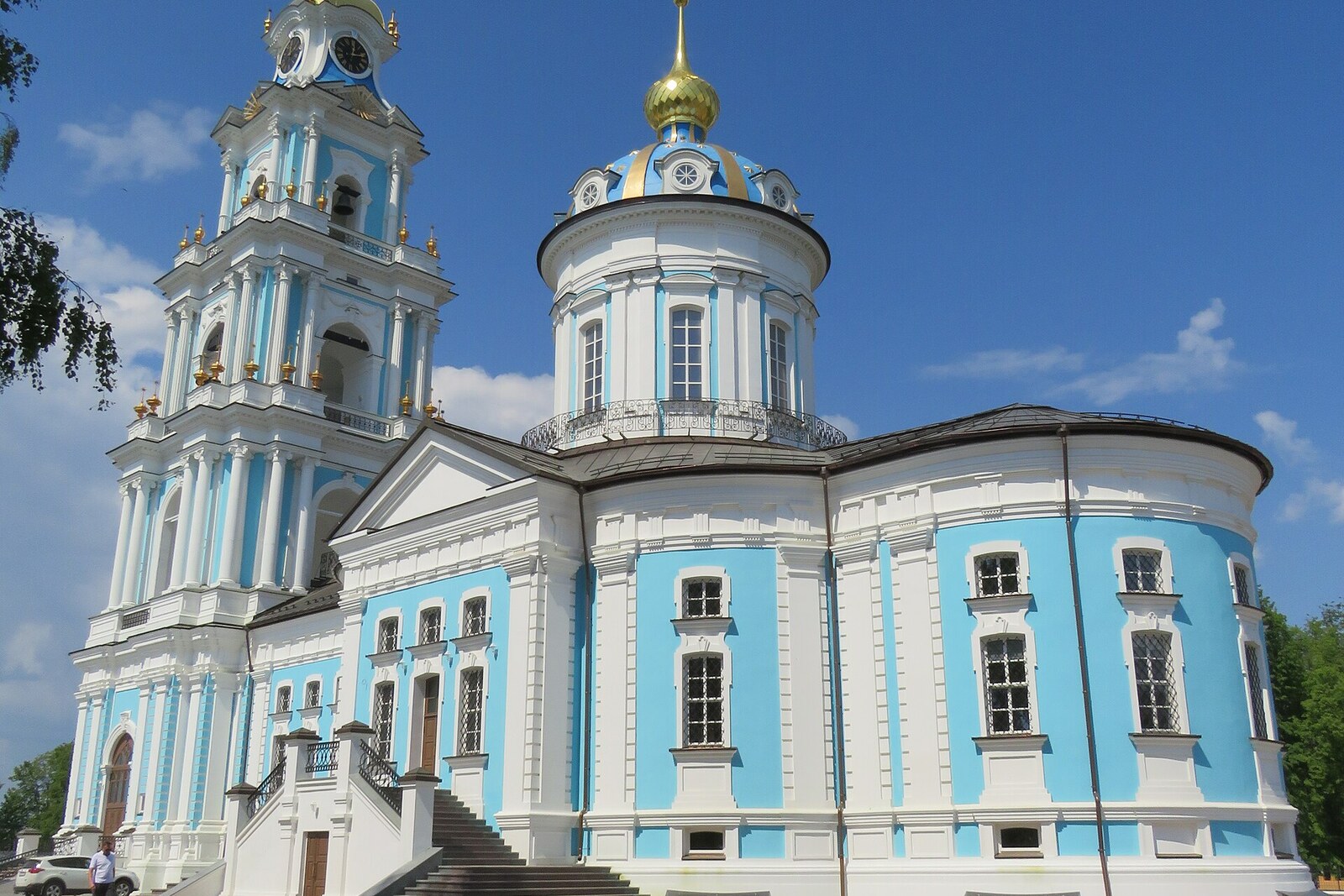
Look around first
What to notice
- Epiphany Cathedral of the Kostroma Kremlin
- Cathedral bell tower
- Granite column at the entrance
- Theodore Icon of the Mother of God
The story of the place
The Epiphany Cathedral of the Kostroma Kremlin and the cathedral bell tower mark the territory of the old city fortress. Inside it, the voevoda's administration and guards once worked side by side, a prison and state grain supplies were kept, and landowners set up courtyards in case of siege. A heated church appeared here for winter: pilgrims no longer had to gather in the small side chapel of the cold Assumption Cathedral. In summer, services took place in the other cathedral, and one shrine passed from church to church with the changing season.
In May seventeen seventy-three, cathedral archpriest Ioann Krasovsky had to decide what to save first. He was responsible for the Assumption Cathedral, which stood in the Kremlin, and for its chief shrine—the Theodore Icon of the Mother of God. Krasovsky's own house on Mshanskaya Street was already in danger, but the priest remained here.
The fire reached the cathedral porch. A wooden floor made of oak beams caught fire, and the flames spread inside. Krasovsky carried out the icon, but the burning buildings soon surrounded the cathedral. With the icon, he reached a small boat and barely had time to sail away to Ipatiev Monastery. Church property that had been carried out to the Volga was burning too; the flames destroyed even vessels on the river.
Krasovsky saved the Theodore Icon of the Mother of God. The Assumption Cathedral burned out inside, and the neighboring Exaltation of the Cross Monastery perished along with its buildings. At that time, the Kremlin was occupied by fortifications, the voevoda's house, guardhouses and administrative offices, a prison, state granaries, and siege courtyards belonging to Kostroma landowners. After the fire, the damaged Assumption Cathedral remained amid the burned-out buildings.
Simon Lagov, Bishop of Kostroma and Galich, wanted to move his residence and the diocesan administration here from Ipatiev Monastery. He also needed a spacious heated church. In winter, people coming to the Theodore Icon of the Mother of God crowded into a small warm side chapel attached to the cold Assumption Cathedral.
On the site of the burned monastery, Simon ordered the construction of the Epiphany Cathedral of the Kostroma Kremlin. It was meant to receive parishioners during the cold season; in summer, services continued in the Assumption Cathedral. The icon was moved between the two churches in keeping with the seasonal order of services.
Simon himself did not see the result. In seventeen seventy-eight, the Holy Synod transferred him to the Ryazan See, and the bishop left Kostroma. The Epiphany Cathedral of the Kostroma Kremlin was consecrated only in December seventeen ninety. The relocation of the diocesan center planned by Simon was completed even later: in eighteen thirty-five, both Kremlin cathedrals received cathedral status.
Epiphany is the church name for the feast of Christ's Baptism. No document explaining the choice of dedication has survived. The cathedral's historians link it to the winter procession: on the feast of Epiphany, the clergy carried shrines from the Kremlin to the Volga for the blessing of the water. Among the citywide processions, this was the one that fell during the cold season, when services were held in a heated church.
The old Epiphany Cathedral of the Kostroma Kremlin is not before you. After the Kremlin churches were closed, their ensemble was destroyed by explosions in nineteen thirty-four, and the ruins were dismantled for building material. The fortress earthworks had disappeared earlier, by eighteen eighteen. That is why the word “Kremlin” now denotes the historical territory of the former city fortress and the cathedral ensemble being restored.
The present building was erected on the former site in eighteenth-century forms, using modern structures. In September two thousand twenty-three, it was consecrated and made the main church of the Kostroma Diocese. In November, the Theodore Icon of the Mother of God was returned here—the very icon with which Ioann Krasovsky barely managed to sail away from the Kremlin surrounded by fire.
Useful on site
The cathedral functions as a church: finish listening before entering, mute your phone, and take services into account. The icon can be seen only when the interior is accessible.