 Guide On Map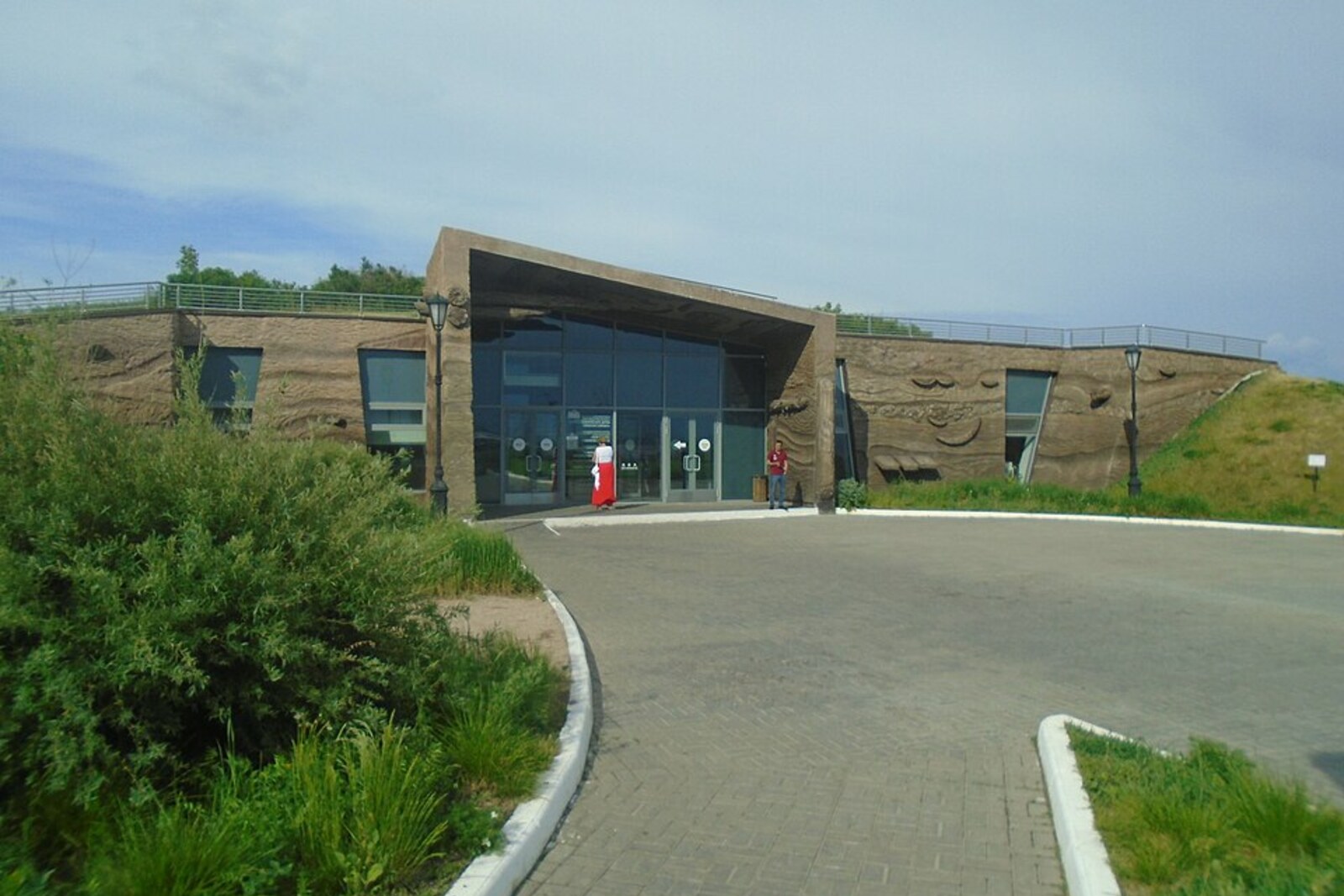
Look around first
What to notice
- Wooden log structures
- Street paving layers
- Remains of fences
- Stumps in the lowest level
The story of the place
The museum building is raised over an old riverside site by the Sviyaga River, where the ground was constantly saturated with water. Residential courtyards and workshops in this lowland had to be raised again and again: wood chips, bark, and then worn-out boards accumulated beneath people's feet. Log structures, street paving layers, and fences show the successive levels, while the stumps below remember the ground before it was built over. The same water that made life difficult in the posad slowed the decay of wood, leather, and small objects.
Beneath the grassy hill lies a real excavation. At the center of the museum hall are the remains of houses, courtyards, fences, and streets found on this site. They were not assembled from finds gathered across Sviyazhsk: the wooden block was left where townspeople of the sixteenth and seventeenth centuries built it.
They settled in the low-lying part of the posad by the Sviyaga River and immediately faced water beneath their feet. To reach their homes and workshops, residents filled their courtyards with wood chips, paved the lanes with bark, and later laid old boards on top—boards that had already served in buildings. One of the uncovered lanes stretches for about thirty meters; at first it was covered with bark and wood chips, then with rough-hewn planks and sawn boards.
Each new layer of paving raised the ground level. After several generations, floors ended up too low, and the owners built new log structures on top of the old ones. This is how several levels of houses accumulated in one place. The excavation revealed traces of a tannery, shoes, leather scraps, wooden floats, tools, tableware, and toys. These objects remained where people worked, fished, repaired shoes, and rebuilt their homes.
The water that hindered the owners preserved the objects they threw away. A three-meter layer of soil remained saturated with moisture; without air, wood and leather decayed slowly. Yet after excavation, that same wood could perish: during ordinary drying, the waterlogged cells shrink, and the logs warp and crack.
The first to understand the importance of this site were the archaeologists Lev Shavokhin and Leonid Belyaev. In nineteen seventy-eight, they surveyed the shore being eroded by the Kuybyshev Reservoir and discovered a waterlogged cultural layer with wooden remains here. Their find determined the site of future research.
From twenty eleven to twenty fifteen, archaeologists uncovered eighty structures here and collected about one hundred forty thousand objects. While researchers recorded every log structure and layer of paving, conservators kept the wet wood from drying out, then strengthened and dried it. Forty structures were preserved for museum display; thousands more details underwent separate treatment.
The name “Tatarskaya Slobodka” refers to this riverside district. A land survey register from the second half of the sixteenth century mentions nearby Tatarskaya Street, Tatar courtyards, and a separate Tatar courtyard by the market rows. Tatars lived and traded here alongside other residents of Sviyazhsk. Archaeologists cannot precisely match the names in the old register to every uncovered lane, so the museum's name designates a historical part of the posad, rather than the proven affiliation of every house found.
Even the stumps of trees cut down before the first buildings appeared have survived in the lowest level of the excavation. Above them lie streets and courtyards that residents raised over and over above the damp ground; the entire museum building was erected over this same site.
Useful on site
25.04–31.10.2026: Mon–Fri 09:00–18:00, Sat–Sun 09:00–18:30; ticket offices close 30 minutes before.
Checked: date not specified. Check the official source before visiting.The excavation and the main finds are accessible only inside the museum; when it is closed, you can understand the building's structure from outside, but cannot see the cultural layer itself.