 Guide On Map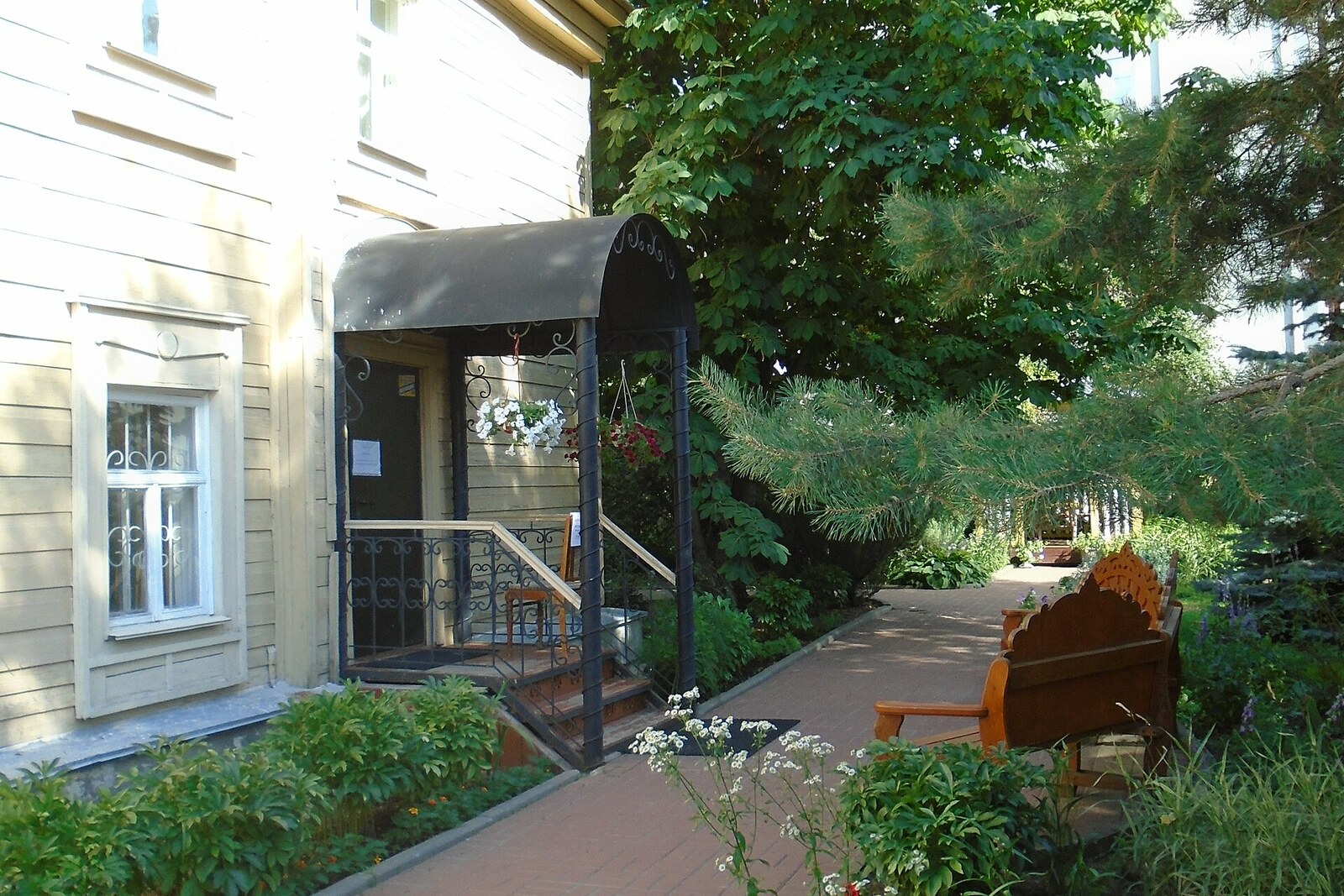
Look around first
What to notice
- Books with a personal seal
- A handwritten logic textbook
- A walking stick
- A chronometer watch
The story of the place
Qayum Nasiri rented two rooms in this house. He was a teacher who wanted to give Tatar children a secular education in their native language. The owner, Mukhamedbedig Khusainov, was Nasiri's relative and served as the muezzin of Galeev Mosque: he called the congregation to prayer. The exact date of Nasiri's move remains disputed. The museum gives eighteen eighty-seven, while researchers, based on documents, give the spring of eighteen ninety-two. One thing is known for certain: Nasiri lived here until his death in nineteen oh two.
He had no house of his own. By then, Nasiri had already left the Russian-Tatar School after a dispute over teaching methods and had lost his regular teaching salary. He gave private lessons, translated documents, and lived on money from selling his books. This explains the range of occupations that may seem like an encyclopedist's whim in the museum. Nasiri wrote textbooks on arithmetic, geography, and botany in Tatar, bound books, made drawings, and crafted instruments. Every skill either became a textbook or helped him earn money.
The work that secured his name in the history of the language dates from the years he lived in these rooms. In eighteen ninety-five and eighteen ninety-six, two volumes of Tatar Dialects were published—the first explanatory dictionary of the Tatar language. Nasiri explained words through living spoken speech rather than forcing it into old Arabic grammars. His contemporaries did not always accept even the title itself: Nasiri recalled that people disliked his calling the people Tatars and the language Tatar. The dictionary established precisely this name and helped set the lexical norms of the future literary language.
The room now shown inside has not survived from Nasiri's time. In the nineteen seventies, the house was damaged by fire. Then, during the reconstruction of the street, it was decided to move it. Architects measured the building and prepared a project, but on April first, nineteen eighty-one, members of the scientific restoration council and representatives of the public spoke out against the move. The house was left on the Khusainovs' plot.
In nineteen ninety-one, another fire occurred. Restorers reassembled the exterior walls and the former interior layout, while the museum's creators reconstructed the study from contemporaries' recollections, published only after Nasiri's death. The museum opened in nineteen oh two. Its authentic belongings include books with his personal seal and a logic textbook copied in the scholar's hand; the walking stick and chronometer watch are thought to have belonged to him, though only presumptively. The house itself has been restored, but it stands where Mukhamedbedig Khusainov set aside two rooms for his relative and where Qayum Nasiri finished his dictionary and his life.
Useful on site
The museum is temporarily closed for renovations; no reopening date has been announced.
Checked: date not specified. Check the official source before visiting.Check museum access in advance. If you cannot go inside, look at the house from the street: the story of its loss and restoration remains an important part of this stop.