 Guide On Map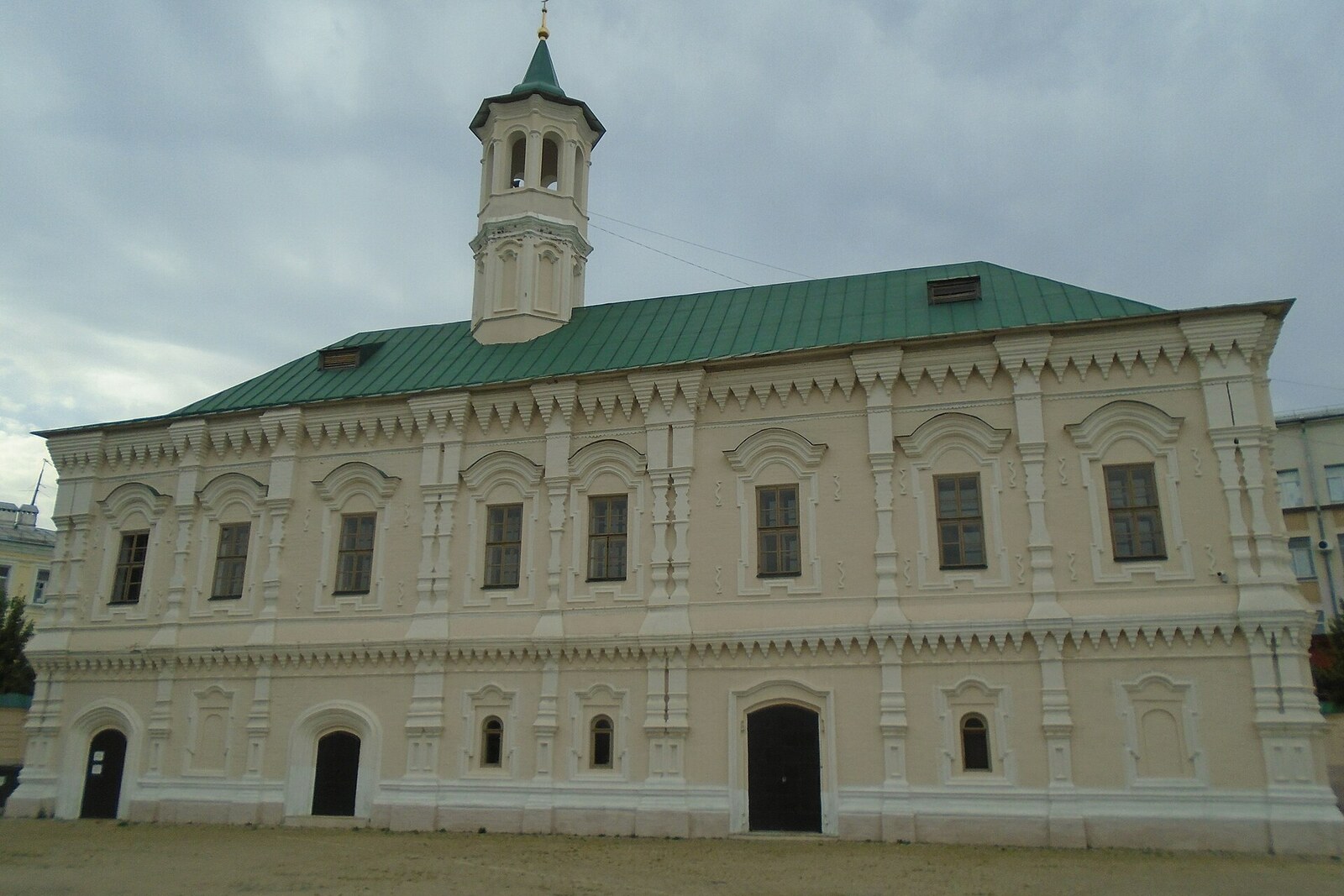
Look around first
What to notice
- Restored minaret
- Brick fence
- Two-story mosque shop
The story of the place
Within the brick fence, an old congregation took shape, with a mosque, a minaret, a madrasa for shakirds, and a two-story shop. The stone building became a place of prayer and study after a time when the settlement's Muslims gathered in wooden prayer houses, vulnerable to fires and officials' orders. In the twentieth century, it was converted into a kindergarten: the minaret and vaults were removed, and internal ceilings divided the former halls. Its present appearance was restored from old documents after the building was returned to the Muslim community.
Behind the fence, the mosque is active: prayers are performed here, the Quran is read, and children and adults learn the basics of Islam and Arabic writing at the mosque. The name on the facade refers to the Apanaev merchant family. However, the money for the first building was provided by another man—Yakub Sultangaleev.
In seventeen sixty-seven, representatives of Kazan's Muslim community obtained permission from Empress Catherine the Second to build stone mosques in the Old Tatar Settlement. Before that, worshippers depended on wooden prayer houses: officials had them destroyed, and they perished in fires. The following year, Yakub Sultangaleev, one of Kazan's wealthiest Tatar merchants, began construction here for the city's second Muslim congregation.
Sultangaleev made his living through trade, so he spent on the mosque the capital that sustained his own business. The historian Shigabutdin Marjani wrote that during construction the merchant suffered major losses, but still completed the work with the money that remained. In the evenings, Yakub and his wife came to the masons, carried bricks, and helped roll logs. For a wealthy patron, this was a way to show the worshippers that the lack of funds would have to be made up through shared labor.
By the beginning of the seventeen seventies, people were already praying here in a stone building. A madrasa—a Muslim school—opened nearby. By the end of the century, more than two hundred shakirds, or students, were studying there. The mosque built by the merchant became the center of the congregation, but the Sultangaleev name did not become attached to it. Yakub had no children, and after his death the family line died out.
The Apanaevs, who lived next door, took responsibility for maintaining the congregation. Their wealth grew through leatherworking, soapmaking, and trade: Musa Apanaev owned a large leatherworks, while his brother Yusuf owned leather and soap factories. The family paid for mosque repairs and the school's work, and its descendants continued to do so for about a century. Worshippers began calling the mosque Apanaevskaya, and also Baiskaya—the merchants' mosque.
In nineteen thirty, the mosque was closed. When it was converted into a kindergarten, builders dismantled the minaret and the vaults, cut away some of the decoration, and divided the two prayer floors into three with internal ceilings. In the nineteen nineties, the Muslim community secured the return of the building. During restoration from two thousand seven to two thousand eleven, craftsmen reconstructed the minaret and the former division of the halls from old documents.
The former mosque shop has survived within the fence. In eighteen eighty-seven, the merchant Mukhamedyusup Apanaev added its second brick floor. This building and the name on the mosque remain from the family that did not begin the construction, but maintained everything that arose around it for several generations.
Useful on site
Active mosque; exterior viewing is possible from the street, while entry depends on prayers and the attendants' decision.
Checked: date not specified. Check the official source before visiting.View the building with respect for the active congregation. Suitable clothing is required to enter; inside, follow local rules and do not take photographs without permission.