 Guide On Map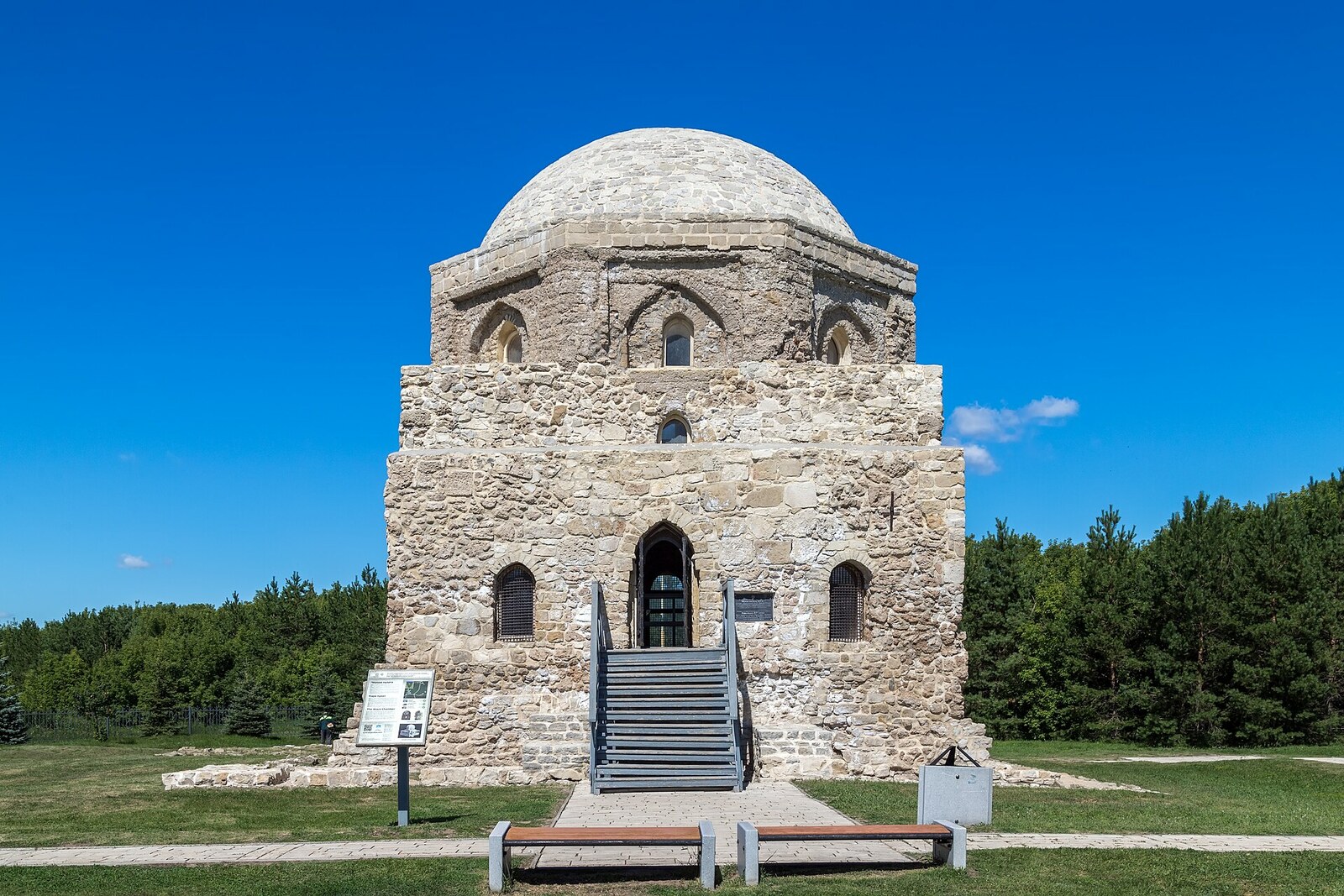
Look around first
What to notice
- Stone masonry
- Tall central hall
- Doorways
- Traces of the lost side rooms
The story of the place
The light stone masonry of the Black Chamber conceals its old nickname: once, the walls inside and out were covered with soot. Of the large building, the tall central hall remains; the side rooms, outer gallery, and staircases have disappeared, but the doorways still show its former complexity. What these rooms served for is not known for certain: researchers debate between a court with a lower room for prisoners and a house of study and prayer for traveling dervishes. Later, the soot was cleaned away, part of the light finish was restored, and the old name remained.
The story of the khan’s daughter can be told here only as a legend. In one version, Khan Abdullah, ruler of Bolgar, tried to save his family when the city was sacked by the army of Tamerlane. He took refuge in this chamber with his loved ones. The conqueror ordered the building to be surrounded with firewood and set alight.
When the smoke cleared, the khan’s daughter was seen on the roof, dressed in white. Tamerlane, struck by the fact that the girl had survived, wanted to take her as his wife. She refused. Then he ordered her two brothers, already condemned to death, to be brought in. They were led forward with wooden collars around their necks.
The khan’s daughter now sought one thing: to get her brothers out of the city alive. She agreed to the marriage on the condition that the prisoners would be freed, given their best horses, and allowed to ride away before her eyes. Tamerlane accepted the condition. The girl waited until her brothers disappeared in the distance, then threw herself from the roof onto the smoldering logs and died. The brothers gained their freedom thanks to a promise their sister had no intention of keeping.
The legend has other endings, and this chain of events itself is not confirmed by documents. Even the building’s original purpose is unknown. It was erected in the middle of the fourteenth century. Of the large complex, the central hall survives; the side rooms, outer gallery, and staircases have disappeared. Some researchers consider the chamber a court of justice: the low, dark floor could have served as a place of detention, while the tall hall with stucco could have been the place of judgment. According to local legend, the khan and three judges each entered through a separate door. Others see a madrasa or a khanqah here—a refuge and prayer house for traveling dervishes.
There is a more reliable explanation for the name. In the eighteenth and early nineteenth centuries, the medieval building was turned into a smokehouse. Soot covered the walls inside and out, and the chamber came to be called Black. Later, restorers cleaned the masonry of its accumulated layers and restored part of the light finish. The soot was removed; the name “Black Chamber” remained.
Useful on site
Exterior viewing — during the territory’s hours; the interior depends on the museum site’s operating schedule. Checked 2026-06-24.
Checked: date not specified. Check the official source before visiting.Walk around the chamber from the outside, observing the barriers; neither the name nor the austere appearance confirms either a fire or the court version.