 Guide On Map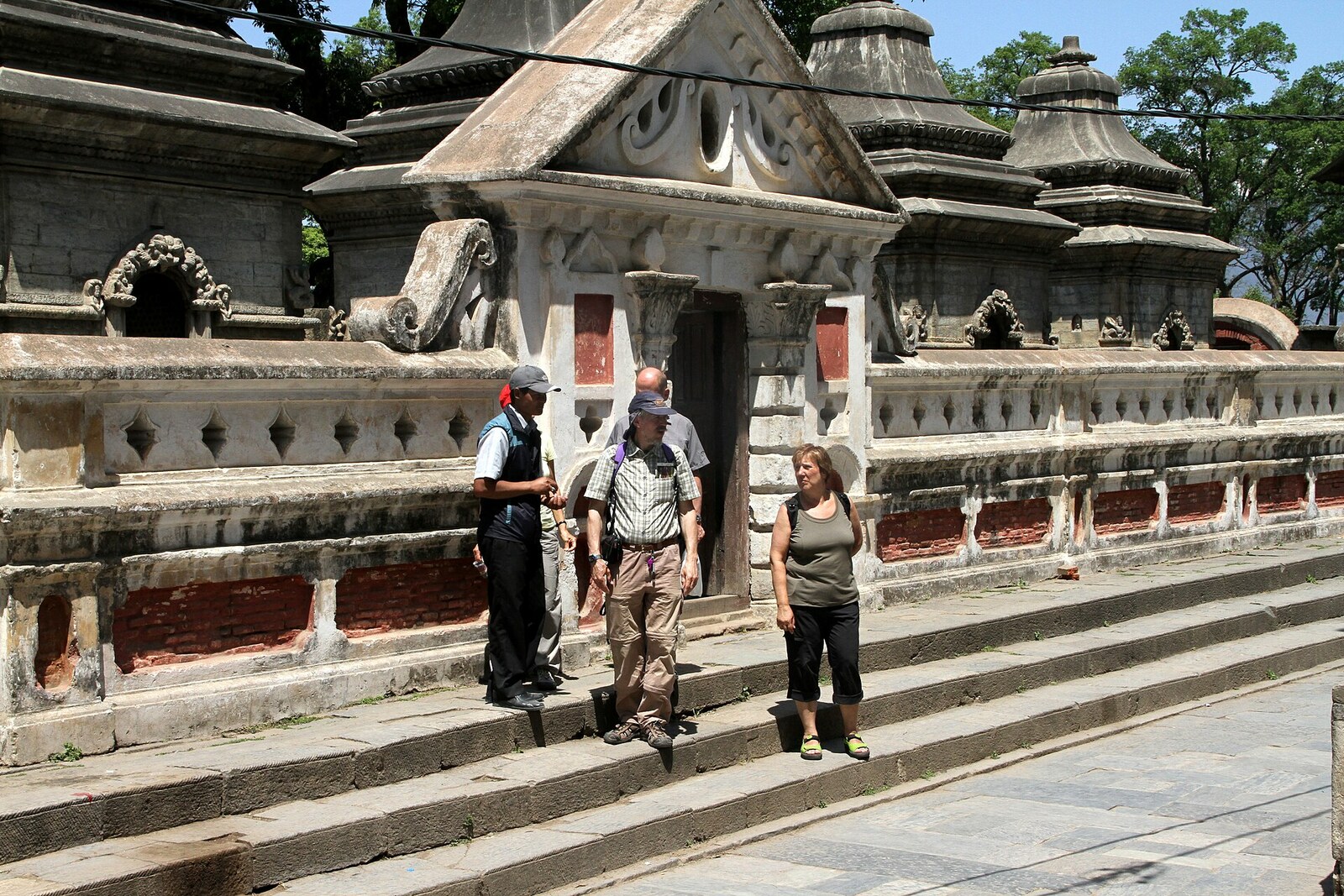
Look around first
What to notice
- Deer enclosure
- Gorakhnath Temple
- Image of the yogi’s feet
- Sculpture of Machhindranath
The story of the place
The paduka, a sign of reverence for the yogi’s feet, is kept in Gorakhnath Temple in Sleshmantak Forest. The present shrine on the slope by the Bagmati dates from the eighteenth century. A sculpture of Machhindranath stands beside the paduka. The feet represent the disciple, and the sculpture represents his teacher; both signs are gathered under one roof.
Mrigasthali means “deer place.” This is the name for part of Sleshmantak Forest on the slope above the Bagmati. According to local legend, Shiva and Parvati hid here in the form of deer. For the sake of this legend, deer are still kept in an enclosed part of the forest.
Gorakhnath Temple stands on the same slope. Its local history, too, is considered a legend; Nepalese chronicles recount it in several versions. In one Shaivite version, Gorakhnath, a wandering yogi and disciple of Machhindranath, came to the valley to ask for alms. The ascetic depended on alms for food, but the residents did not recognize the visitor and gave him nothing.
Angered, Gorakhnath bound nine nagas—serpent spirits who controlled the rain—and sat on them to meditate here in Mrigasthali. The rain stopped. The legend gives the drought twelve years: the crops failed, and famine began to threaten the valley.
The ruler Narendra Deva convened a council to discover the cause of the disaster. The Buddhist teacher Bandhudatta explained whom the yogi was holding beneath him and proposed bringing the only person before whom Gorakhnath would certainly rise: his teacher Machhindranath, who is more often called Machhindranath in Nepal.
Narendra Deva and Bandhudatta went after him to Kamarupa—a region in what is now Assam. When the teacher arrived in the valley, Gorakhnath rose to bow to him. The nagas were freed, and the rain returned. Narendra Deva established an annual chariot procession in honor of Machhindranath; it is still held in Lalitpur as Rato Machhindranath Jatra.
The present Gorakhnath Temple dates from the eighteenth century. Inside, a paduka—a venerated image of the yogi’s feet—is kept, and a sculpture of Machhindranath stands beside it. The disciple is represented by the feet from which he rose when his teacher appeared; the teacher remained beside him in the same shrine.
Useful on site
The forest is accessible from dawn to dusk; yogis may restrict access to the ashram.
Checked: June 17, 2026. Check the official source before visiting.Walk carefully over uneven ground, do not approach monkeys while carrying food, and do not enter places of retreat without an invitation. After rain, assess the condition of the trail before going uphill.