 Guide On Map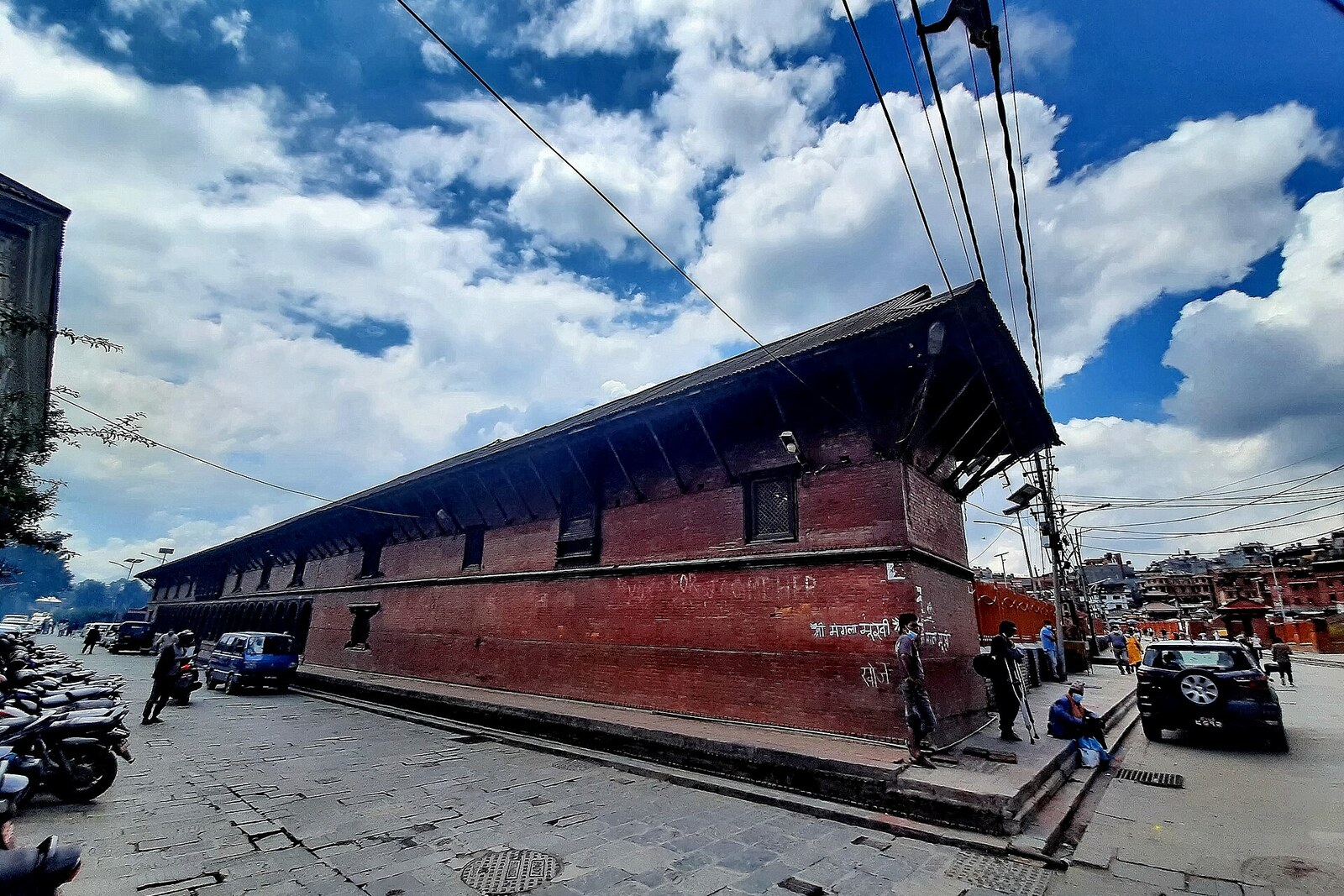
Look around first
What to notice
- Five tower-like shrines
- Square courtyard
- Residential buildings of the former dharmashala
- Cotton wicks
The story of the place
Five tower-like shrines stand in the middle of a square courtyard, and they gave Panch Deval its name, “five temples.” They are dedicated to different forms of Shiva, while residential buildings run along the edges of the courtyard. These rooms once received pilgrims who needed free overnight lodging on their way to Pashupatinath Temple.
In this courtyard, Laxmi Devi Thapa earned a little money by twisting cotton into wicks for oil lamps. Pashupatinath pilgrims bought them. The woman who made them had herself nearly ended up on the street.
Laxmi was orphaned in childhood, never married, and in old age was left without anyone she could live with. In two thousand fifteen, she said that Shiva had appeared to her in a dream three times and called her to Pashupatinath Temple, but she refused: who would take her there, and where would she stay? Then, in her words, Parvati appeared. When Laxmi woke up, someone came to her and told her about a home for the elderly at the temple. This is her own religious explanation of what happened, not a confirmed miracle.
Laxmi moved here, received shelter, and began weaving baskets and making wicks. The work gave her a small personal income. Pilgrims took her wicks to the temple lamps, so she could support herself, at least in part, through the very reason she had once come here.
The name Panch Deval means “five temples.” At the center of the square courtyard stand five tower-like shrines dedicated to five forms of Shiva. In eighteen eighty-one, under King Surendra Bikram Shah, a dharmashala—a free shelter for pilgrims arriving at Pashupatinath Temple from afar—was built beside them. The rooms of today’s shelter originally served as a shared overnight lodging.
Over time, some elderly residents stopped leaving. Some wanted to spend their final years near the venerated temple and the cremation ghats; others simply had nowhere to return to. At first, benefactors cared for them. In nineteen seventy-seven, the government of Nepal officially transformed the pilgrims’ shelter into Pashupati Briddhashram, a state shelter for the elderly.
The institution now has capacity for two hundred thirty people. The residential buildings of the former dharmashala still surround the five shrines. From Laxmi’s room to the courtyard where pilgrims bought the wicks she made, there were only a few steps.
Useful on site
The complex is open around the clock; it is both a shrine and a shelter.
Checked: June 17, 2026. Check the official source before visiting.Stay in the public part of the complex. Do not enter the residential rooms, do not ask residents about their families, and ask permission before taking any photograph or starting a conversation.