 Guide On Map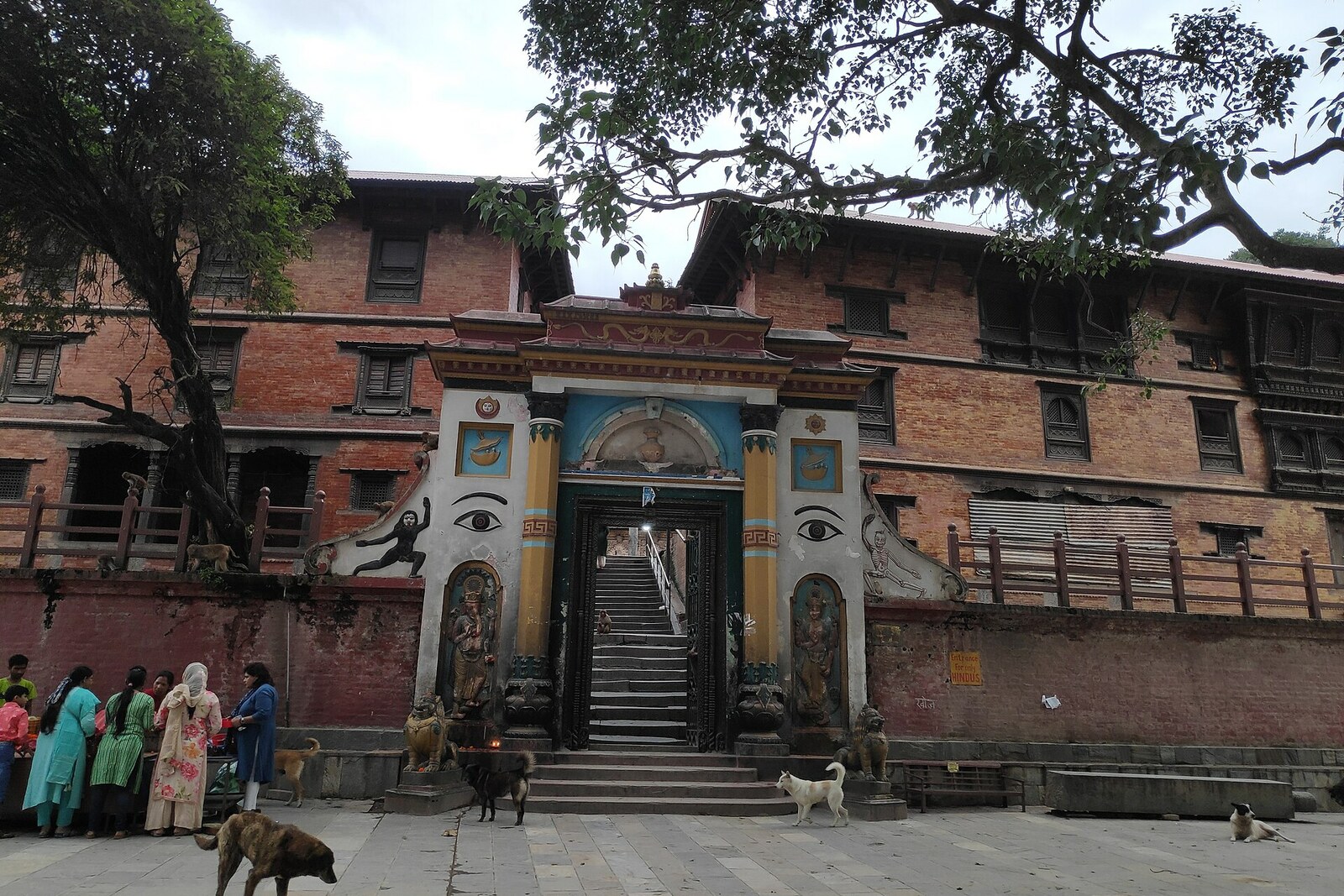
Look around first
What to notice
- Temple enclosure
- Silver kalash
- Silver lining of the water-filled depression
The story of the place
A silver kalash covers a small water-filled depression at the center of Guhyeshwari's sanctuary; its walls are also lined with silver. King Pratap Malla ordered the temple built and enclosed in the middle of the seventeenth century. Hindu pilgrims come here to perform puja, especially devotees of Shakti and tantric rites: worship is directed to the very point in the ground, not to a human image of the goddess.
According to legend, Daksha, the father of the goddess Sati and the organizer of a great sacrifice, excluded her husband Shiva from the rite. At such a ritual, each god was due a share of the offerings, so Shiva's absence meant public humiliation. Sati came uninvited to demand an answer from her father. Daksha did not relent, and she burned herself in the sacrificial fire.
Shiva took his wife's body and carried it across the earth. Nepal's Swasthani Brata Katha, a ritual tale about the goddess, continues this story differently from many Indian versions. There, Vishnu does not cut up the body with his discus. The other gods ask him to intervene: as long as the body remains whole, Shiva will not stop wandering. Vishnu sends insects, the body falls apart, and its parts fall to the earth one after another. At each such place, a shakti pitha arises—a sanctuary of female divine power.
According to the Nepalese tale, the first thing to fall was Sati's guhya—her hidden, intimate part. Local tradition and the official Nepalese description specify that it was her anus. Other lists attribute Sati's knees to the Nepalese shrine, so this is a legend, not an established event. But this temple's name follows the local version: “guhya” means hidden, and “ishwari” means goddess. Guhyeshwari is the goddess of the secret part of the body.
In the middle of the seventeenth century, Kathmandu's king Pratap Malla ordered a temple built and enclosed here. At the center of the sanctuary, they placed not a human figure of the goddess. There is a small water-filled depression, lined with silver and covered by a silver kalash vessel. Worship is directed to the very point in the ground where, according to legend, Sati's body part fell.
Hindu pilgrims come here to perform puja for the goddess; the temple is especially important to devotees of Shakti and tantric rites. In the religious logic of the tale, Sati did not remain dismembered: she is present whole in every pitha, and Shiva remains beside her. That is why, after Pashupatinath, the route leads here—from Shiva's temple to the silver bowl in the ground that marks Guhyeshwari here.
Useful on site
Open from morning to evening (approximately 6:00–19:00); closes during rituals.
Checked: June 17, 2026. Check the official source before visiting.Look only from permitted areas, and do not try to peer beyond barriers for a view of the sacred water. Respect restrictions on entry and photography.