 Guide On Map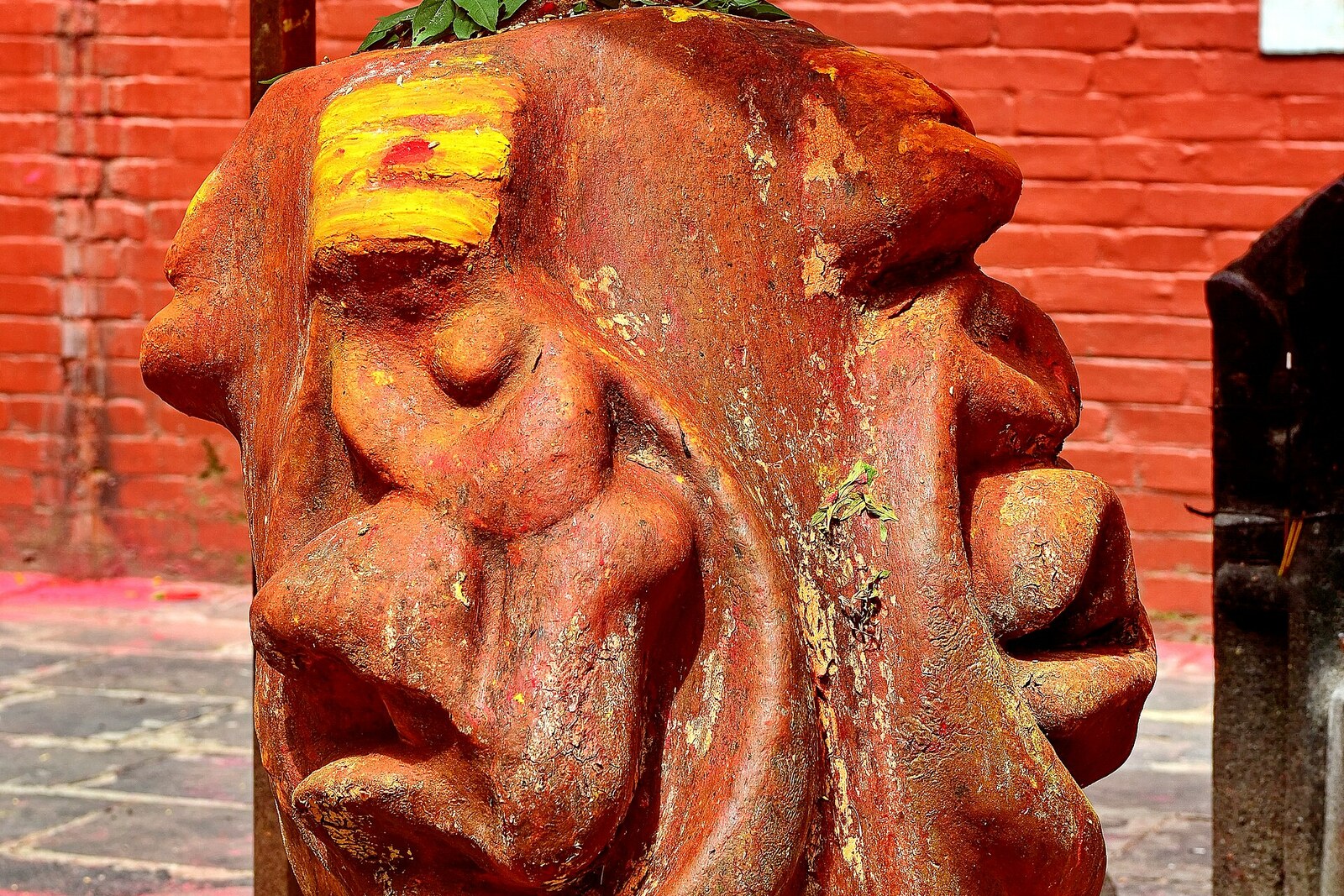
Look around first
What to notice
- Tall stone lingam
- Open temple courtyard
- Kirateshwar Sangeet Ashram venue
The story of the place
The open-air temple courtyard at Kirateshwar Mahadev Temple also serves as the venue for a music ashram. Its founders were looking for a permanent place where Nepali musicians could study the classical tradition and perform for anyone who wished to attend; since nineteen ninety-two, a free concert has been held here at every full moon. The ashram teaches singing and instrumental playing, and the winner of the annual competition for young performers receives a scholarship and performs in this same courtyard.
At the top of the hill stands a tall stone lingam—a conventional representation of Shiva in the form of a rounded pillar. The shrine’s name combines two of Shiva’s names. Mahadev means “Great God,” and Kirateshwar means “lord of the Kirats.” In ancient Sanskrit texts, Kirats were the mountain peoples of the Himalayas; in this story, a Kirat appears as a hunter.
A local legend connects the hill with an episode from the Mahabharata. The epic itself places the action in the Himalayan wilderness and names no modern location. Later Nepali sacred tradition tied the story to this bank of the Bagmati.
Arjuna, a prince and the finest archer among five exiled brothers, was preparing for war against relatives who had taken their kingdom from them. At his elder brother’s command, he went north to ask the gods for weapons. During the first months of his ascetic life, Arjuna ate less and less often: first fruit once every few days, then dry leaves once every two weeks. By the fourth month, the epic says, he was already living on air, standing on the tips of his big toes, and holding his arms raised.
Shiva decided to test the person to whom he would entrust his weapon. He came in the form of a Kirat, a mountain hunter. At that moment, the demon Muka, transformed into a boar, rushed to kill Arjuna. The archer and the hunter released their arrows at the same time. The boar fell, but both claimed it as their prey.
Arjuna challenged the stranger to a fight. His arrows did the hunter no harm. The hunter took Arjuna’s bow, and Arjuna’s sword split against the hunter’s head. After hand-to-hand combat, Arjuna lost consciousness.
When he regained consciousness, he fashioned a clay lingam of Shiva and placed a garland of flowers on it. The garland was on the hunter’s head. Then Arjuna understood whom he had fought and asked forgiveness. Shiva revealed himself to Arjuna and gave him Pashupatastra, a weapon summoned by an incantation. Arjuna wanted to use it against future opponents, but he received a strict order: do not release Pashupatastra without extreme need or against a weak enemy, or it may destroy the entire world.
Arjuna’s brothers later won the war, and their eldest brother became king. In the account of the battles, Arjuna never used Pashupatastra against people.
The clay lingam from the legend is not here: the epic does not claim that it survived. The stone pillar in the open air is considered a work from the Kirat period, made before the fourth century CE. It does not prove that the duel took place on this hill; it was around this pillar that local devotees established the name Kirateshwar and the story of Shiva the hunter.
The founders of Kirateshwar Sangeet Ashram also chose the open courtyard around the lingam. In the early nineteen nineties, Krishna Prasad Ghimire and his companions were looking for a permanent venue where Nepali musicians could develop the classical tradition and perform for anyone who wished to attend. Since nineteen ninety-two, a free concert has been held here at every full moon.
The ashram teaches singing and instrumental playing. The winner of the annual competition for performers under eighteen receives a one-year scholarship and the right to perform at a concert. The open courtyard around the stone lingam of Kirateshwar becomes that winner’s stage.
Useful on site
The temple is open from dawn to dusk; concerts take place on full-moon evenings.
Checked: June 17, 2026. Check the official source before visiting.An ordinary visit does not guarantee a concert or a class. During a rehearsal, remain a listener, do not enter the teaching space, and do not distract the performers.