 Guide On Map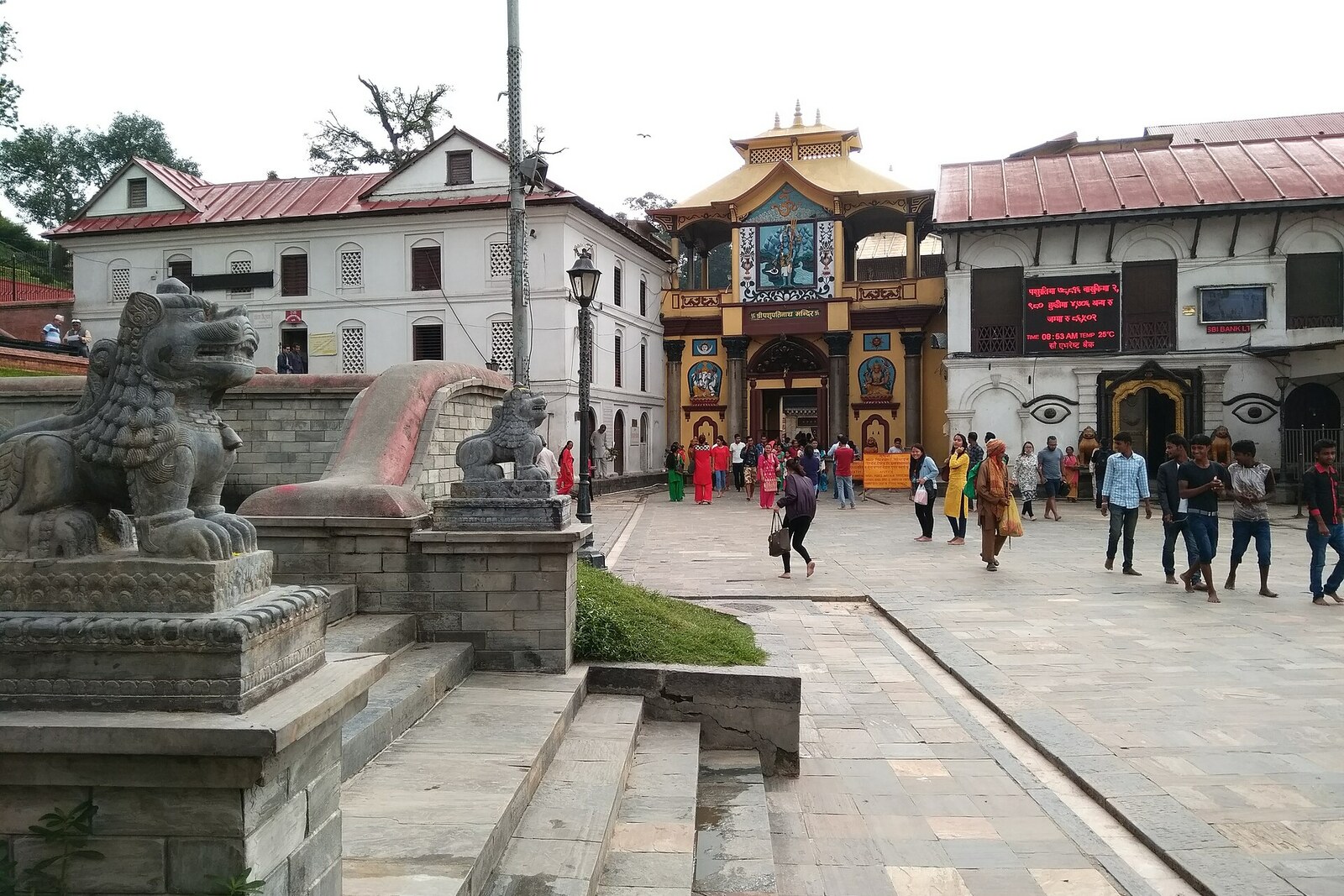
Look around first
What to notice
- Gate
- Dharmashala building
- Road to Pashupatinath Temple
The story of the place
Gaushala Gate stands on the western approach to Pashupatinath Temple. Buses and taxis drop pilgrims off here, and on major festival days a separate queue is set up at the gate. The name came neither from the temple nor from an ancient city. “Gau” means cow, and “shala” means shelter. Gaushala is a cattle yard.
In the early nineteen forties, Ram Kumar Agarwal, an entrepreneur from the Marwari trading community and the founder of the future Kedia Group industrial group, set about establishing such a yard on temple land. A record dated May eighteenth, nineteen forty-two, states the purpose of the plot with agricultural precision: to grow fodder grass for abandoned bulls at Pashupati Sacred District.
These animals were associated with Nandi, the bull Shiva rides. They were revered, but reverence alone did not provide them with fodder. Old animals no longer needed by their owners were left near the shrine, where someone had to take on the daily costs and care. The land remained the property of the temple fund. Ram Kumar received the right to use it for a specific service: to keep livestock and provide milk for offerings to Pashupatinath. In the first years, the entrepreneur ran the establishment himself, relying on donations from other Marwari merchants.
Then more pilgrims from India began arriving here. There were not enough hotels for them; people pitched tents near Pashupati Sacred District or slept in the open air. Ram Kumar expanded the former cattle yard and opened a dharmashala beside it—a house where a pilgrim could receive shelter and food. Later, he brought the entire Marwari community into the work, and the committee it created took over the establishment. The cows received stalls and fodder, the temple received milk for ritual use, and arrivals received a place to spend the night.
A dharmashala that grew out of that establishment still stands at the intersection. The name “Gaushala” now refers to the entire neighborhood, the transport stop, and these gates. Beyond them begins the road to Pashupatinath Temple; the name at the entrance remains from the plot where Ram Kumar grew grass for the bulls left at the temple.
Useful on site
Gates open daily 4:00–21:00; the ticket office for foreigners operates 6:00–19:00.
Checked: June 17, 2026. Check the official source before visiting.Do not linger in the roadway, and observe pilgrimage life without taking close-up photographs of people on buses without permission.