 Guide On Map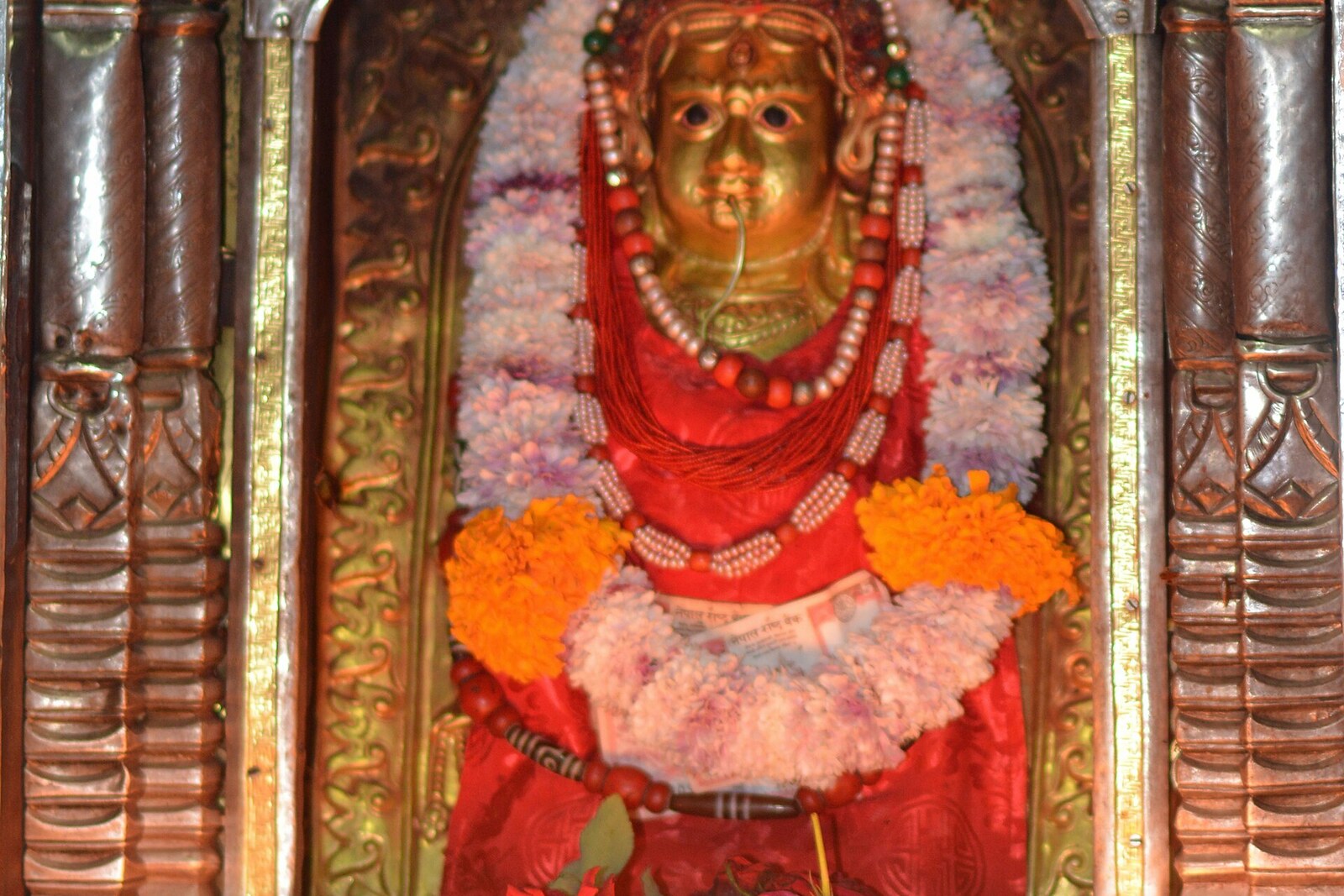
Look around first
What to notice
- Gilded roof
- Shrine doors
- Seven bowls of water
- Image of Ajima
The story of the place
The boundary between the quarter and the white dome here runs through a narrow temple beneath a gilded canopy. It is dedicated to Ajima, whose Newari name means “grandmother,” and stands at the entrance as a guardian of families and the Buddhist shrine. Three old metal statues have been left inside: they were removed from the main place and replaced when the alloy deteriorated.
At the northern entrance, a small shrine with a gilded roof is built into the base of the stupa. Early in the morning, one of the senior lamas of Gyang Guthi—the local religious brotherhood that maintains the temple—opens the doors, cleans the images, and places seven bowls of water before the main image. Only after this do the others enter. Parents of a long-awaited child complete the kora here and light a lamp, asking for the child's health.
Ajima means “grandmother” in Newari. Here, this is the name for Hariti, the protector of children. A Buddhist legend explains why people ask her for precisely this. When Hariti kidnapped and devoured other people's children, King Bimbisara, whose subjects were losing sons and daughters, turned to the Buddha. He hid Priyankara, Hariti's own beloved son. She searched for him everywhere, then asked the Buddha for help. He returned the boy after she promised never again to harm children. Hariti received another duty: to protect families and Buddhist shrines. That is why her temple stands at the entrance to the stupa, on the boundary between the city and sacred space.
The image here has its own local legend. A priest named Phalda served Ajima and was responsible for caring for her image. But the residents believed that the goddess had begun causing them suffering again. Phalda decided to stop it himself: he took the statue out of the shrine and threw it into Ghyoilisang Pond. For the priest, this meant going against his direct duty—to remove the one he served.
In a dream, Ajima asked to be returned to her former place and promised not to torment people again. Phalda changed his mind. He called the lamas, performed the necessary rites with them, and installed the image in this temple again. According to one version, Mamla Jatra—the annual procession of Ajima—arose precisely after the goddess's return.
On the full moon of Magh, members of Gyang Guthi cover the image with cloth, perform a rite of forgiveness, and place it on a decorated chariot. First, they take the chariot around the stupa, then take it out into the quarter. Families welcome Ajima at their homes and offer her vermilion, fruit, money, and lamps. After this, the procession is brought back through Tushal Square to the shrine. The chariot makes one more circuit, the lamas place the image back in its former place, and only then remove the covering.
It cannot be claimed that the present statue is the very one that Phalda, according to legend, threw into the pond. The temple keeps three earlier metal images: they were removed from the main place when the metal deteriorated and replaced with new ones. But the route of return has been preserved exactly: once a year, the covered figure leaves this doorway, passes through the quarter, and finds itself once again in the center of the shrine.
Useful on site
The shrine is accessible at any time; come during daylight hours to see the details.
Checked: June 17, 2026. Check the official source before visiting.Do not block worshippers' view of the shrine or touch the offerings. It is easier to examine the details by stepping back from the main flow.