 Guide On Map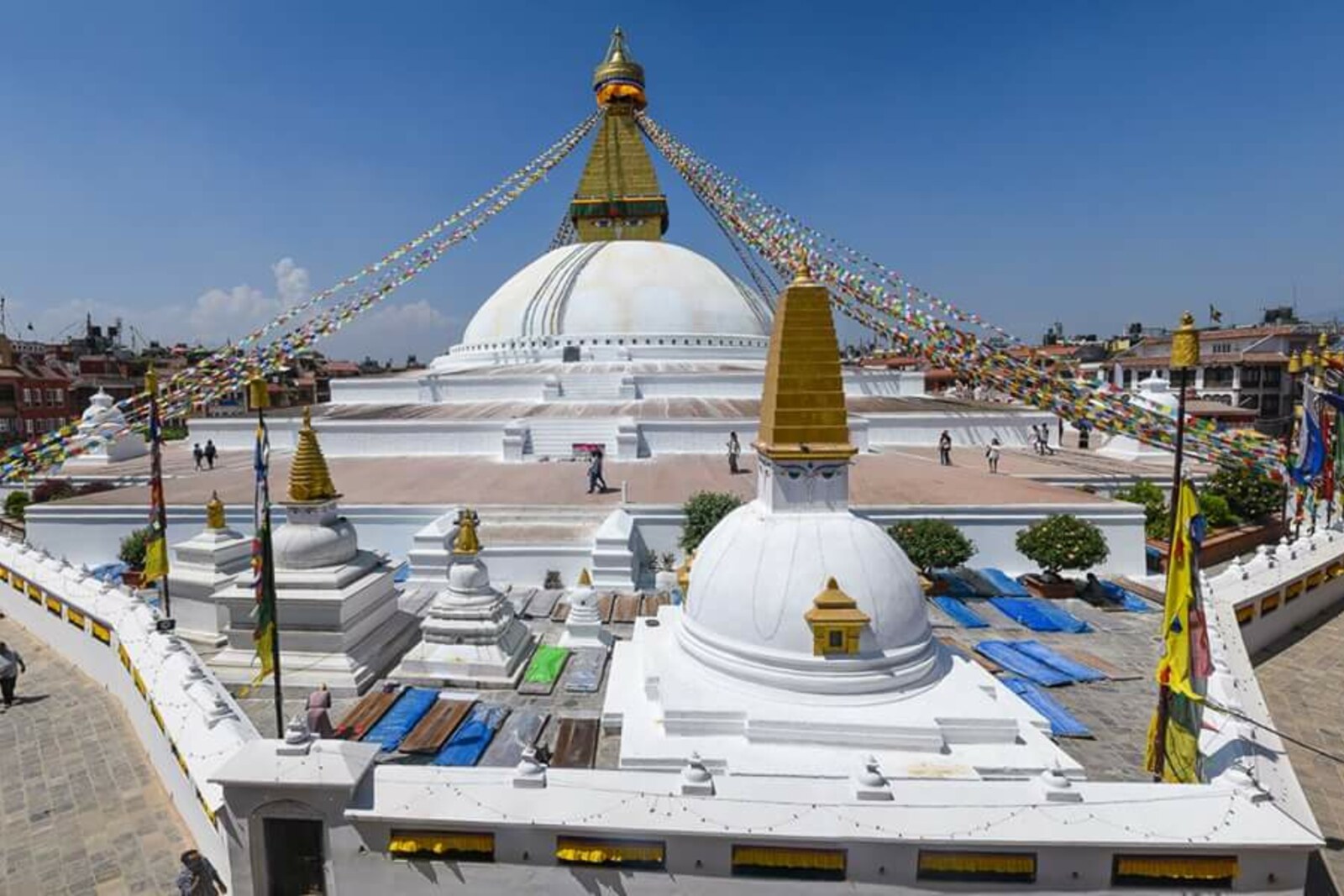
Look around first
What to notice
- Circumambulation platform
- White dome
- 13 steps
- Golden spire
The story of the place
This platform is intended for the second circuit around the stupa—closer to the white dome than the outer kora with its prayer wheels. Pilgrims do not enter inside: the stupa is designed as a closed repository of sacred objects, so prayer becomes movement around it.
On April twenty-fifth, two thousand fifteen, an earthquake split the golden spire, and cracks ran through the dome and the walls of the base. Everything above the dome had to be dismantled. The monks put the relics and golden plates into storage, craftsmen removed the wooden crown, and the bricks from the thirteen steps were set aside for reuse. Circumambulation on the platform was closed, although people continued to come and perform the rites available to them below.
The restoration was led by Sampurna Kumar Lama, chairman of the local committee, who pressed for the stupa's swift return to pilgrims. The committee decided not to wait for government funding. The residents then collected money, building materials, and labor. One local schoolteacher worked for free for a week and cooked food at home for the others; relatives living abroad sent donations through him. An elderly woman who had previously come here to pray every day gave money and materials. In all, local Buddhists, overseas communities, and monasteries collected about two hundred thirty million rupees; more than thirty kilograms of gold were donated for the spire.
The craftsmen worked with brick, lime, and mortar made from crushed fired clay. The old central pillar turned out to be rotten. A new one was carved from a single tree, and for twenty days the monks consecrated it with prayers and offerings. The preserved relics, texts, and statues were then returned inside, the pillar was installed, and the upper part of the stupa was reassembled.
On November twenty-second, two thousand sixteen, after rituals lasting several days, the platform reopened. Boudhanath Stupa became the first major monument in Nepal to be fully restored after the earthquake. The golden spire above the dome was assembled after the disaster; inside it stands that very single-piece pillar, and the close circuit around the closed repository once again runs along the platform.
Useful on site
The platform is open daily from 05:00 to 18:00 (until 19:00 in summer). Access may be restricted in bad weather or during rituals.
Checked: June 17, 2026. Check the official source before visiting.Climb only through an open passage and do not go beyond the barriers. If access is closed, the main details of the tower are clearly visible from below.