 Guide On Map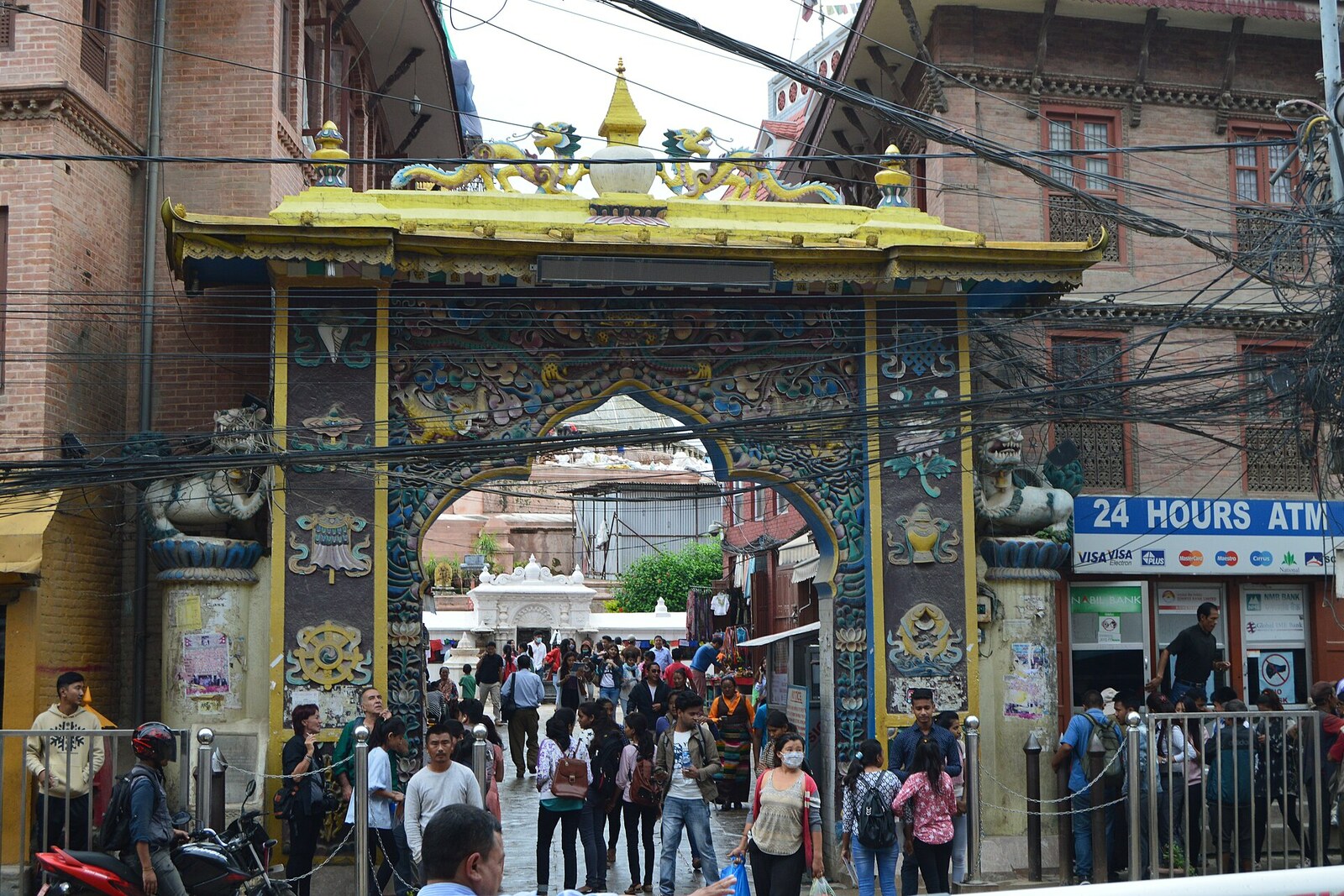
Look around first
What to notice
- Painted southern arch
- Eight auspicious signs
- Small stupas above the gate
- White dome
The story of the place
Beneath this southern arch, the city street narrows into a passage toward the white dome of Boudhanath Stupa. The gate appeared much later than the stupa itself, but it was decorated in the Tibetan monastic style: the eight auspicious signs are arranged on its supports, and small stupas stand above them. Through this entrance, Tibetan pilgrims enter the shrine that retains a special name for them.
According to a Tibetan legend explaining the origin of Boudhanath Stupa, Jadzima, a bird breeder, came to the local king to ask for land for a stupa. She wanted to build a reliquary for Kashyapa Buddha—a Buddha of a previous era. For a woman of her standing, this was an almost unimaginable undertaking.
Jadzima raised four sons by four fathers and made her living breeding birds. First, she gave her sons the means to set up households of their own. Then she announced that she would spend her remaining savings on construction. The king considered her request and said, “Let it be done”—in Tibetan, “Jarung.”
Jadzima, her sons, and one servant began bringing bricks on an elephant and a donkey. When the foundation had risen three tiers, wealthy residents and courtiers demanded that the work be stopped. If a poor bird breeder built such an enormous shrine, they said, what would be left for the king and his officials to build? The king refused to take back the permission. The word had already “slipped from his lips”—“ka shor.” This is how the legend derives the Tibetan name of the stupa: Jarung Khashor, “Let it be done—the word slipped from the lips.”
After four years, Jadzima realized that she was dying. She ordered her sons to finish the structure and place the relics inside. According to the legend, through the construction she attained the state of a Buddha. Her sons continued the work for another three years and fulfilled her will. Then they wished to be reborn where Buddhist teaching had yet to become established. Tibetan tradition considers them the later incarnations of the king, abbot, teacher, and minister who together firmly established Buddhism in Tibet.
The painted southern arch appeared much later than the stupa itself. It is a modern entrance made in the Tibetan monastic style: the eight auspicious signs are placed on its supports, and small stupas stand above. Beneath the arch, the city street becomes a passage toward the white dome. Jadzima’s name is not on the gate, but beyond it begins the shrine that Tibetan pilgrims still call by the words that once slipped from the king’s lips.
Useful on site
The gate is open daily; ticket offices usually operate approximately from 05:00 to 19:00 (until 21:00 in summer).
Checked: June 17, 2026. Check the official source before visiting.Before entering, clear the passage and observe which way the flow is moving. From there, keep clockwise.