 Guide On Map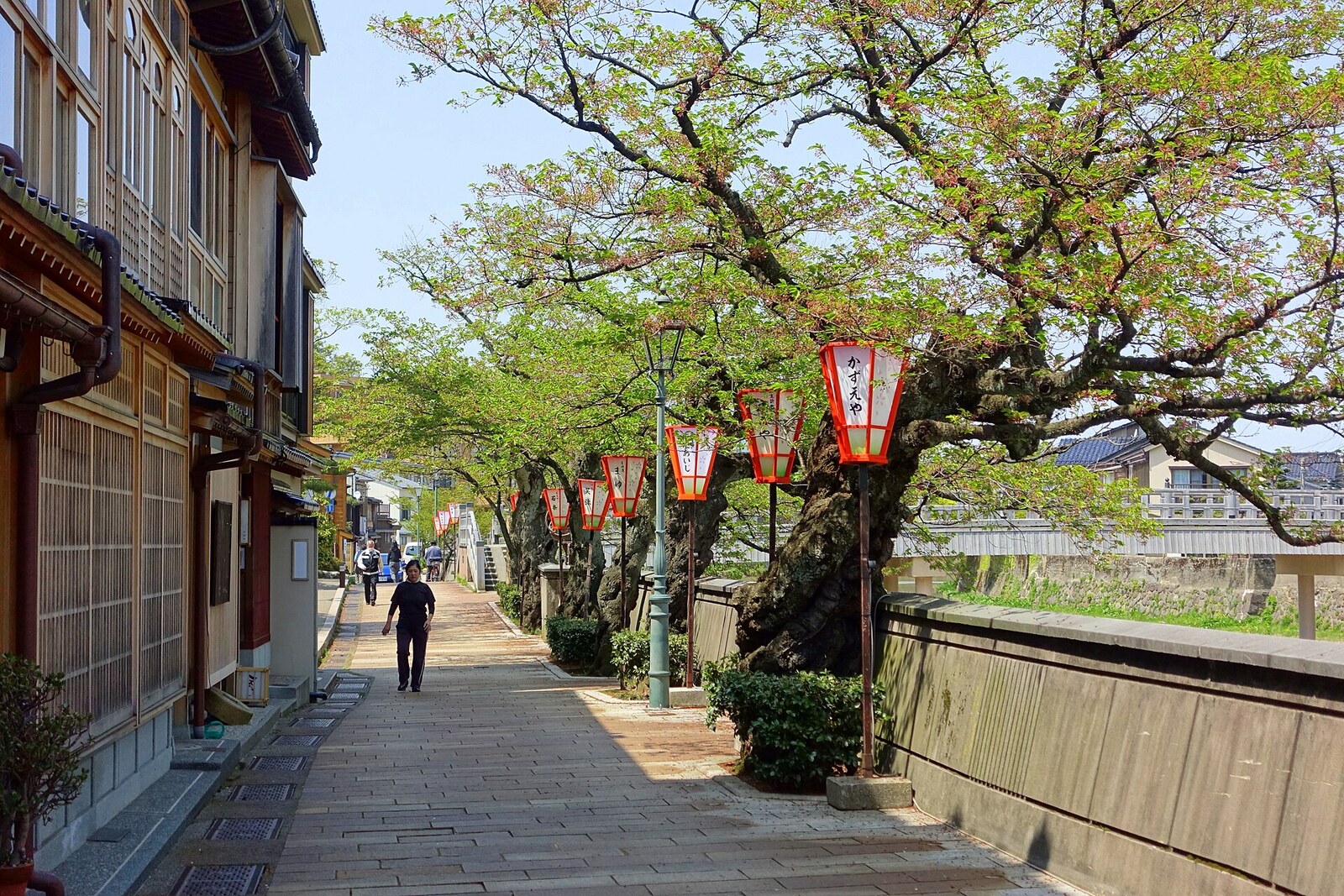
Look around first
What to notice
- Kuragarizaka Slope
- Wooden facades
- Asanogawa River
- Asanogawa Ohashi Bridge
The story of the place
Kazue-machi Chaya District retained the name of the long-vanished town estate of Tomita Kazue Shigeie, a senior vassal of the Maeda clan. Later, forty-eight teahouses gathered in the district, nearly one for every building. Wooden facades still stand along the Asanogawa River, behind which female proprietors received regular guests in establishments called restaurants and teahouses. The women worked under geigi licenses, performing music, dance, and games, while the proprietors' income depended on returning clients and their recommendations.
A stone staircase between the houses leads down from Kuboichi Ototsurugi Shrine to the teahouse district by the Asanogawa River. The sun barely reaches here even during the day, so the passage was named Kuragarizaka Slope—the Dark Slope. Its dimness proved useful to people who wanted to pass unnoticed.
After the fall of the shogunate, a teahouse district formed by the bridge across the Asanogawa River. The location was chosen beside the busy Hokkoku Kaido: people crossed the river here, boats carrying goods arrived here, and merchants and visitors traveled over the bridge. Wealthy merchants became regular guests of the local geigi—musicians and dancers. So that acquaintances would not see which house they were heading for, visitors bypassed the large bridge, crossed the river farther downstream, or came down here by the dark staircase.
Kazue-machi Chaya District did not have official status as a red-light district. The establishments were called restaurants and teahouses, while the women received geigi licenses: their profession was music, dance, and games with guests. Regular visitors and their recommendations brought in the income. The secret route allowed merchants to keep their visits private and female proprietors to receive well-off clients without open advertising. By the end of the nineteen twenties, there were forty-eight teahouses here; nearly every building in the district served as one.
The name Kazue-machi Chaya District appeared before the teahouses. Kazue is a man's name: at the beginning of the seventeenth century, Tomita Kazue Shigeie, a senior vassal of the Maeda clan, kept a town estate here. The house later disappeared, but the area's name preserved that of its owner. Merchants descending to the geigi were already coming to a district named after a samurai estate that had ceased to exist long before.
Tomita's estate and the forty-eight teahouses are no longer here. Restaurants and cafes have opened along the river, where people can enter without a recommendation, while some teahouses deeper in the district still receive primarily guests they know. Between them, the former back entrance remains: a narrow staircase by which visitors descended to the river, trying not to meet anyone they knew.
Useful on site
The streets are always open; teahouses, restaurants, and institutions operate on their own schedules.
Checked: date not specified. Check the official source before visiting.Most houses remain private residences or operating establishments: observe from the street and do not look inside. Be careful on the stone slopes after rain.