 Guide On Map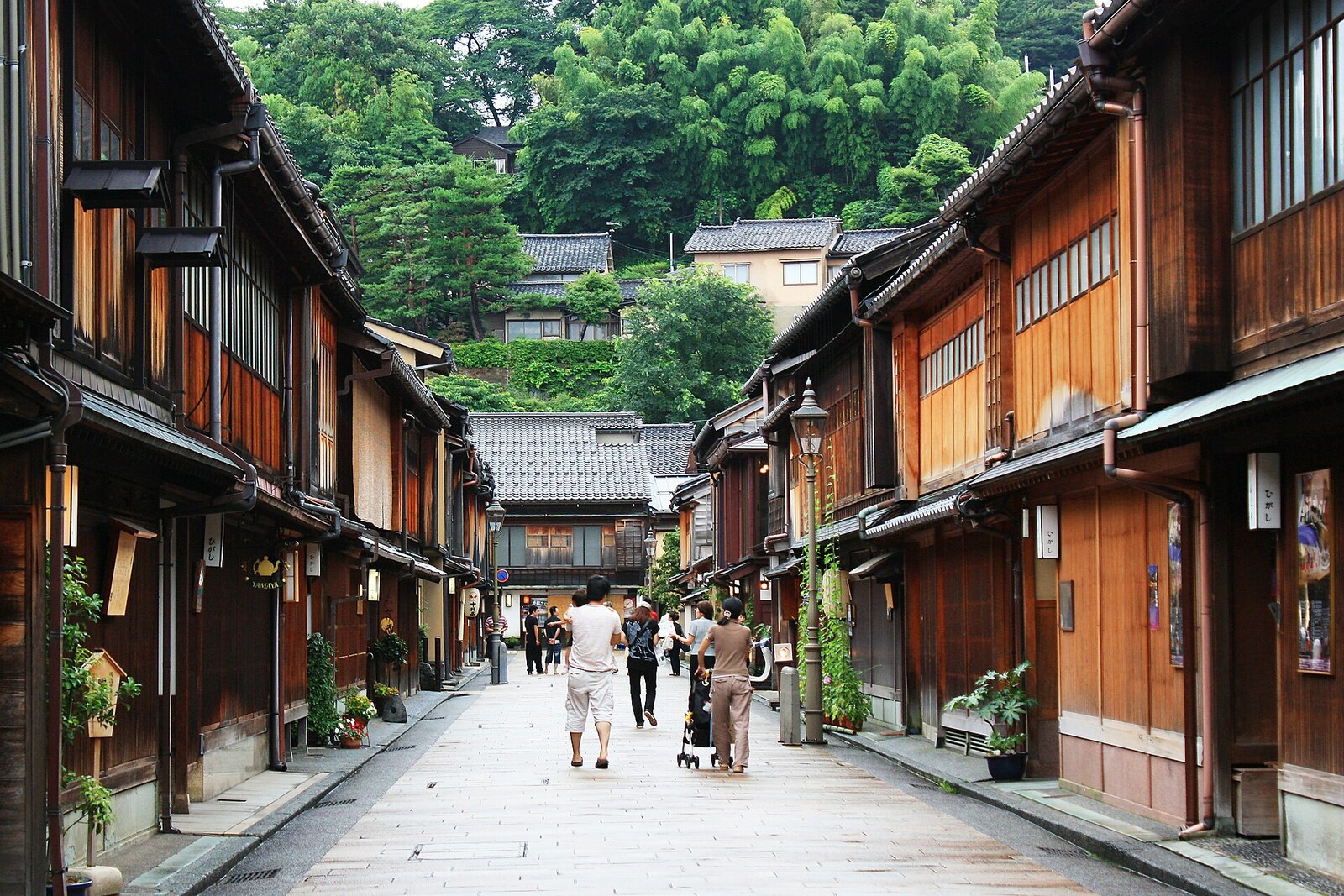
Look around first
What to notice
- Kimusuko lattice
- Guest rooms on the second floor
- Wooden facades
- The district's straight street
The story of the place
Shima preserves the layout of a teahouse where the proprietress arranged evenings for clients she knew and was responsible for their entire bill. Dishes were ordered from separate cooks, and performances were included in the bill along with the rooms and drinks. Spacious guest rooms were made on the second floor, while the proprietress's business and the geigi's preparations to appear remained below. A fine kimusuko lattice can be seen on the wooden facade: those sitting behind it could make out the street and approaching people, but passersby found it difficult to see faces in the dim room.
In the spring of eighteen twenty, the operators of Kanazawa's underground establishments asked the city magistrate, Yamazaki Tanomo, to legalize their trade. Tanomo sought a different kind of order: to gather the proprietors and women into two designated districts, monitor them there, and end secret meetings throughout the city. He claimed that licenses would also provide an income for girls from families that could not support them.
Maeda Narinaga, the twelfth ruler of Kaga Domain, allowed this experiment. The locations were chosen beside two roads that entered Kanazawa across bridges: one beyond the Saigawa River, the other here, by the Asanogawa River, where merchants, travelers, and pilgrims to the temples on Mount Utatsu converged. It was from this pair that today's Higashi Chaya District got its name: the “eastern tea district.”
Officials laid out the streets and plots here anew, marked out a rectangle of about one hundred by one hundred eighty meters, and installed gates on two sides. Etchuya Kyuhei was recorded among the first proprietors on the land-allocation plan. The house now called Shima opened then under the sign “Etchuya.” It was built in the same year the district was established.
In the first orders, the women were called zashiki-onna—women of reception rooms. They included geigi and prostitutes. For some, music, dancing, and games with guests became a source of income; for others, selling sex. Permission brought them out of hiding, but the district boundary soon became the boundary of their movement. As early as eighteen twenty-three, prostitutes were forbidden to leave the designated area.
The arrangement of Shima preserves the order of an evening at that time. Guests went upstairs to the formal rooms on the second floor. On the first floor, the proprietress kept the accounts while the geigi prepared to appear. Food was ordered from outside cooks: the teahouse proprietress combined the room, dishes, drinks, and performance into one bill. That was why she admitted only clients she knew or people with a recommendation—she was the one who would have to settle with everyone hired if a guest disappeared without paying the debt. The front rooms on the first floor were concealed by a fine kimusuko lattice with one-way visibility. Its slats were given a trapezoidal cross-section: from inside, the street was visible, while from outside the faces behind the lattice were hard to make out. The women could recognize an arriving client while remaining, to passersby, part of the dark interior. They then left this lattice and went upstairs, to rooms where the public already looked at them openly.
Yamazaki Tanomo's attempt to keep the trade within the established order lasted eleven years. Officials barred samurai, monks, and doctors from visiting the district, restricted the women's clothing, suppressed loans for entertainment, and required prices to be lowered. The senior adviser Honda Masakazu had sought the repeal of the licenses from the outset. In eighteen thirty-one, his position prevailed: the proprietors were paid compensation, both districts were closed, and later orders required the teahouses to be converted into ordinary dwellings.
Only thirty-six years later were establishments allowed to operate again. The house changed signs several times and received its current name, “Shima,” after the Second World War. It is now a museum. The district gates are gone, but the division of the streets, the high guest floor, and the lattice on the first floor remain: from outside, it is still difficult to see the room from which the street is clearly visible.
Useful on site
Streets are always open. Shima House: 9:30–17:30 from March to November, 9:30–17:00 from December to February, open 365 days; adult ticket 500 yen.
Checked: date not specified. Check the official source before visiting.From the street, you can see the district's architecture but not the private life of operating teahouses. At Shima, you can study the historic interior; an actual geiko evening requires a separate arrangement and is not part of an ordinary museum visit.