 Guide On Map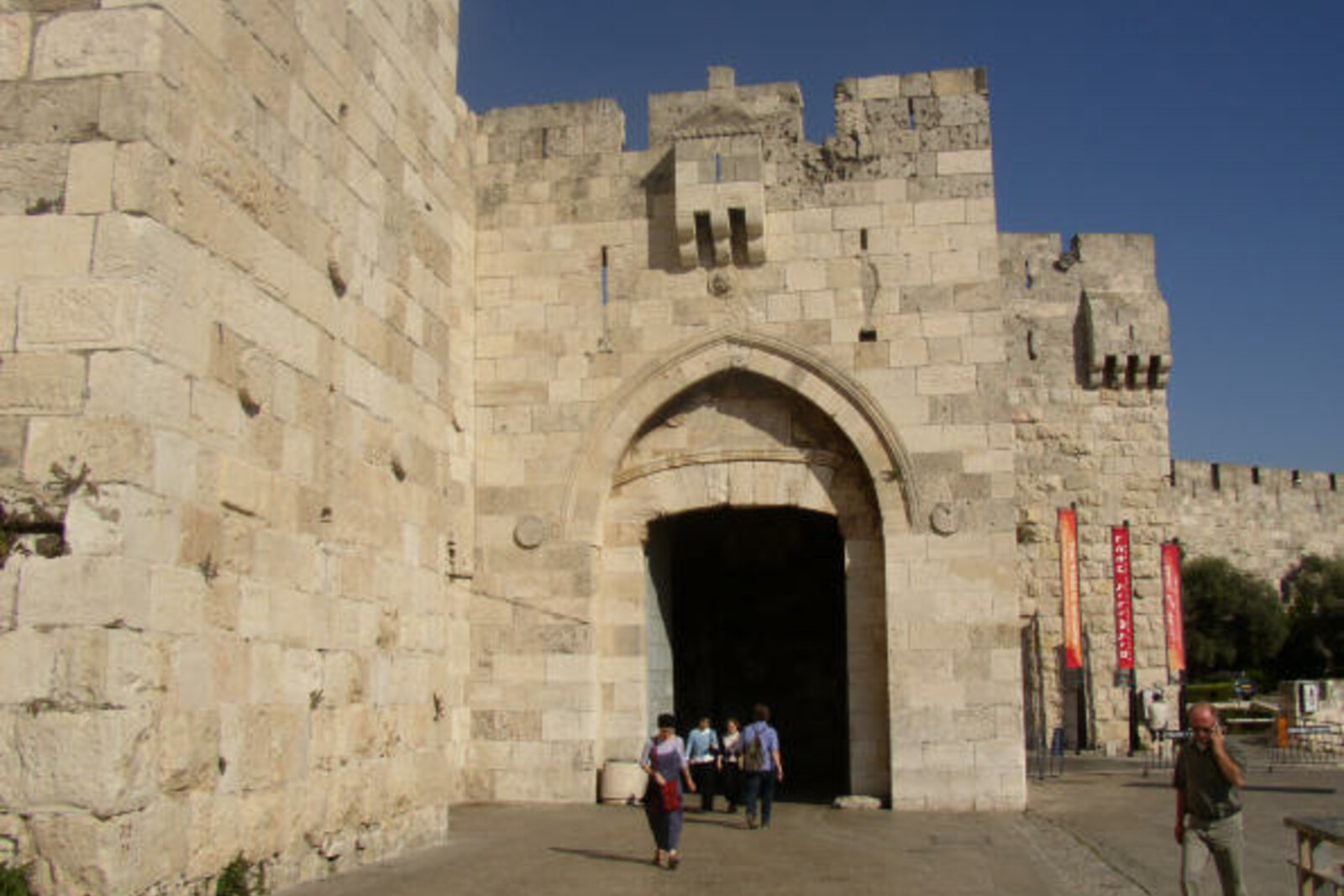
Look around first
What to notice
- Stone arch
- Wide passage
- Gate tower
- Citadel steps
The story of the place
Jaffa Gate has two entrances. The stone arch with a sharp turn is the gate built by order of Sultan Suleiman the Magnificent in fifteen thirty-eight. The turn prevented attackers from rushing into the city at full speed. The wide passage beside it, now used by people and cars, appeared three and a half centuries later.
The name indicates a direction. The road to the Mediterranean port of Jaffa began here, where many travelers from Europe arrived. In Arabic, this same Jaffa Gate is called Bab al-Khalil, “the Gate of the Friend”: this is how Abraham is known. He is buried in Hebron, which was also reached by the road from here.
In the autumn of eighteen ninety-eight, the Ottoman administration was preparing to receive the German emperor Wilhelm II. He was traveling to Jerusalem as an ally of Sultan Abdul Hamid II and was to take part in the consecration of a Lutheran church. The imperial procession, with horses and carriages, could not pass through the narrow turn of the old gate.
To make way, part of the dry moat by the citadel was filled in, and the top of the wall between the citadel and the gate tower was dismantled. A popular legend claims that Wilhelm himself demanded that the wall be breached so that he could enter on horseback without bowing his head. Surviving documents say otherwise: when the emperor learned of the plan, he called it barbarism and ordered the work stopped. Ottoman officials completed it anyway. They had intended to widen the entrance for carriages earlier; the visit gave that project a reason and a deadline.
On October twenty-ninth, the imperial procession passed through the new passage. Wilhelm received the ceremonial entry to which he had managed to object, but in the city's memory he remained the man for whom the wall was destroyed. The breach was not closed after the ceremony.
Nineteen years later, British General Edmund Allenby rode up to it. He commanded the army that occupied Jerusalem after the Ottoman troops withdrew. His actions at the gate had been set out in advance in telegrams from London. The head of the British General Staff ordered Allenby to dismount and enter on foot, explicitly referring to the Kaiser's entry on horseback. The War Cabinet even sent the text of a proclamation that was to be read to the residents.
On December eleventh, nineteen seventeen, Allenby dismounted before Jaffa Gate and walked into the Old City of Jerusalem with officers of the Allied armies. Then, on the steps of the citadel, martial law was proclaimed in seven languages, along with a promise to protect the holy sites of different religions. This marked the beginning of the period of British rule in Jerusalem.
The wide passage prepared for one imperial procession remained the main entrance. Beside it, the old arch with its defensive turn survives—the gate before which another commander dismounted by order.
Useful on site
The exterior space and the passage through the gate are public urban space, usually accessible daily.
Checked: June 27, 2026. Check the official source before visiting.Look around from the side of the pedestrian and vehicle flow; do not stop in the narrowest part of the gate.