 Guide On Map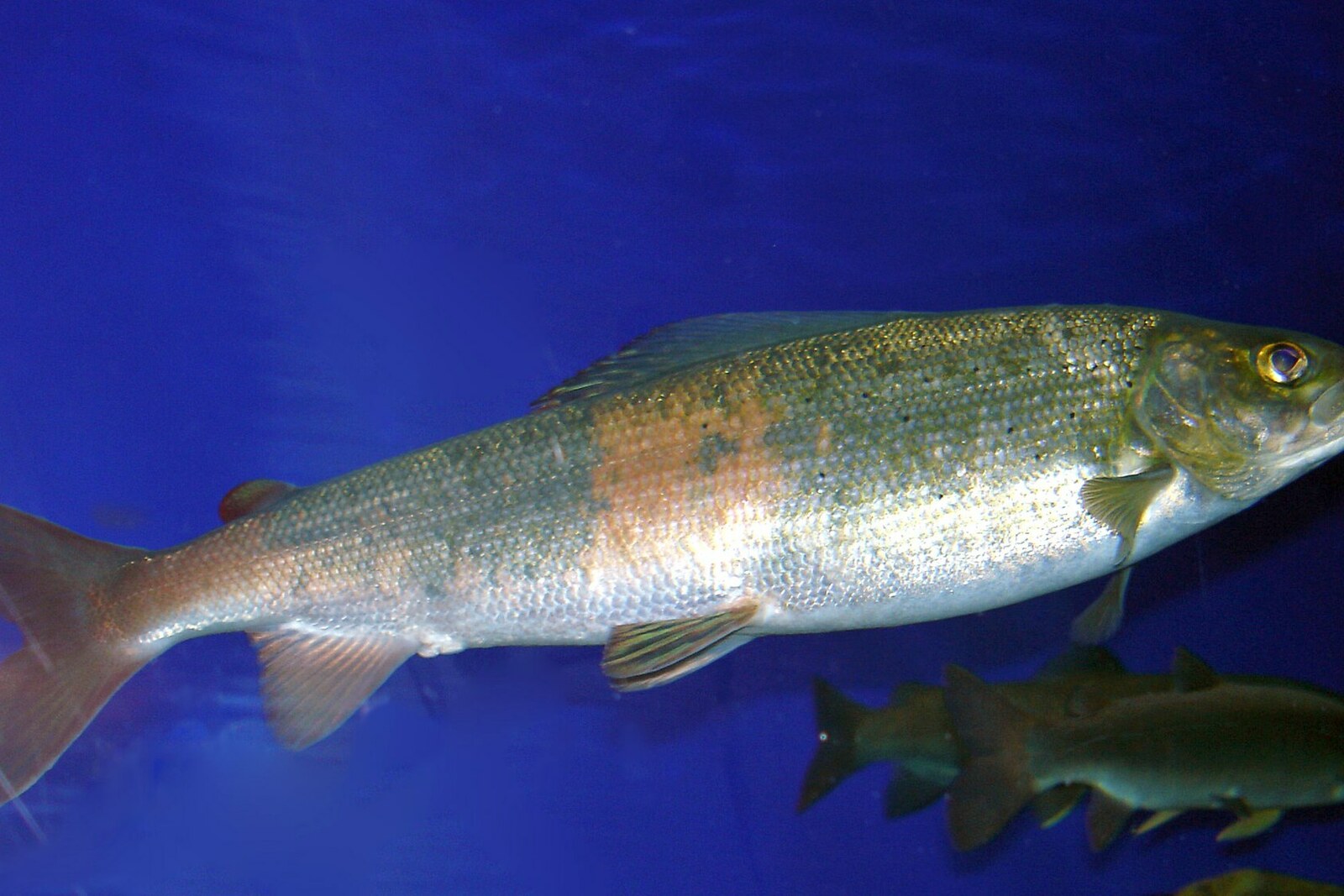
Look around first
What to notice
- Large aquariums
- Transparent aquarium panels
- Baikal seals
- Fish and sponges
The story of the place
In nineteen ninety-three, the Limnological Institute, which studied Lake Baikal, moved from Listvyanka to Irkutsk. Its former building, together with its scientific collections, was transferred to a new independent institution—the Baikal Museum of the Siberian Branch of the Russian Academy of Sciences. Vladimir Abramovich Fialkov, an underwater researcher, was appointed its organizing director. He had to decide what a museum of a lake should be like when people can never see most of it from the shore.
Fialkov had worked underwater on Lake Baikal since nineteen sixty-three. He took part in deep-water expeditions in the Pisces submersibles, reached the lake’s deepest basin, and spent more than four thousand hours underwater in total. Meanwhile, scientific samples and collections lay in the museum halls, and display stands stood there. The submersibles remained working tools for a few specialists. Fialkov set a different task: to bring living Baikal water into the building and place the lake’s inhabitants in it.
The project took eleven years. The large aquariums required transparent panels capable of withstanding the pressure of tens of tons of water. Suitable foreign-made panels were too expensive, and none were produced in Russia at the time. Fialkov saw multilayer bulletproof glass being installed in one of the banks and suggested testing it for the aquariums. Specialists confirmed the calculation: the bulletproof glass could withstand the load and cost several times less. One panel became covered with thousands of cracks while being unpacked, but did not fall apart—this is exactly how the material should behave when damaged.
The water still had to be delivered. Staff laid a pipe from the shore to a water intake at a depth of four hundred meters and built a pumping station. In nineteen four, the aquarium complex opened. Its tanks held seventy-two tons of water; fish, crustaceans, sponges, and Baikal seals appeared inside. For the first time, visitors were shown living inhabitants of the lake in water coming from Lake Baikal itself.
Later, staff added forty research aquariums. They are used to study the life cycles of Baikal animals and ways to keep deep-water species after they are brought up. The pumps deliver about five hundred cubic meters of water a day. This is what the words “Siberian Branch of the Russian Academy of Sciences” in the name mean: staff continue their research here, while the visitor exhibition uses the same installation.
Behind the bulletproof glass flows water raised from a depth of four hundred meters. A pipe connects the aquariums to Lake Baikal behind the wall of the former institute.
Useful on site
Daily 09:00–19:00. Main exhibition with aquarium: adult ticket 600 ₽, schoolchildren and visitors over 60 — 300 ₽, children under 7 — free; additional programs are charged separately.
Checked: date not specified. Check the official source before visiting.You can look at the exterior apparatus before visiting the exhibition, but the story of the living lake unfolds inside. Set aside separate time for the museum, and do not treat the aquariums as an ordinary entertainment display.