 Guide On Map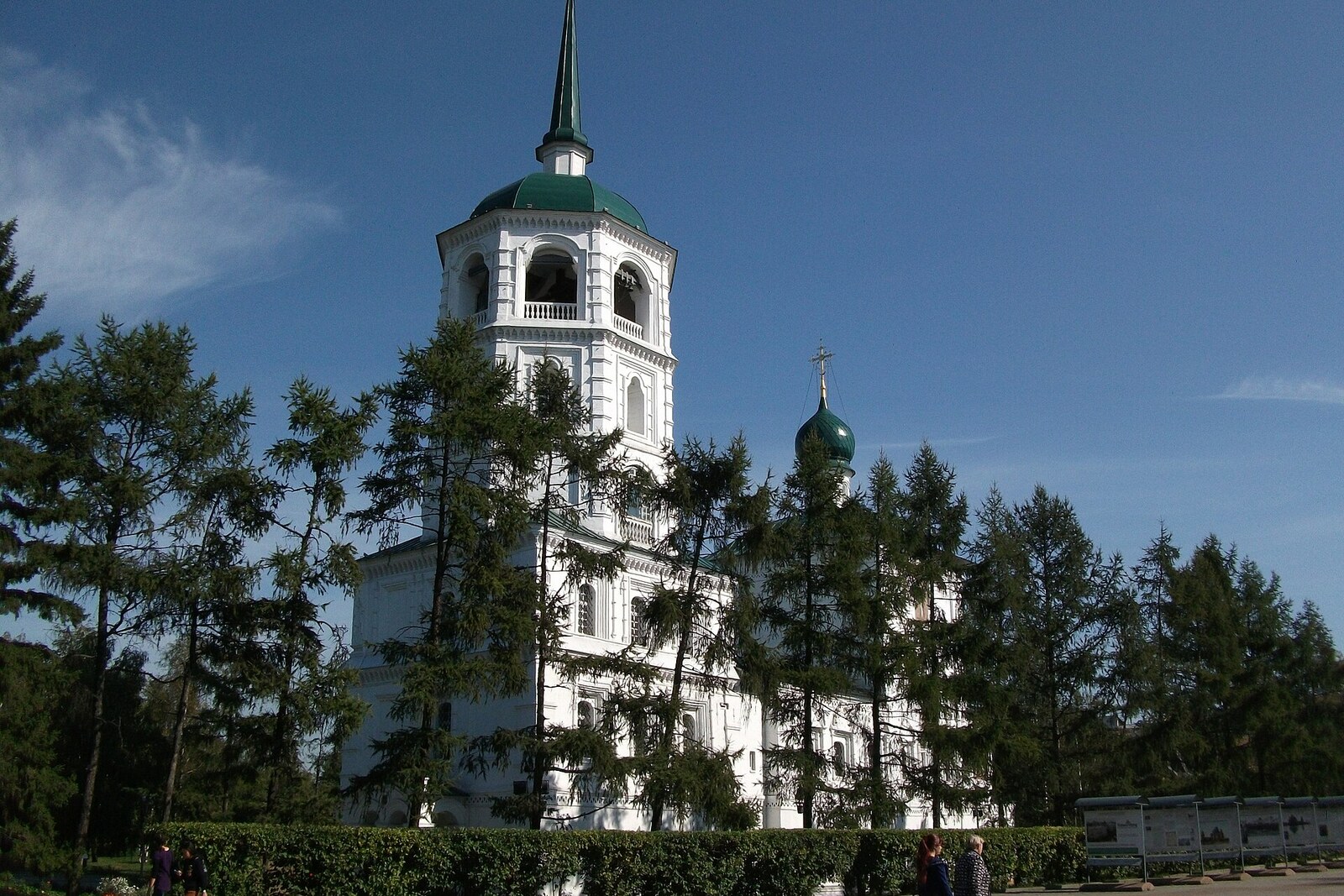
Look around first
What to notice
- Facade paintings
- Panel on the eastern wall
- Brickwork
The story of the place
The brick church stands where a wooden wall once enclosed the southern edge of the fort. Services were held upstairs, while the lower floor served as the city's storehouse: beside the heated side chapel, it held grain, furs, and the voivode's treasury. Nothing survives of the fort wall, the administrative office, or the warehouses; the line of the old fortification can be traced only by this building. Its brick facades still bear colorful paintings.
In September nineteen seventy-four, the restorer Leonid Grachev came to the Church of the Saviour for ten days. He had to find out whether early nineteenth-century paintings remained beneath the whitewash and cement crust. A mistake here would cost the very painted layer: it could be removed together with the later covering, or declared lost and repainted over.
The facade was painted over after the church was closed in nineteen thirty-one. A dormitory, workshops, communal apartments, and warehouses succeeded one another in the building. The interior paintings were destroyed; the exterior ones were whitewashed and in places covered with cement. No one knew what exactly remained between the brickwork and this outer shell.
From September seventeenth through twenty-seventh, Grachev made test clearings. Old paint appeared beneath the later layers. That was enough to abandon the plain white facade and continue uncovering it. The work was taken on by the artist-restorer Yevgeny Maslov, who before coming to Irkutsk had restored the paintings of cathedrals in the Moscow Kremlin. In the summer of nineteen seventy-eight, the craftsmen finished uncovering the paintings and began restoring the lost colors. By nineteen seventy-nine, the paintings had been returned to the facades, and three years later an exhibition hall of the local history museum opened in the former church.
The result before your eyes cannot be taken entirely as untouched painting. It was originally done in tempera, then retouched with oil paints, and in the twentieth century assembled from surviving fragments and restoration additions. The right-hand part of the large panel on the eastern wall was painted anew. The central scene—the Baptism of Christ—was restored in its former place.
The church's name, however, comes from a different image. Here, the Saviour means Christ, and the Image Not Made by Hands means his face, which, according to church tradition, was imprinted on cloth without an artist's involvement. The main altar was dedicated to this image. In seventeen ten, townspeople transferred a processional banner bearing the image of Christ from the earlier wooden church into the stone church. Local tradition links this banner with the Cossacks who came to found Irkutsk Fort; there is no documentary confirmation of this part of the story.
The stone church was founded in seventeen oh six by order of Larion Sinyavin, the voivode of Irkutsk, and with funds collected by the townspeople. Moisey Dolgikh, a Moscow master builder in stone, made brick kilns, searched nearby for clay and lime, and built the church directly into the southern wall of the wooden fort. Services were held upstairs, while the lower floor, beside the heated St Nicholas side chapel, stored grain, furs, and the voivode's treasury.
Nothing remains of the fort wall, the administrative office, or the warehouses around it. The Church of the Saviour is the only building by which the former boundary of the fort can be traced. Services have been held here again since the beginning of two thousand seven. There are no old paintings left inside, but outside remains what Grachev found beneath the cement during ten September days.
Useful on site
Active church; it is best to check the current service schedule on the parish website on the day of your visit.
Checked: date not specified. Check the official source before visiting.The main rarity at this stop is visible from the street, so going inside is not necessary. Do not block the passage or go too close to the paintings.