 Guide On Map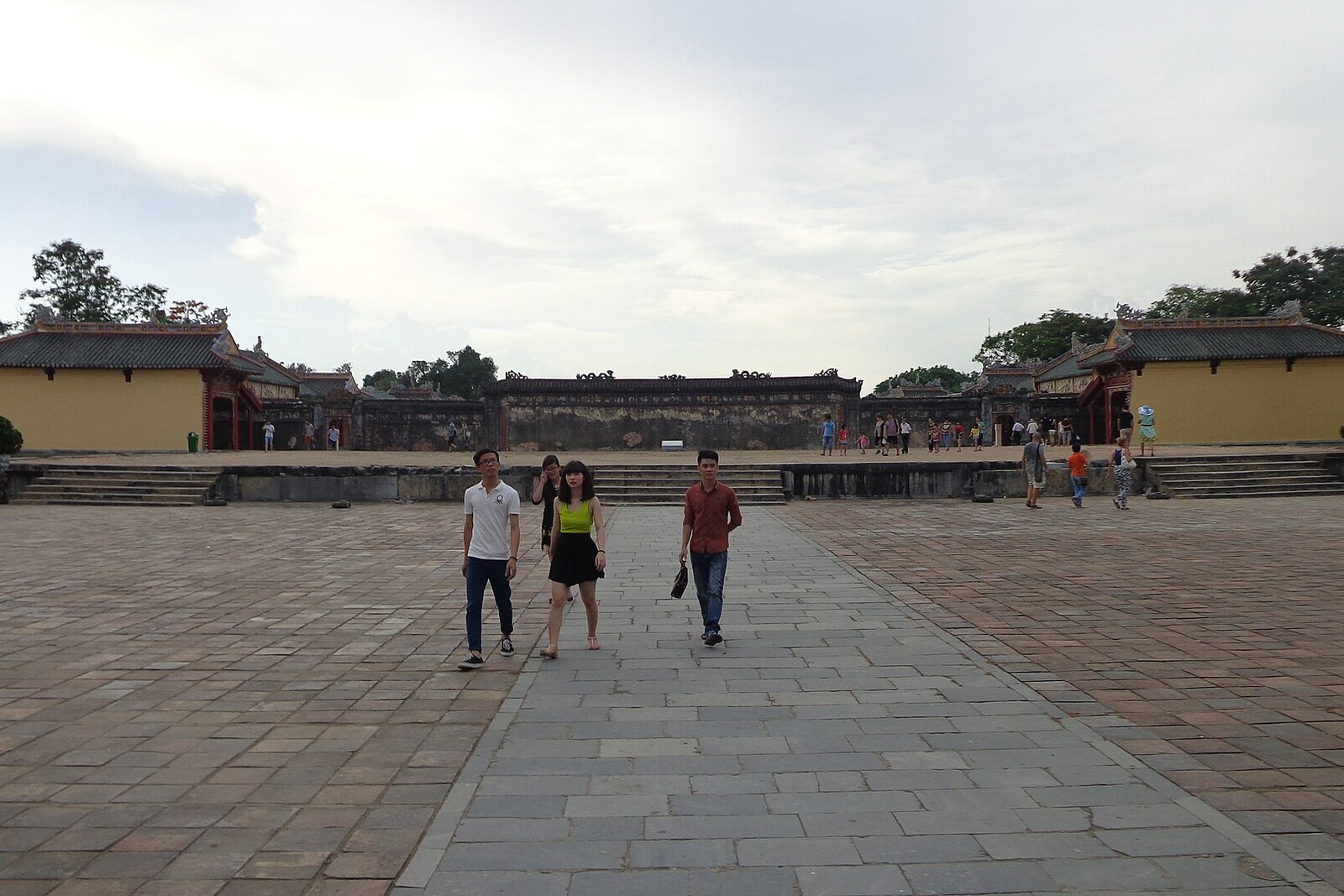
Look around first
What to notice
- The foundation of Can Chanh
- The central part of the foundation
- Traces of the former wooden hall
- Structures under reconstruction
The story of the place
Can Chanh served as the palace hall for the emperor’s day-to-day affairs and stood in the northern part of the Forbidden Purple City. Officials were received there at regular audiences, embassies were welcomed, and banquets were held for courtiers. During the fighting, the wooden structure was destroyed; the foundation survived, and the hall is now being rebuilt above it from earlier measurements, drawings, and photographs.
In March nineteen thirty-four, twenty-year-old Nguyen Huu Thi Lan entered Can Chanh alone. She came from a wealthy Catholic family in southern Vietnam, studied in France, and agreed to become the emperor’s wife on several conditions: that she keep her faith and receive the title of empress immediately after the wedding.
The groom, Bao Dai, was her age. The young emperor wanted to choose his own wife and accepted the conditions, although at the Nguyen court wives were usually granted the highest title only after their husbands’ deaths. On March sixth, he issued a decree: as soon as Nguyen Huu Thi Lan entered the palace, she was to be elevated to the rank of empress.
Can Chanh was chosen for the ceremony—the monarch’s working hall in the Forbidden Purple City. Its name translates as “Hall of Diligent Governance.” Here the emperor received officials at regular audiences, met embassies, and held court banquets. Bao Dai’s private choice here became a decision that all the state’s highest officials had to recognize.
Bao Dai later recalled the red-and-gold carpet between two rows of courtiers. The bride walked along it in a yellow robe and a crown of pearls and gemstones. Yellow was reserved for the emperor; Bao Dai authorized it for his future wife by a separate order. Before the throne, she bowed three times, then sat to the right of her husband on a lower throne. For the first time, a woman passed through the court assembly in this manner.
Nguyen Huu Thi Lan received the name Nam Phuong—“Fragrance of the South.” She was recognized as empress during her husband’s lifetime, kept her Catholic faith, and the couple settled in the northern part of the Forbidden Purple City and raised five children.
In February nineteen forty-seven, the wooden Can Chanh was destroyed during fighting; its foundation survived. The hall is now being rebuilt on it from old measurements, drawings, and photographs. The place where Nam Phuong walked between the rows of courtiers occupies the central part of this foundation.
Useful on site
The zone is inside the ticketed complex, but accessible paths and viewpoints change because of restoration work in 2025–2029.
Checked: date not specified. Check the official source before visiting.The condition of the site changes as work progresses: stay behind the barriers and view only what is visible from the officially accessible side.