 Guide On Map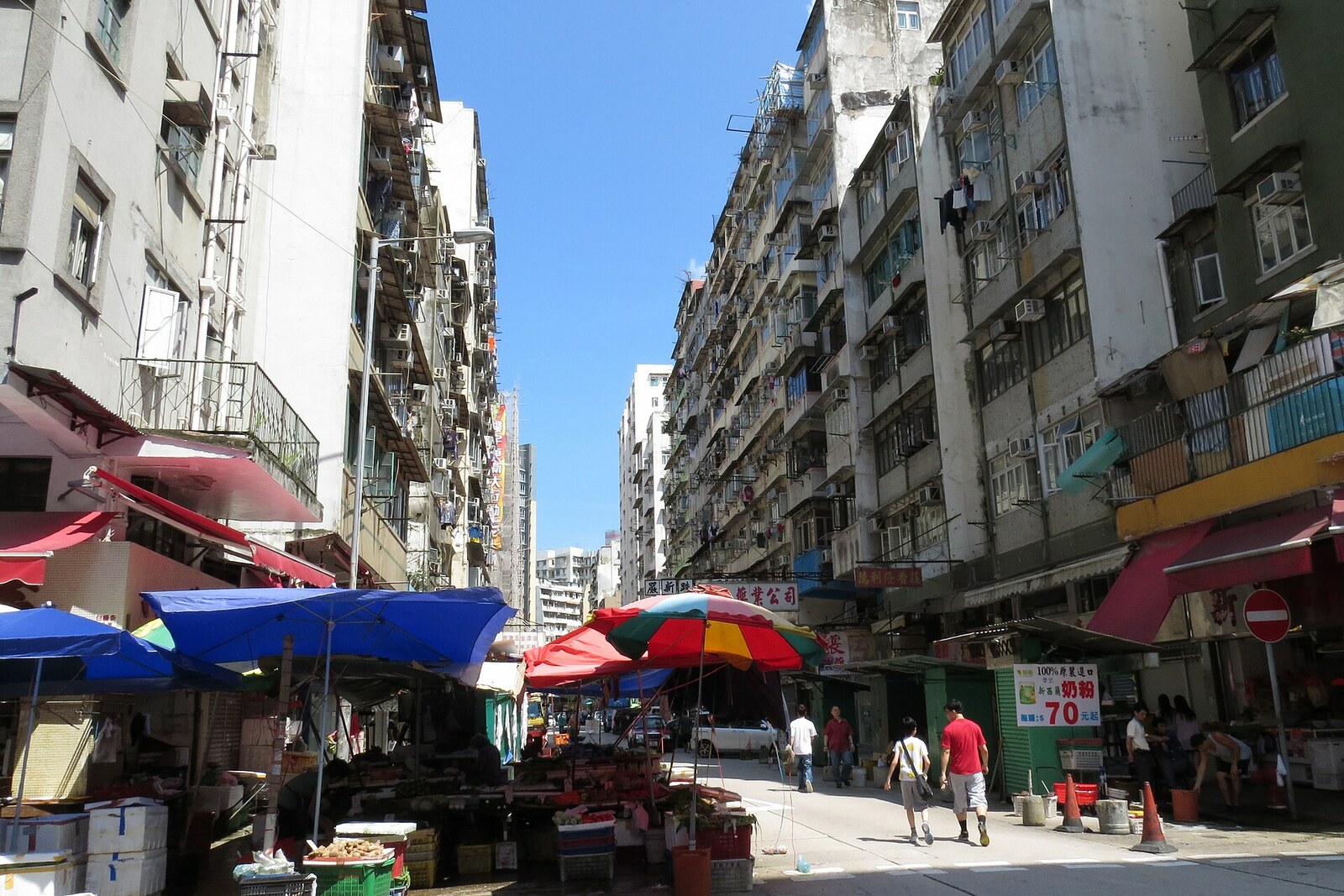
Look around first
What to notice
- Facade of building 215
- Signs of haberdashery shops
- Buttons in shop windows
- Zippers and fasteners
The story of the place
In the shop windows along this commercial street, buttons, zippers, fasteners, and fabric still lie on display. When Sham Shui Po became a garment district, factories and workshops collected all the small details for future clothing batches here, moving from one shop to another. Goods were supplied by the hundreds: a handful of buttons was shaken on a wooden board with cells until a full gross was reached. Garment production left Hong Kong long ago, but the haberdashery shops remained.
Ki Lung Street is named after Keelung, a Taiwanese port city. “Button Street” is a local nickname given to it by merchants. Its origin is well explained by the story of building two hundred fifteen: until September two thousand twenty-five, Chung Wah Co. was located here.
In the nineteen fifties, the future owner's father opened a button factory. He made buttons from shells, horn, coconut shells, and plastic—for local garment businesses and for export. In nineteen fifty-eight, the manufacturer bought premises on Ki Lung Street and set up a shop alongside the factory here.
Choosing the street was a calculated decision. Sham Shui Po was becoming the center of Hong Kong's garment industry; factories constantly needed fasteners, zippers, ribbons, and fabric. Suppliers settled near one another so that a single buyer could collect every detail for a future clothing batch within a few blocks. Chung Wah Co. worked mainly with large orders and sent boxes of goods to factories every day.
The founder's son, Mr. Heung, came to Hong Kong at eighteen and began here with the simplest tasks. He learned to count on an abacus and to wrap buttons in paper. The final task in the shop was called “medicine packing”: the small, identical circles really were laid out like pills.
Buttons were counted using wooden boards with recesses. The merchant poured a handful of goods onto one such board and shook it; when all one hundred forty-four cells were filled, that made one gross—twelve dozen. Another board held eight hundred sixty-four pieces at once. These devices show the true scale of the trade: the customer chose a color and size, and the seller supplied goods by the hundreds.
In the nineteen seventies, plastic buttons began to displace products made from shells and horn. The family closed the factory, switched to imports, and handed the shop over to Mr. Heung. He maintained the business through its peak years: along with buttons, customers bought zippers, needles, thread, and hooks here. There were so many such shops on Ki Lung Street and neighboring Nam Cheong Street that the distance between them was sometimes only a few doorways. That is how the nickname “Button Street” became attached to an entire block.
From the nineteen nineties, garment factories began moving production out of Hong Kong, and everyday clothing increasingly did without buttons. Chung Wah Co.'s orders almost stopped. Mr. Heung was growing older and looked for someone to whom he could pass the business on, but no willing person was found. Even an offer to take some of the goods for free did not help.
On the second floor, boxes of shell buttons made in the nineteen seventies still lay there. Customers took two or several pieces for handicrafts, although the same goods had once gone to factories by the gross. The owner calculated that at this rate, the stock would not run out even in two hundred years. He sold off packs that had cost one hundred Hong Kong dollars for ten or twenty.
After sixty-seven years of work, Mr. Heung closed the shop and retired. Buttons, zippers, fasteners, and fabric are still sold on Ki Lung Street, so the commercial nickname has survived. But in building two hundred fifteen, there is no longer Chung Wah Co., no boxes of buttons made from old shells, and no wooden boards that counted them by the hundreds.
Useful on site
Independent shops; hours vary. During the day, the selection and open doors are usually more reliable than late in the evening.
Checked: June 25, 2026. Check the official source before visiting.Do not interfere with repairs and deliveries, and do not touch tools or bicycles; enter the workshop only by invitation.