 Guide On Map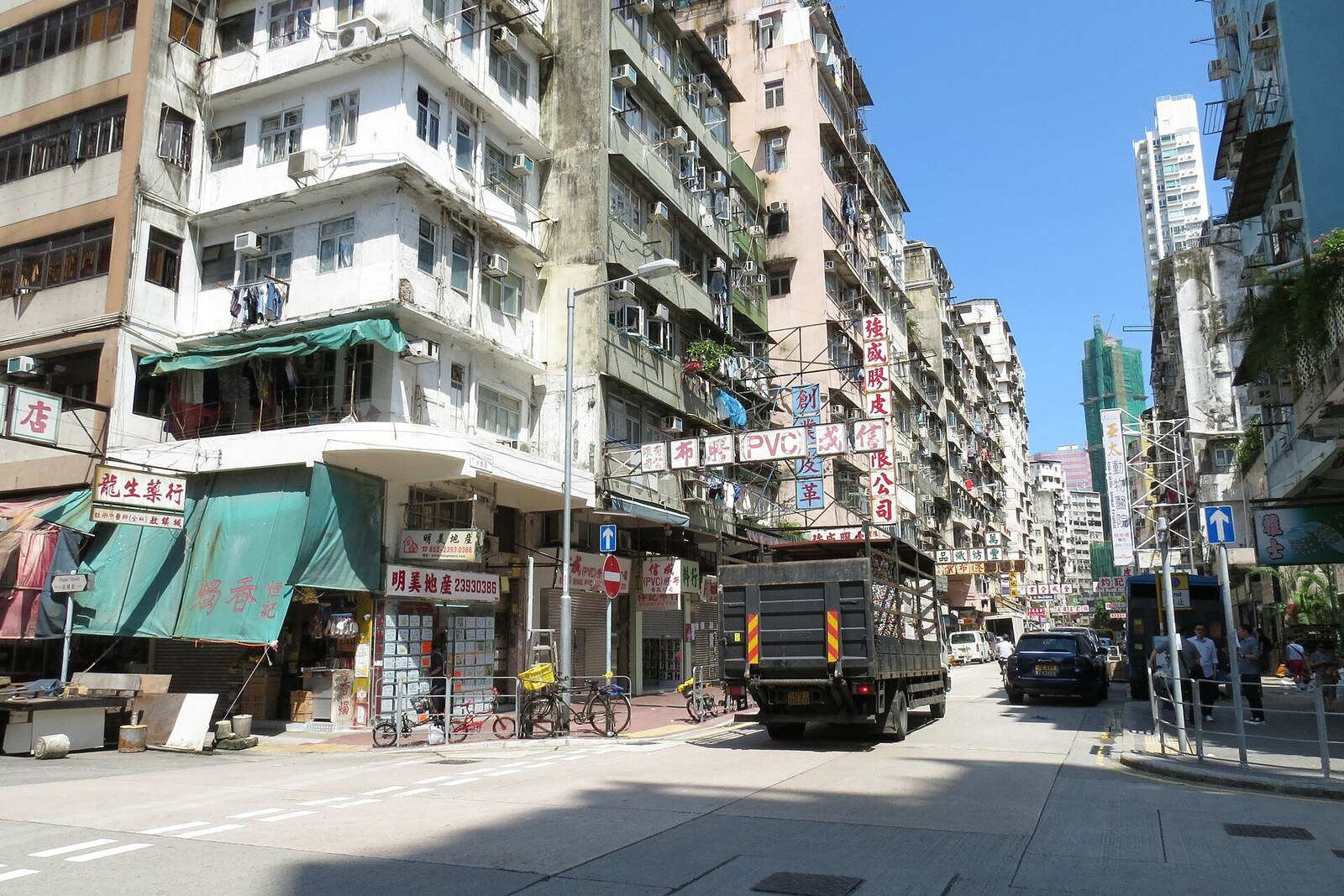
Look around first
What to notice
- Columns clad in small tiles
- Iron railings
- Leather cuts
- Entrance to Lung Cheung Leather
The story of the place
Leather left here in batches of thousands of square feet. It was bought by shoe, garment, and bag workshops in Sham Shui Po, while raw-material suppliers kept shops near the manufacturing. That is how Tai Nan acquired the nickname Leather Street, and Lung Cheung Leather operated as a wholesale shop. Leather cuts that were once intended for neighboring workshops still lie by the entrance.
At number one hundred seventy-three on Tai Nan Street, two columns clad in small tiles are surrounded by iron railings. They do not support the building. The owners of Lung Cheung Leather installed the railings after trucks weighing five to six tons began chipping the tiles: drivers pulled their vehicles right up to the doors to load whole bales of leather.
The shop was opened in nineteen forty-eight by a married couple who had moved to Hong Kong from Guangzhou. At the time, workshops making shoes, bags, belts, and clothing were multiplying in Sham Shui Po. They constantly needed raw materials, so leather merchants gathered near the manufacturers. Lung Cheung Leather sold almost exclusively wholesale: a single buyer might take five thousand to ten thousand square feet of leather. The whole local trade grew out of such orders, and Tai Nan came to be called Leather Street.
The family lived on repeat orders and took a risk with every deferred payment. Goods were released in exchange for a check or a verbal promise. A buyer might reliably pay for five lots, take a sixth, leave an unsecured check, and disappear. The loss could amount to tens of thousands of Hong Kong dollars at the time.
When the shop's founder died early, his widow, Cheung Siu-wa, took over the business. She had to preserve the family income and retain customers in an industry where the owners were almost always men. She continued the wholesale trade and became the first woman honorary chair of the Hong Kong Leather Merchants Association. The shop outlived her generation and passed to the children, then to her grandson.
At the beginning of two thousand eighteen, Cheung Siu-wa's grandson, Tommy Leung, took over the shop in a changed city. The manufacturers had moved away, large orders had disappeared, and the wholesale share had fallen from nine-tenths of sales to less than one-tenth. In three months, Tommy reconfigured the interior. On the lower floor, he placed small cuts and finished goods for retail customers; upstairs, he created a workshop and exhibition space, and invited experienced leatherworkers to lead classes. There were not many more customers, but design students began coming here; the premises started to host master classes, exhibitions, and theater projects.
Lung Cheung Leather still trades in leather and accepts orders. The iron railings around the columns have also remained, although large trucks are now hard to find. Raw materials for factories once passed between them in thousands of square feet; now, through the same entrance, someone carries a small piece of leather from which a visitor plans to make one bag or wallet.
Useful on site
Independent workshops, cafés, and shops; hours vary. Check the specific place if you want to go inside.
Checked: June 25, 2026. Check the official source before visiting.Look at the leather without touching it until the seller offers you a sample; arrange classes and visits to the working spaces separately.