 Guide On Map
Working Sham Shui Po: Markets and Family Shops
From Mei Ho House through the trading streets to Tai Nan Street
Guide On Map on your phone
Open the walk like a regular app
It takes about 10 seconds to install. No app store needed.
The whole path
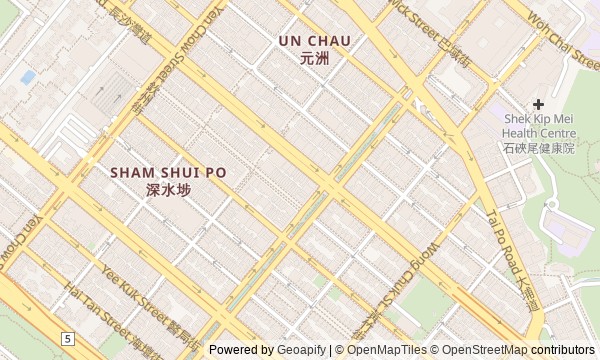
Route map
About the walk
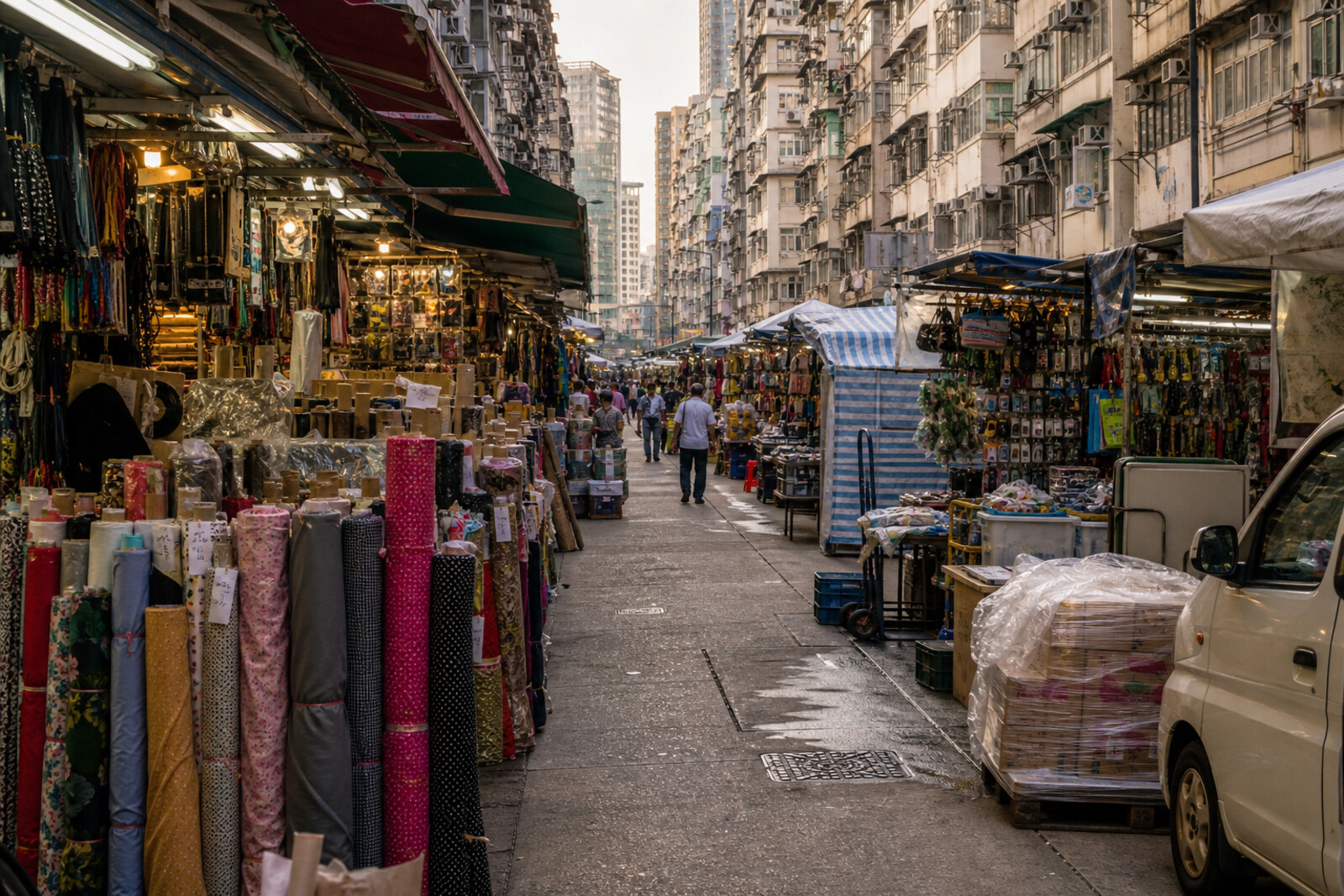
You will begin by a resettlement housing block, then head down to Apliu Street, where old radio parts sit beside new electronics. The road will then lead through the food market and turn into a grid of streets with trade nicknames: Ribbon, Bead, Button, Leather. This is not the Hong Kong of harbors and towers, but a neighborhood of buyers, family counters, and stock passed from hand to hand. Questions will come up along the way. Why was a number attached to a family photograph? Why did a merchant sleep beside the bales? What remains of a shop when buttons are no longer bought by the hundreds, but two at a time? The story moves through details like these—quietly, without museum grandeur or premature conclusions. By the end, you will be able to read Sham Shui Po as a map of old manufacturing: through which goods sit side by side, the size of an order, and who stayed behind the counter.
Why this order
Mei Ho House sets the route at a domestic scale: first you will see housing where a family shared one room, then descend to Apliu Street and move from home life to making a living on the street. Pei Ho Street continues the story of the same counter, but shows how trade was divided between the street and a municipal building. From the market, the route follows Ki Lung Street to Nam Cheong Street: after the rules for sellers, you will see what the suppliers themselves relied on. Next, neighboring Yu Chau Street and Ki Lung Street bring together fabric, beads, and buttons—parts of one garment industry, but with different family-business fates. Tai Nan Street comes right after Button Street: after a shop that closed, the route ends at one where old wholesale trade has been adapted for new customers.
Those who want to see everyday, industrial Hong Kong Lovers of markets, old signs, and family shops Those interested in human stories of work and trade
Those looking for a route along the waterfront and famous panoramas Those worn out by trading streets and cramped shops Those who care more about grand architecture than the history of ordinary things
Before you go
Wear comfortable shoes and keep your hands free: sidewalks can be narrow, with carts, bicycles, and goods being unloaded beside you. Check access to the museum section at Mei Ho House in advance if you want to see the restored rooms; the building is still a worthwhile stop from outside. Pei Ho is an active market and everyday food spot, so do not block the walkways or photograph vendors up close without permission. In material shops, first ask whether you can touch samples and take photographs. Cash, water, and a light bag for unplanned purchases will come in handy.
When to go
Set out in the first half of the day or around noon, when the markets are already in full swing and specialist shops have not yet started to close. Leave extra time for the whole route: interest here often begins at an unassuming storefront or after a brief conversation. In hot or rainy weather, alternate open streets with covered arcades and the market.
Backup plan
If the Mei Ho House museum is closed, take in the H-shaped block and its open galleries from outside, and use the story as a guide to the building's scale. If a particular shop or workshop is not open, do not look for an urgent replacement on a random recommendation: walk the whole block and compare neighboring facades, goods at the entrances, and the layout of the upper floors. In heavy rain, spend less time lingering outdoors and more at Pei Ho and under covered sections. If you are tired, end the walk after Ki Lung Street; Tai Nan Street is better saved for a separate daytime visit than rushed through.
Route conditions
Elevation. Ascent — 37 m; descent — 38 m
OpenStreetMap extract of June 18, 2026: database data, not a check on the ground. Data © OpenStreetMap contributors, ODbL licence
Walk plan
Open in maps ↗- 1
Mei Ho House
Here, the family room will show the price fire victims paid to obtain permanent housing. - 2
Apliu Street Market
A street cart begins the story of a trade that gradually took over an apartment and a warehouse. - 3
Pei Ho Street Market and Cooked Food Centre
This stop explains why food ended up under a roof while dry goods kept their place on the street. - 4
Nam Cheong Street (Ribbon Street)
A family shop links garment production to an item buyers of ready-made clothing barely notice. - 5
Yu Chau Street (Bead Street)
The story of a fabric stall shows how factory remnants supported a family and changed along with its customers. - 6
Ki Lung Street (Button Street)
The closed shop shows a moment when there is still plenty of old stock, but no one left to continue the family business. - 7
Tai Nan Street
The ending will show a family business that preserved an old product but found another use for it.
Route features
Everything you need stays in the browser
Progress, saves and your trip plan are stored on this device.
Add Guide On Map to your home screen so the walk opens outside the browser.
How we handle sources, maps and corrections: our editorial standards