 Guide On Map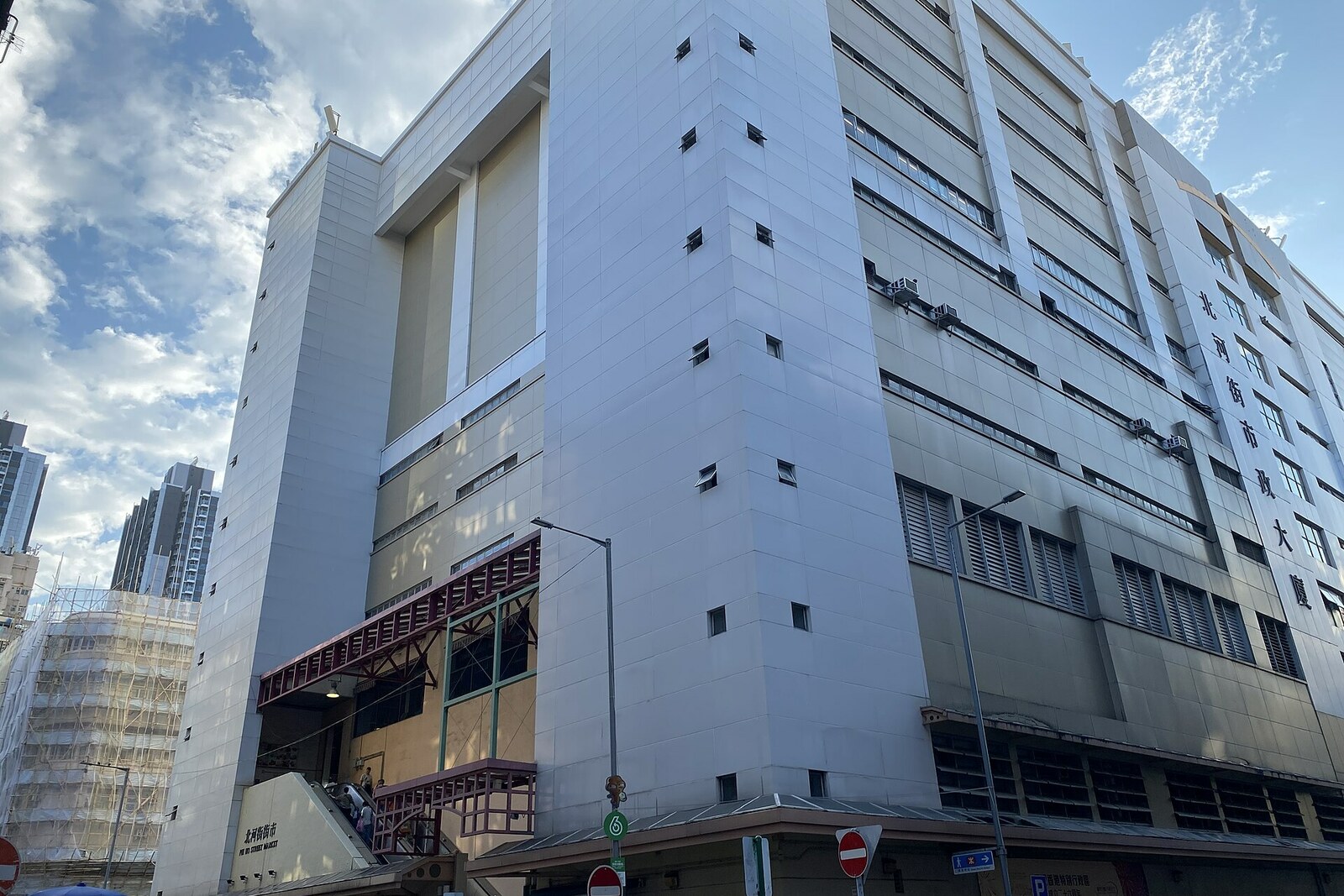
Look around first
What to notice
- Multistory municipal building
- Food stalls
- Cooked-food stalls
- Street rows of dry goods
The story of the place
In the multistory municipal complex, food stalls, cooked-food stalls, and a shared hall with tables operate under one roof. Before the present building was constructed, the single-story Sham Shui Po Market stood here; it opened in nineteen eighteen and was surrounded by street rows. When the Urban Council decided to replace the market, tenants and vendors of perishable food were temporarily transferred to Nam Cheong Street Market and Tung Chau Street Market, and the old buildings were demolished.
In February nineteen seventy-three, staff from the Urban Services Department measured about seven hundred stalls on Pei Ho Street. Traders had long pushed their stalls beyond their allotted boundaries: the extra strip of pavement let them lay out more goods, and their daily earnings depended on how much merchandise was in front of the customer. Officials ordered every stall returned to its permitted size. Vendors moved part of their stock behind the new line and continued trading from reduced spaces.
Three months later, Murray MacLehose, the British governor of Hong Kong, came here. He wanted to see what had happened after the clearance and spent more than an hour questioning traders and officials. Pei Ho Street was chosen for the inspection because owners of allocated pitches, vendors with fixed stalls, and unlicensed itinerant vendors all worked here at the same time. A representative of the urban services said then that all the problems of street trading were gathered on a single street.
The operation was called “Marking Out.” After the Pei Ho Street experience, urban services staff began carrying it out across Hong Kong: reducing stalls that had been expanded without permission, moving trading pitches, and transferring vendors to bazaars and covered markets. For Pei Ho Street traders, this last change stretched out over another two decades.
Their old market, then called Sham Shui Po Market, had opened as early as nineteen eighteen. It was a single-story complex surrounded by street rows. When the Urban Council, which ran the markets, decided to replace it with a multistory building, tenants and street vendors of perishable food were temporarily accommodated at Nam Cheong Street Market and Tung Chau Street Market. The old buildings were demolished, and in nineteen ninety-five the traders received pitches in the present municipal complex.
That is how the division that remains here today arose. Vendors brought fish, meat, poultry, and vegetables under a roof; above the food rows, cooked-food stalls and a shared hall with tables were installed. On the street, trade remained mainly in clothing, household odds and ends, and other dry goods. Nothing of the single-story market survives: its former activities are now spread between the floors of the building and the stalls of Pei Ho Street.
Useful on site
FEHD: market 06:00-20:00; Cooked Food Centre 06:00-02:00. Check notices on site for individual stalls.
Checked: June 25, 2026. Check the official source before visiting.Do not occupy a table longer than necessary, keep your belongings out of the aisle, and be ready to share space; ask on site about menus and dish ingredients.