 Guide On Map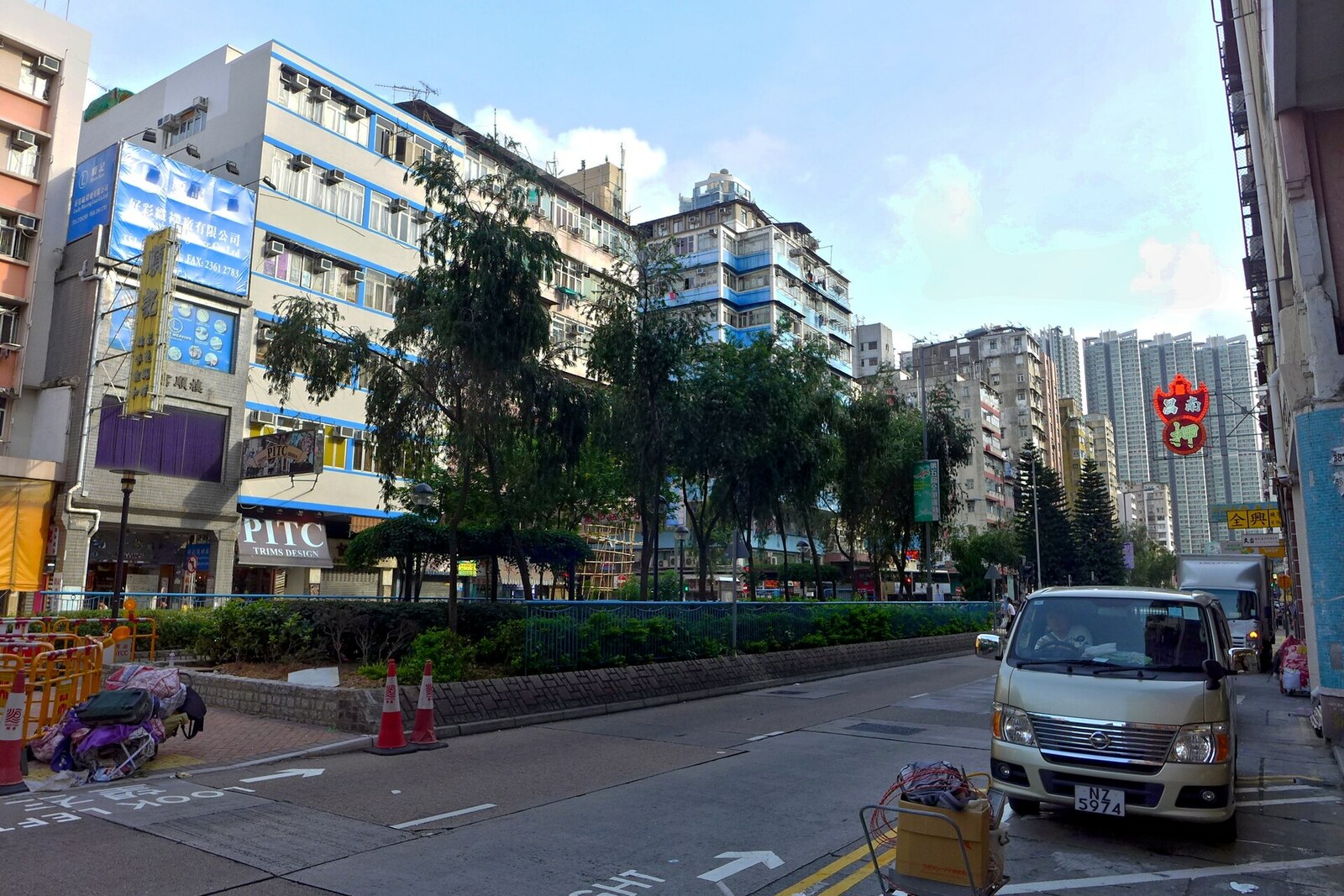
Look around first
What to notice
- The orange Cheung Hing sign
- Upright rolls in wooden boxes
- Sample cards
- An old calculating device
The story of the place
This part of Nam Cheong Street was nicknamed Ribbon Street for its shops selling ribbons, braid, lace, embroidery, and zippers; for fabrics, beads, and buttons, people go to the neighboring streets. After the war, a whole district of suppliers formed around garment factories and home workshops, where every unobtrusive detail of clothing could be found. The orange Cheung Hing letters are visible above the entrance, and inside, upright rolls stand in wooden boxes beside sample cards. When garment production moved outside Hong Kong, the former container shipments disappeared, but this shop retained its old way of trading.
In nineteen seventy-one, the fabric merchant Yuen Kwan-pang was looking for a place in Sham Shui Po for a shop of his own. Ten years earlier, he had arrived from Shenzhen and found work as a travelling salesman for a woolen-cloth shop on Shanghai Street: he called on customers, learned to distinguish fabric grades, and lived on his sales. He then ran a business with a partner on Portland Street for five years. Now Yuen wanted to work under his own name, and he chose number one hundred seven on Nam Cheong Street.
He needed this address because of its neighbors. After the war, garment factories and home workshops opened in Sham Shui Po, and suppliers gathered around them, selling everything that goes into ready-made clothing. Nam Cheong Street sold ribbons, braid, lace, embroidery, and zippers; the neighboring streets sold fabrics, beads, and buttons. Traders and customers nicknamed this stretch Ribbon Street. Its official name is connected with the Chinese city of Nanchang and has nothing to do with garment making.
Yuen Kwan-pang took up one narrow specialty: lining and interfacing fabrics. The first are sewn inside garments; the second reinforce collars, shoulders, and fronts. A buyer of a ready-made coat usually barely sees them, but a manufacturer needs the exact color, weight, and width. That is why Cheung Hing displayed cards with small samples and stood its rolls upright in wooden boxes: a customer could match the inner fabric to an outer fabric already selected.
Yuen's wife, Lai Hing-yung, built up the shop alongside him. While raising their children, she had to learn on her own to serve customers, distinguish materials, cut cloth evenly, carry rolls, and tie them with white cord. The couple opened the shop at nine in the morning and worked until eleven at night. Three years later, they were able to open a branch on nearby Ki Lung Street. In the nineteen seventies and nineteen eighties, whole containers of lining from here went to factories in San Po Kong, To Kwa Wan, and Kwun Tong; Yuen also supplied fabric merchants from the local covered market.
The shop and the family grew at the same time. In the year the shop opened, the couple's second son was born. Lai Hing-yung named him Kai-yip: the character “yip” means business or occupation, and the name was meant to preserve the memory of the beginning of the family trade. Many years later, all three children returned from university in Australia to help their parents. The eldest son took charge of the Ki Lung Street branch and overseas orders, while Kai-yip began working beside his father at number one hundred seven.
When garment factories moved their production outside Hong Kong, the container shipments stopped. Yuen acknowledged that the shop had been kept afloat by owning its premises: at current rents, the old lining trade would no longer pay for itself. Inside, rolls still stand in boxes, an old calculating device lies on the counter, and the orange Cheung Hing name is repeated on the sign, beams, and product boxes. Kai-yip now works beneath those letters—the son named after the business in the very year his father opened the shop on Ribbon Street.
Useful on site
Independent shops; hours vary. A daytime visit is more reliable than an evening one, and Sunday may be quieter.
Checked: June 25, 2026. Check the official source before visiting.View the building from the sidewalk and do not go beyond closed doors; the old neon signs may have been removed.