 Guide On Map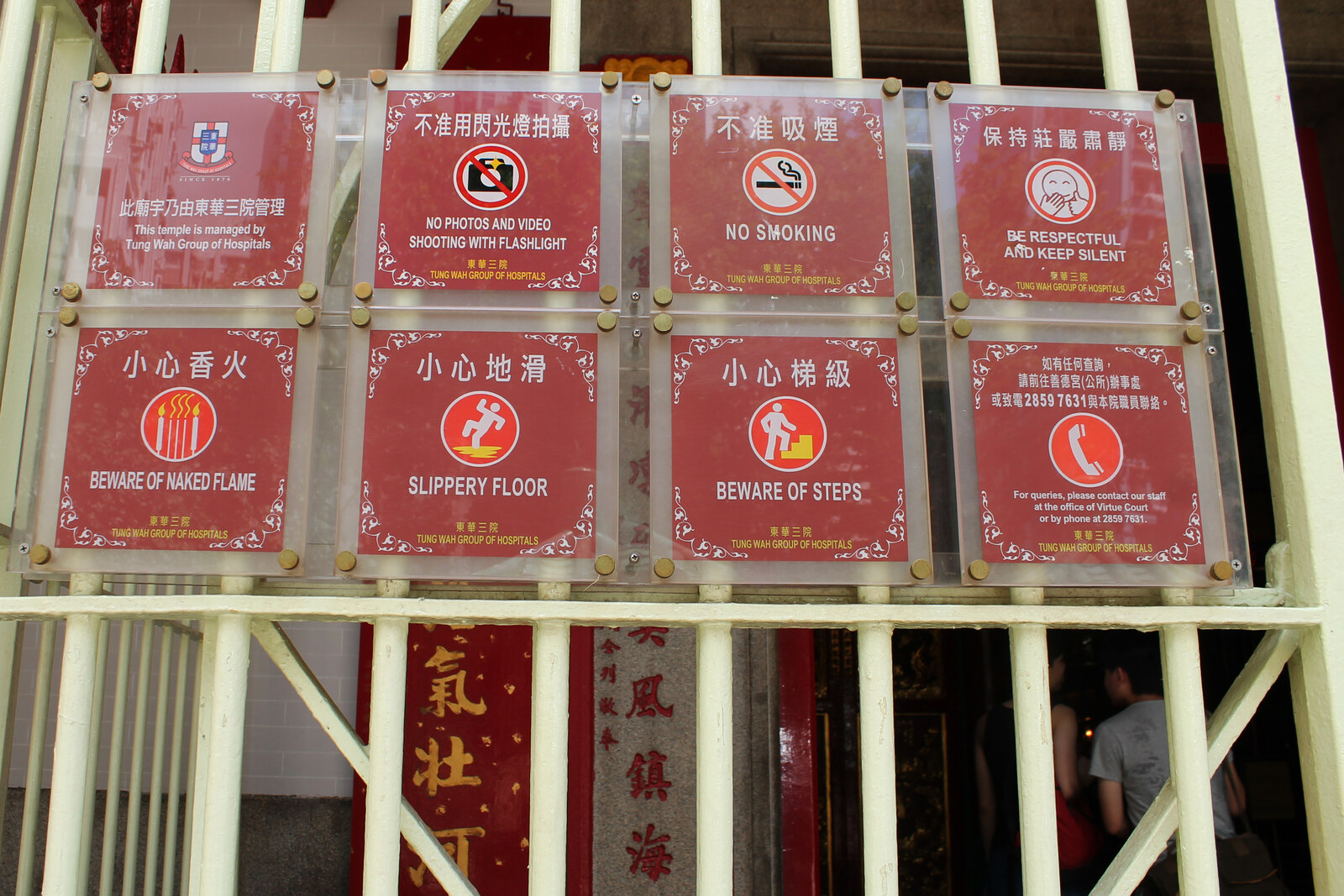
Look around first
What to notice
- Man Cheong altar
- Mo Tai altar
- Kung Sor granite door frame
- Date 1862 on the frame
The story of the place
The temple's two altars are dedicated to Man Cheong and Mo Tai. People come to the first with requests concerning studies and examinations, and pray for well-being at both. Its construction was paid for by two Chinese entrepreneurs of early colonial Hong Kong: one came from the Tanka boat community, while the other began as a craftsman at a Singapore shipyard and once escaped debtors' prison thanks to a creditor. A separate Kung Sor hall was established beside it for community meetings; its granite door frame survives, with the date eighteen sixty-two carved into it.
In September nineteen eighteen, Hung Tai sought through the court to recover five hundred dollars from Ho Yik-piu, who had been hired to organize trade in antimony ore. For a small business, this was working capital, and the outcome depended on Ho's account books: the firm considered them unreliable, while he sought dismissal of the claim.
Ho, the principal witness, proposed evidence that cannot be found in the records: to swear before the gods at Man Mo Temple and seal the oath by cutting off a rooster's head. The parties came here. The witness swore that the books were genuine and performed the ritual. After that, Hung Tai's representative agreed to a judgment in Ho Yik-piu's favor. The five hundred dollars were not recovered from him.
This outcome did not rest on one merchant's exotic whim. For decades, Chinese residents of early colonial Hong Kong brought here cases that they did not want, or did not know how, to settle under British procedure. An oath before the gods threatened a liar with misfortunes that were supposed to pass to the liar's children and descendants. Even judges who did not share this belief understood that such a threat could mean more to a witness than an ordinary oath.
The temple received this role from its founders. In eighteen forty-seven, Lu Akui and Tam Ah-choy provided the money for its construction—entrepreneurs of the first generation of Chinese Hong Kong. Lu came from the Tanka boat community, which stood low in the old social hierarchy. Tam began as a craftsman at a Singapore shipyard, then took construction contracts and once nearly ended up in debtors' prison: a creditor saved him. Here they established a place where merchants could gather and settle disputes without hereditary officials and the learned gentry.
As early as eighteen fifty-one, shopkeepers from the surrounding neighborhoods elected a temple committee themselves and entrusted it with hearing cases affecting the whole community. In eighteen sixty-two, a separate Kung Sor hall was built beside it—a public chamber for meetings and hearings. Lu and Tam gained the standing that their origins had not given them: people began to turn to them as recognized mediators.
The temple's name points to those before whom oaths were sworn. Man Cheong is the patron of literature, learning, and state examinations. Mo Tai is the deified commander Guan Yu, revered for loyalty and justice. So today, people leave requests for success in studies before Man Cheong, and pray for well-being before the two altars. Hearings are no longer held in Kung Sor; from the former community court, its granite door frame survives, with the date eighteen sixty-two.
Useful on site
Usually 08:00–18:00; 07:00–18:00 on the first and fifteenth day of each month and on the specified temple festivals. Checked 2026-06-30.
Checked: June 30, 2026. Check the official source before visiting.Keep quiet, do not block worshippers' access to the shrines, and check the signs before taking photographs.